Biometrics + ‘Evidence-based’ Design: the Next Step for Architecture

We’re sharing a new post from iMotions, a bio-metric aggregating company based in Boston and Copenhagen, on the emerging field of neuroarchitecture, and how high tech tools can help us better understand human responses to the built-environment and improve design.  (Full disclosure: we’ve successfully used iMotions in our studies.)

Screen Shot 2018-07-12 at 7.59.48 PM.png

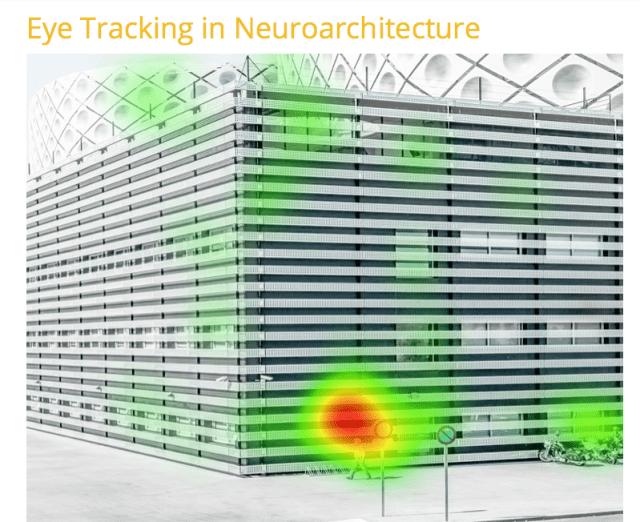
Neuroarchitecture or cognitive architecture, is an emerging field that provides an empirical basis for the design choices made by architects. Rather than settling for purely theoretical debates about test prices in design, research is showing the way, and guiding the creation of actual evidence-based design.

Continue reading this post to find current trends in eye-tracking and how they inform our world today.

Posted in Uncategorized | Leave a comment

A Trip to Tahoe: Walking the California/Nevada Divide

When I asked the concierge for directions to cafes and shops, he told me to walk three blocks to the traffic lights, then turn right to California or left to Nevada. “You’ll see the difference,” he said.

Indeed.

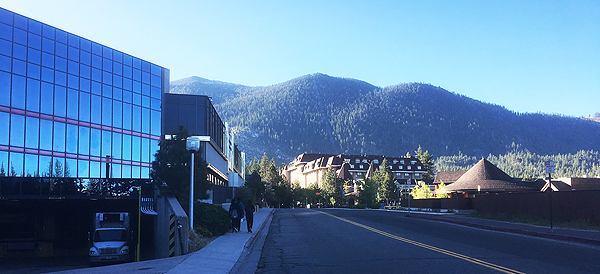
Little did I know when I booked a vacation to Lake Tahoe that I would straddle two states on opposite sides of the street with such different walking and safety experiences. The photo below shows California’s alpine architecture on the right and Nevada’s polished glass on the left. Not only did I find the left-hand side of the street scary, I couldn’t find a door with all those mirrors.

South Lake Tahoe

South Lake Tahoe: Right side of road=California; Left side of road=Nevada

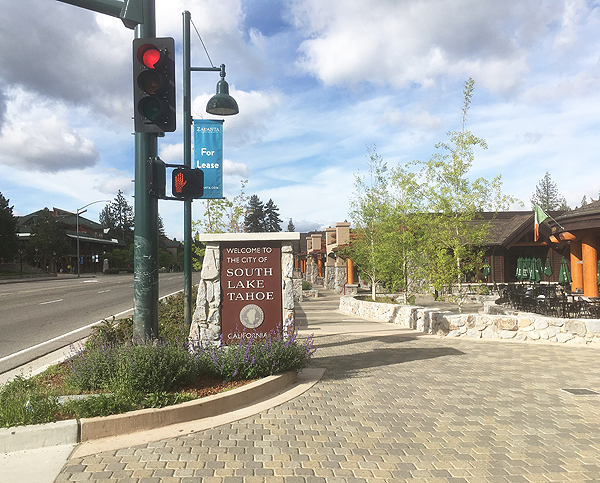
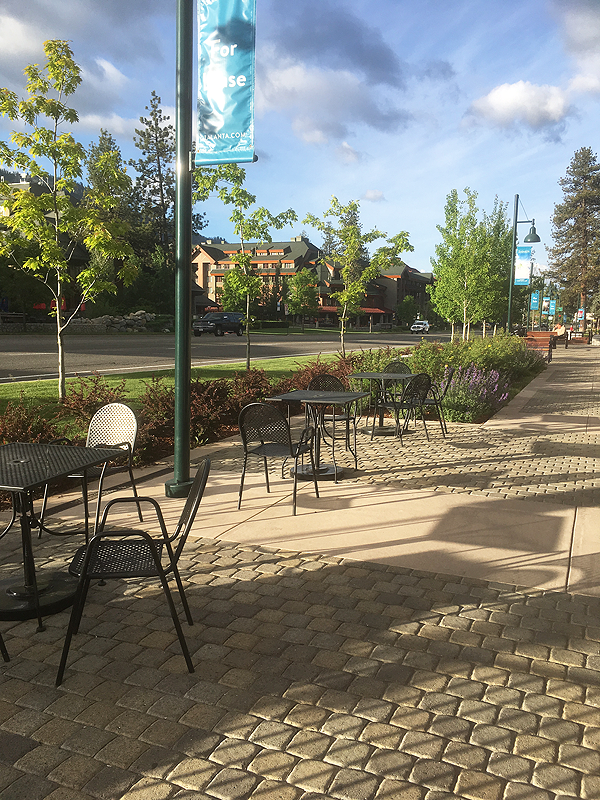
Believe it or not, the California side led to a place called “Heavenly Village.” Did Nevada lead to “Sin City?” Maybe. The next picture shows the corner where I turned right to see California’s wide, walkable sidewalks with patterned pavers leading to open spaces, outdoor cafes and flowery landscaping. The sign said “welcome,” the bright colors beckoned, and I felt safe.

South Lake Tahoe California

South Lake Tahoe, California

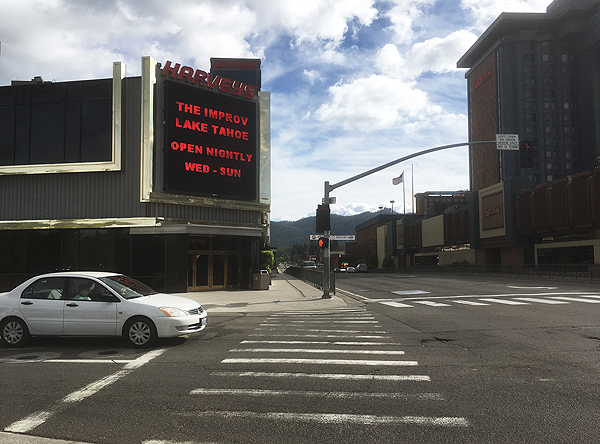
Then I turned 180 degrees to take the photo below of the Nevada side. Notice the skinny cement sidewalks, lack of pleasing outdoor space and absence of greenery. The casino’s neon sign against the black and brass building felt like Darth Vader beckoned; I turned away.

South Lake Tahoe Nevada

South Lake Tahoe, Nevada

The differences were palpable. The decision—easy. Avoid the stressful street in Nevada and embrace the welcoming one in California. That’s where I turned.

And, of course, we face that same decision building everywhere in America today; do we want to make more ‘approachable’ places or ‘avoidant’ ones?  South Lake Tahoe makes the answer clear; build places people want to be—inside + out. It will be better for us all, and our descendants will thank us.

South Lake Tahoe California

South Lake Tahoe, California

All Photos Copyright: Janice M. Ward

Posted in Architecture, City Planning, Health, People-centric Design, Walkability | Tagged , | Leave a comment

The Powerful ‘Pavers of Paris’ – How They Get You Walking without Saying a Thing

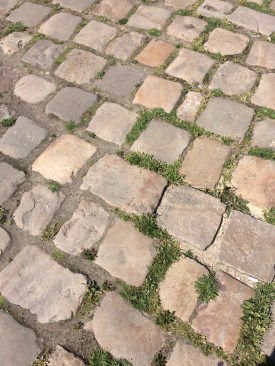
What makes Paris so walkable? The 18th and 19th-century architecture, the shops, the cafes-on-every corner, the human-scaled development – yes, yes, yes.  All true. But there’s more, something not as celebrated and a key secret to Paris’ walkability and engaging street-life: the road construction itself. The pavers of Paris – like these:

paris4IMG_1973Paris1FullSizeRender


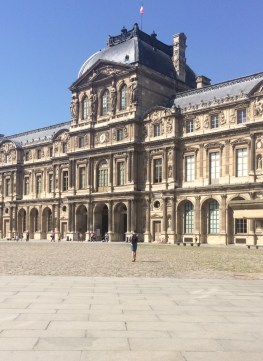
These stone blocks surround the Louvre, the 2nd-most-visited museum in the world, (after the Palace Museum, Beijing), and literally knit together a visitor’s uplifting experience there. Everyone sees them entering, leaving or lingering around the museum. They’re colorful, look hand-hewn and create an eye-catching, unostentatious visual fabric. They anticipate our human need for pleasant visual stimulation – even before people set foot inside the museum – and they complement the color of the surrounding palace, too – everything a uniform all asphalt or concrete drive could never do.

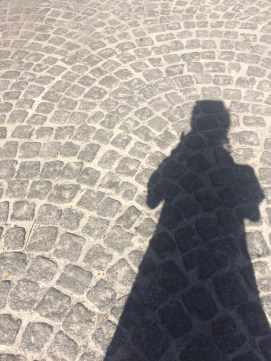
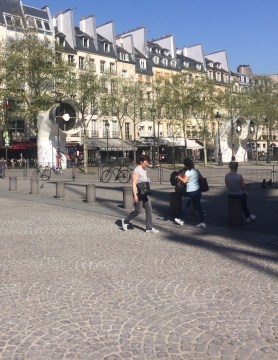
Even the newer museums in Paris, like the hi-tech style Pompidou Center, (c. 1977) boast antique style pavers and patterns that move you forward and invite you to linger. Here are the ones surrounding this modern art museum; it’s a timeless look that acknowledges our human love for repeating patterns and undulating shape:

Iparis3MG_1959paris2FullSizeRender


The pavers not only anticipate our need to always have something to look at, but the fact – see person walking down hill, above right – that most of the time  we hold our head about 15% downward as we walk, making sure the path’s safe ahead. It’s an old habit, that got us safely out of the savanna 70,000 years ago and is not going to go away soon.

In sum, the pavers of Paris tell a story, not just about what we like to see but about who we are – a bi-pedal mammal pre-occupied with the patterns at our feet.  It’s all understandable, once you stop to think about it, and provides the next step to improve walkability everywhere moving forward. People aren’t cars; we need to accept that to build the best places for them.

Posted in Uncategorized | Leave a comment

Updates to Our 2018 Art+Science Photo Contest

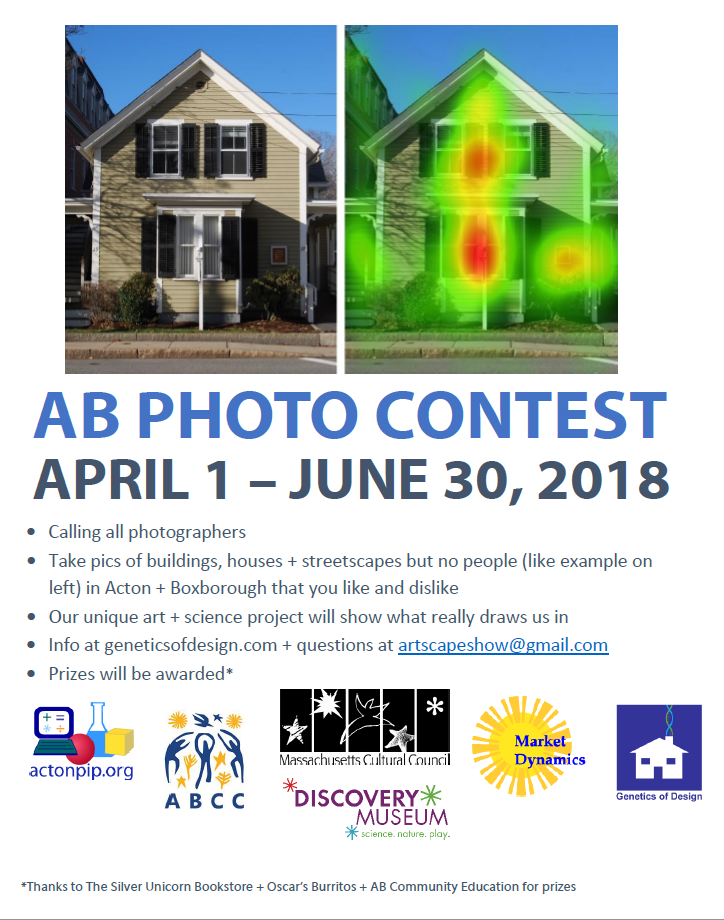
Our new poster shows the kind of photograph that works well with our Art + Science Photo Project and the resulting heat map.  Please take some pictures. Join the fun. Find out what really draws us in with no conscious control. We’ll use the 3M VAS (Visual Attention Software) to find out.

AB Photo Contest

Contest FAQs

  1. Photos of buildings, houses and streetscapes must be in towns of Acton and/or Boxborough, MA, USA.
  2. You don’t have to be a resident to participate.
  3. All ages are welcome.
  4. Prizes will be awarded.
  5. No people in the pictures; they skew results.
  6. Submit up to 5 photos of AB places you like +/or dislike.
  7. Make sure your last name is part of the filename for each pic, and file extensions are .jpg or .png or .gif.
  8. Click the Upload Pix Here button to fill out the form and submit your photos.  (You’ll have to be logged into your Google account.)
  9. Other ?s: email artscapeshow@gmail.com
Posted in Architecture, Design, Eye Tracking, People-centric Design, STEM | Tagged , , | Leave a comment

‘How Biometrics Can Help Designers Build Better Places for People’ from Common\Edge

Davis Sq T Exit

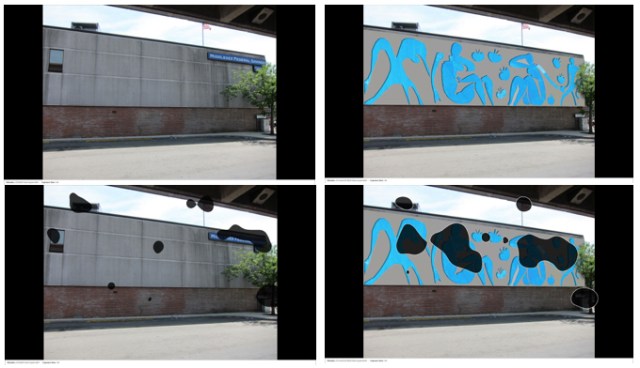
Biometric ‘shadow’ study shows how mural draws attention; ©geneticsofdesign.com

Click on images above or the link here to read this recent post on Common\Edge.org, a non-profit site dedicated to improving the design of our built environment.

Ann Sussman and Janice M. Ward from geneticsofdesign.com co-authored the piece with Tufts professor Justin Hollander and editorial savvy from Martin Pedersen.

Posted in Uncategorized | Leave a comment

O-x-y-t-o-c-i-n: The 8-letter Word Every Architect Should Know

Screen Shot 2018-03-25 at 10.14.36 PM

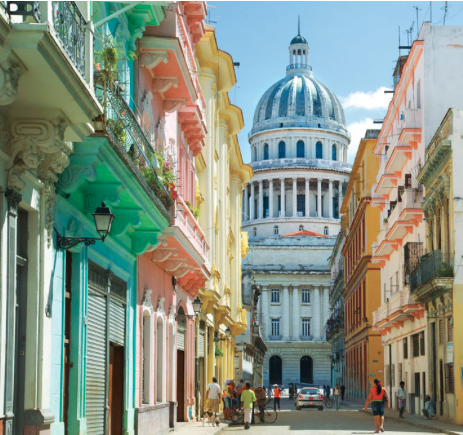
Capitol Building, Havana, Cuba ©wikimedia

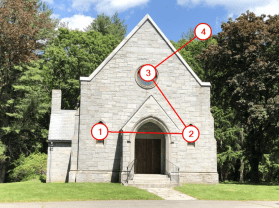
What are attributes of great design? It draws the eye. And you delight in taking it in—no matter your age, background or the times you live in. The buildings wordlessly beckon.

But how?

Turns out to understand why great buildings and streetscapes, like the one above in Havana, have timeless appeal, you need to know something about architecture—specifically the architecture of our nervous system. As mammals, we’re hardwired to look at the world and approach or avoid things instantly. Our survival depends on it. If we had to stop to consciously ponder our every move, we simply couldn’t and wouldn’t exist.

Enter oxytocin, sometimes called ‘the cuddle hormone’. This neuro-chemical not only has a significant role to play in parental bonding and significant-other relationships (including ones with our dogs), making us the social creatures we are, but is at work getting us to move towards things in our environment too.

Screen Shot 2018-03-31 at 12.21.35 PM

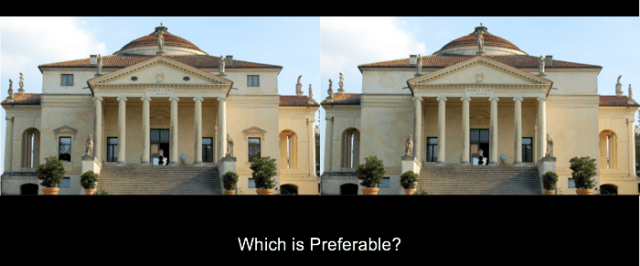
Villa Rotunda, Vincenza, Italy, ©wikimedia, ©geneticsofdesign.com

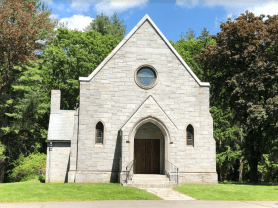
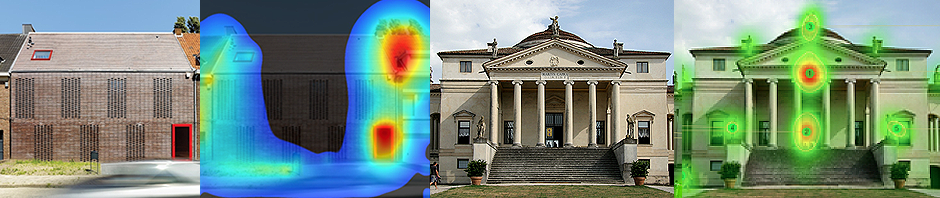
Take a look at the two versions of Palladio’s Villa Rotunda above, a 16th-Century UNESCO World Heritage Site in Vicenza, Italy. Which would you rather head towards, the real one with windows or a photoshopped-version without them? Don’t think too much, just choose!

We’ve asked hundreds of people the same question at lectures, and no matter their age or demographic, we always get the same answer quickly: the building at left. Why? Humans as social animals are hard-wired to respond to direct gaze, this is when oxytocin, that hugging-hormone, is released (from the pituitary gland) getting us to move toward another person or, as in this case, an inanimate object that suggests one. 

It can’t be any other way, of course, once you stop to think about it. After all, our brain and nervous system are artifacts of 3.8 billion years of evolution, and for most of that time (say 99.9% of it) there were no man-made buildings—just animals and nature—so that’s what we’re built to see—no matter how modern we may think we are!

In many fields, including advertising, travel and graphic design, it appears they’ve intuited the science, if not actually figured it out. The Havana photo above, for instance, was on the cover of a recent Tufts Travel brochure.
TuftsTravel

Architects, for the sake of their future and ours—should take note!

Posted in Architecture, Biology, People-centric Design, STEM | Tagged | Leave a comment

Our 2018 Art+Science Photo Contest

We’re thrilled to announce our grant from the Acton-Boxborough Cultural Council (ABCC) for a unique art + science study of two Massachusetts towns.

2018-ABCC-certificate.jpg

This study uses photography, biometric tools and new findings in neuroscience to show how our unconscious behaviors govern our experience of the built environment.

To engage the public, we’re starting with an open call for photos of buildings + houses + streetscapes (no people) that people love – or don’t like so much – in Acton and Boxborough.

2018ABCCphotocontestflyer.pngMany thanks to our collaborators for this first-of-its-kind STEAM (science | technology | engineering | arts | math) study;  AB PIP STEM (actonpip.org), the Discover Museum of Acton, Green Acton and the ABCC, a branch of the Massachusetts Cultural Council (MCC). Without their support and appetite for creativity, it wouldn’t have happened!

Contest FAQs

  1. Photos of buildings, houses and streetscapes must be in towns of Acton and/or Boxborough, MA.
  2. You don’t have to be a resident to participate.
  3. All ages welcome.
  4. Prizes will be awarded.
  5. No people in pictures; they skew results.
  6. Submit up to 5 photos of AB places you like +/or dislike.
  7. Make sure your last name is part of the filename for each pic, and file extensions are .jpg or .png or .gif.
  8. Click the Upload Pix Here button to fill out the form and submit your photos.  (You’ll have to be logged into your Google account.)
  9. Other ?s: email artscapeshow@gmail.com

Upload Pix Here!


Posted in Architecture, City Planning, Design, Eye Tracking, People-centric Design, STEM, Walkability | Tagged | Leave a comment

If You Want To See How People ‘See’ Boston City Hall – Eye Track it!

Piazza del Campo in Siena, Italy and Boston’s City Hall Plaza are often cited as the best and worst of what architecture can be. The Italian piazza with its crenelated city hall and tightly-aligned buildings has invited public gathering and acclaim for centuries, frequently making best-in-design lists. Boston’s 50-year old plaza, on the other hand, an urban renewal project from the 1960s, has never lived up to its promise. Instead, you’ll find it listed as one of “the most disappointing places in America,” and even calls for its demolition.

Why?

That’s been studied a good deal. Researchers have carefully analyzed Boston City Hall Plaza for years, including in graduate school theses and this recent Tufts University planning class. In 2015, Boston’s then-new Mayor, Marty Walsh, launched yet another initiative to find ways to improve the look, feel and function of his workplace.
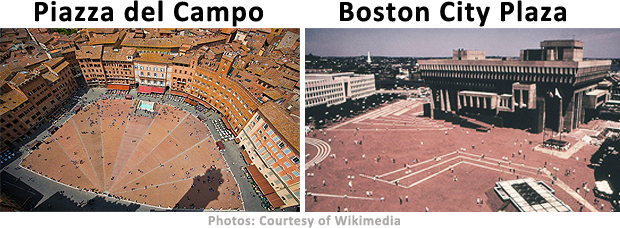
Siena + Boston

So, why does Boston’s Government Center fail from a public perspective? Frequently mentioned strengths of the Italian vs American counterpart include:

Piazza del Campo, Siena, c. 1349

  • Pedestrian friendly access to and within the plaza;
  • Buildings and plaza scaled for people with safe, obvious places for gathering;
  • Destinations for all, such as shops, eateries;
  • Protected from vehicular traffic; cars banned from central city;
  • Open, yet has awnings for shelter; distinct edges, clear exits.

Boston City Hall Plaza, MA, c. 1968

  • Not-very-pedestrian-friendly access to site and uncertain circulation path within;
  • Buildings and plaza not human scaled; no place really feels safe; no gathering spots beckon;
  • Few destinations such as shops, eateries;
  • Unprotected from vehicles to east, west and south;
  • Open design offering little shelter or well-defined edge-conditions.

We buy it, yet our research suggests there’s something more. Indeed, to make sense of Boston City Hall Plaza today, we think you first need to ask really basic questions – like these:

  • How do people actually take in the place?
  • Where do they look when they’re there?
  • What draws their eye initially, then second and third?

Using biometric tools, such as eye tracking, which measures our conscious and ‘unconscious’ eye movements as we take in visual stimuli, and is frequently used in advertising and web design, we can now do so, efficiently and inexpensively.  So what happens when you eye track Boston City Hall?

Much more than we expected! In fact, it took us a while to understand our findings; but after running four pilot-studies, eye tracking more than 150 buildings both within and outside Boston over two years, we can now report with some authority:

Boston City Hall and Plaza fail to attract the public because the building and surrounding spaces don’t provide the fixation points in the first 3-5 seconds the brain needs to see (that’s during pre-attentive processing, before the conscious brain can get into the act), to most easily regulate, feel at its best, and effortlessly move us forward.

It was astonishing for us to ‘see’ how difficult it was for people to actually look at, or ‘fixate’ on any part of the building, even with its picture on a monitor placed directly in front of them.

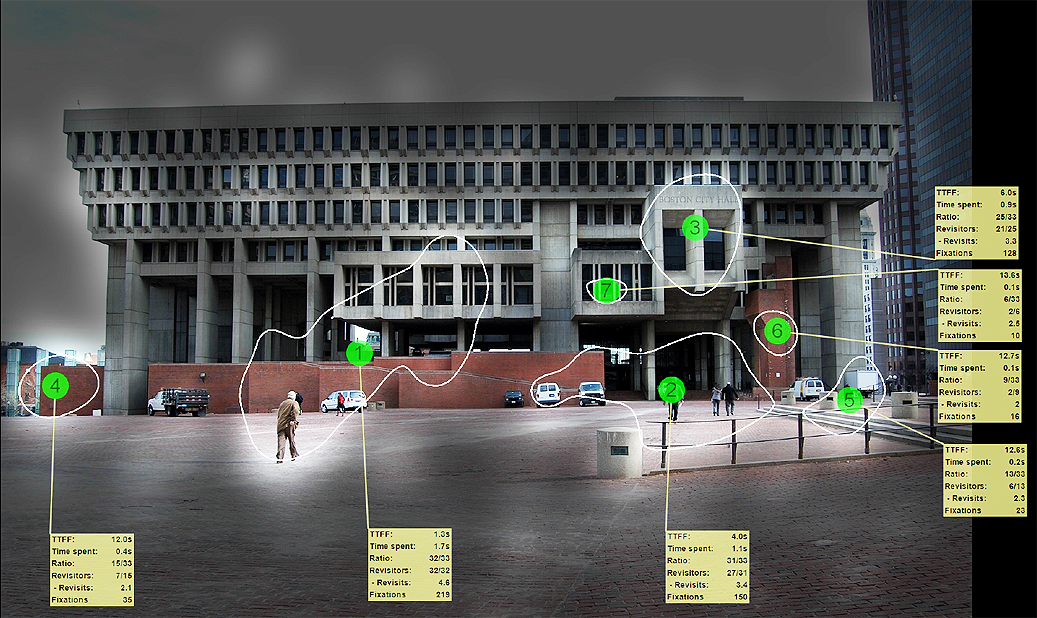
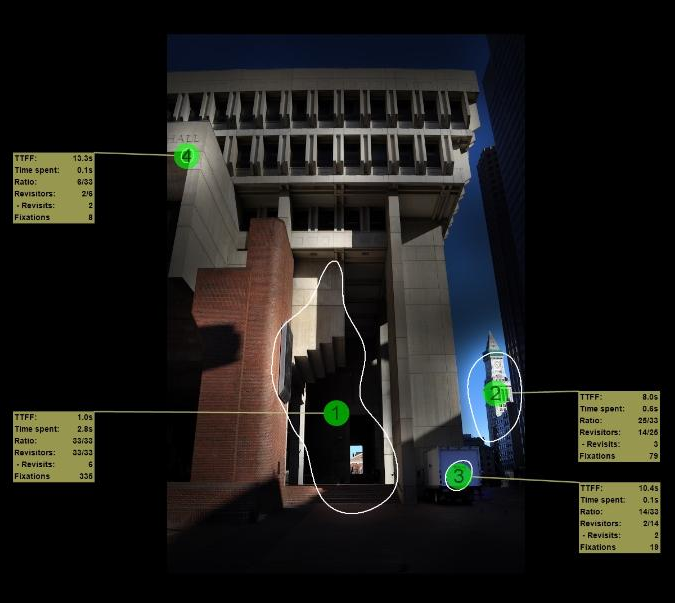
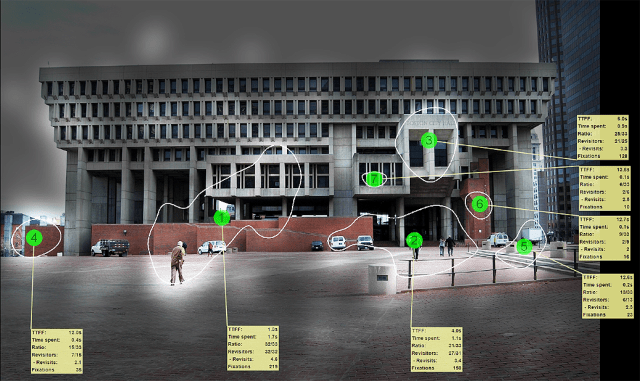
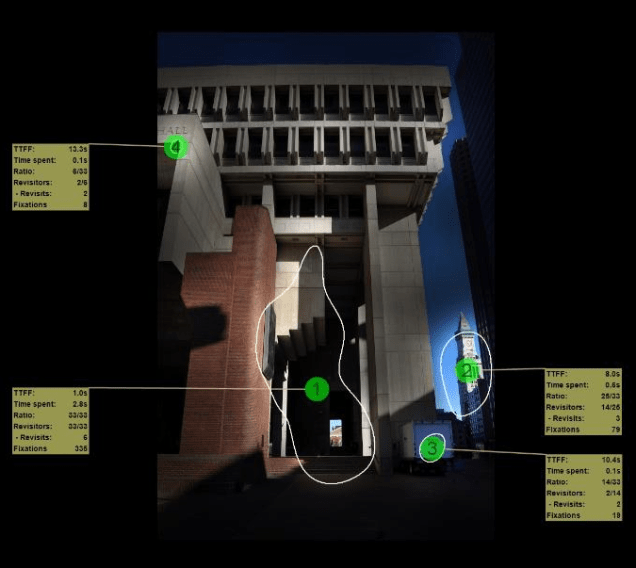
Check out two of the images from our study below. Note where people look: at City Hall’s edge conditions, at other people, at vehicles in the vicinity. Only at six (6) seconds in did viewers, not all, but 75% of them, look directly at the building – apparently the high contrast large black windows with the engraved letters above catching their eye. After that, almost half the participants (15 of 33) quickly looked away to focus on outermost edge conditions again.

Of couse, a next question would be, what kind of architecture draws the eye in pre-attentive processing? That’s critical to understand if we want to design people-friendly places!  And one quick answer would be, The Old State House, (c 1713,) a building one-tenth of a mile away from City Hall,  with clear hierarchy, bilaterally symmetric-arrangements of windows, and details to delight to eye -no matter the century!
Eye Tracking Boston City Hall Plaza

Eye Tracking Boston City Hall + Plaza

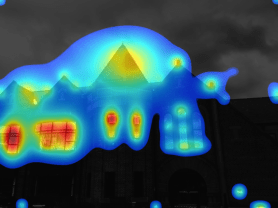
The shadow study  above showing eye-tracking results from our first pilot-study of Boston City Hall using iMotions biometric software glows brightest where people look most, fading to dark grey in areas ignored. Note how much of the building and plaza are in the dark. The green-circled numbers show seven areas of interest (AOIs) that drew the attention of 33 participants sequentially. Yellow boxes highlight more eye-tracking metrics.

The Metrics
Fixations is where eyes stop to focus. The length of time it takes people to focus is Time to First Fixation (TTFF). Time Spent is what it sounds like – length of time spent focused. Ratio compares the number of people who gazed at an area over total number of participants. Revisitors refers to the number of people who looked away and looked back at an area; Revisits are the number of times they went back to a same spot.

Fixation Sequence (1 – 7) Boston City Hall (front elevation)
1. By 1.3 seconds, 32 of 33 participants look at the area with a person and through an opening in City Hall to light beyond, (we’re hardwired to look for people and areas of high contrast without conscious effort).
2. Next, 31 of 33, focus on a second group of people and high-contrast area; gaze again appears directed through the building rather than at it.
3. 25 of 33 then apparently move to study the text and contrast provided by the elevation’s tallest punched windows; this happens at 6 seconds, when more of  ‘conscious’ brain may come online.
4. 15 of 33 then notice a side wall against the skyline; (as mammals, we innately seek out well-defined edges, it’s a survival strategy).
5. At 12.6s, 13 of 33 shift focus to a person and trucks in the courtyard.
6. 9 of 33 focus on high contrasting section of brick wall, slightly above trucks.
7. At 13.6 seconds, 6 out of 33 finally looked at an almost centrally-placed location on the City Hall building, high-contrast windows above 2nd fixation point; our bifocal vision favors looking at things centered in front of us, so this move seems to take a while.

Fixation Sequence (1 – 4) Boston City Hall (front elevation closer detail)
Boston City Hall

Eye Tracking Boston City Hall + Plaza

1. By 1 second, 33 participants fixated (335 times) on the high-contrast central area of image; again gaze appears drawn to the light, blue sky and brick building beyond plaza.
2. By 8 seconds in, 25 of 33 viewers, or 75%, are looking away from City Hall to iconic Custom House Tower.
3. 14 of 33 went for the truck, and its contrasty print letters;
4. At 13.3 second, 6 of 33, or 18% of viewers, go back to look at the building, likely drawn to contrasting color, sharp edges and letters above entry.

For the article in Journal of New Design Ideas by Sussman and Ward on this topic, click:

Eye-tracked images©geneticsofdesign.com

Many thanks to Boston’s Institute for Human-Centered Design for providing lab set-up and staff for this study, to iMotions for creating game-changing biometrics, and to Justin B. Hollander of Tufts University for his initiative, collaboration and support for studies outside Boston.

Thanks to ArchNewsNow.com for linking to post, Feb. 20th, 2018.

							
Posted in Architecture, City Planning, Eye Tracking, People-centric Design, Walkability | 1 Comment

Why Putting Pets on a Package Grabs Attention – No Matter What’s Inside

Around the end-of-year gift-giving season, it’s fun to check out the packages that grab our attention. Like this one:

Screen Shot 2017-12-18 at 11.44.26 PM

Completely irresistible. How can you not look at those kitties and love them? Won’t you take them home? The feelings are so strong that it barely registers that what you’re also buying is the contents inside the box: in this case, small butter biscuits. Nothing to do with pets. But your brain, hardwired for attachment, feeling safe and happiest in connection, instantly overrides all logic.

The reasoning parts of your mind simply can’t compete with the attachment parts. Why? They’re up against 3.8 billion years of evolution. When mammals showed up  200 million years ago their young were uniquely helpless—the world had never seen such needy little ones. The tendency accelerated over the millennia, particularly for primates, and today humans bear the most helpless babies ever. If our infant offspring had the abilities of a newborn chimpanzee, our nearest living relative, they’d have to gestate 18-21 months!

So we stick readily—even to embossed kittens on a metal box – because that’s the solution Mother Nature came up with to overcome acute post-natal helplessness: acute attachment behavior. Nothing else could secure the species’ survival. And the quirky side-effect? We’ll attach to anything that suggests a little face—even on an inanimate box or bottle or building facade.

Screen Shot 2017-12-20 at 9.53.02 PM

Screen Shot 2017-12-21 at 9.23.11 AMIt can’t be any other way since Nature’s preset what we most need to look at before birth. Marketers know this, of course, and use it effectively.  Architects don’t – and should take note!

 

cottage photo: © S Hines

Posted in Uncategorized | Leave a comment

Eye-Tracking Architecture: Going viral…

Eye Tracking Examples
We were pleased to see our research reported in Common\Edge earlier this month getting broad coverage elsewhere. Let us know if you’d like to republish too.

1. Fast Company:

2. Architectural Digest:

3. ArchDaily: (in English + Portuguese)

4. ArchNewsNow:

5. Architecture Here and There:

6. More Sports, More Architecture: (in German + English)

7. Curbed:

Posted in Architecture, Design, Eye Tracking, STEM | Tagged | Leave a comment