by Pietra Leao
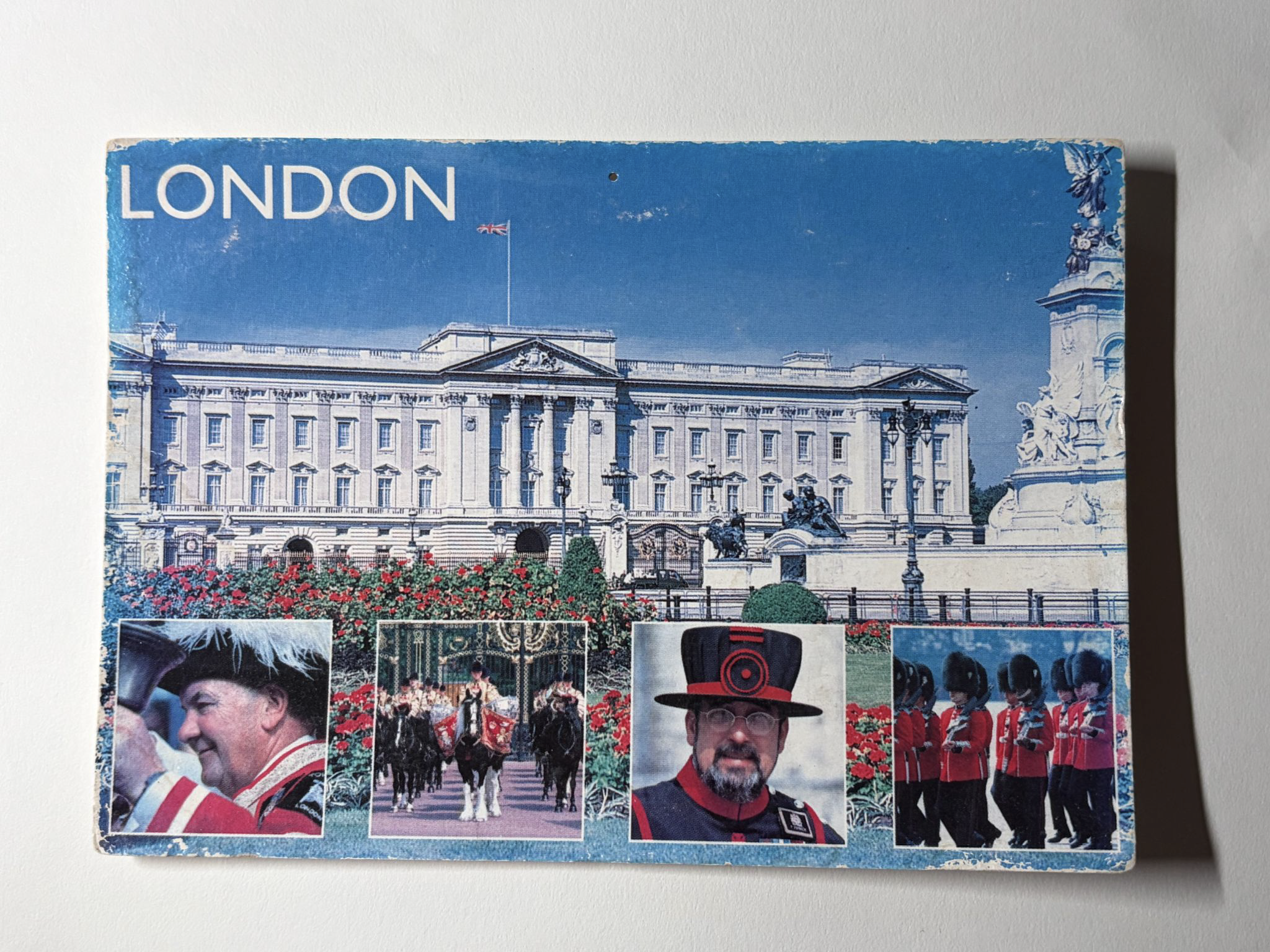
On a recent trip to London, I came across a corner shop offering a tempting deal: £2 for any 10 postcards of the city!
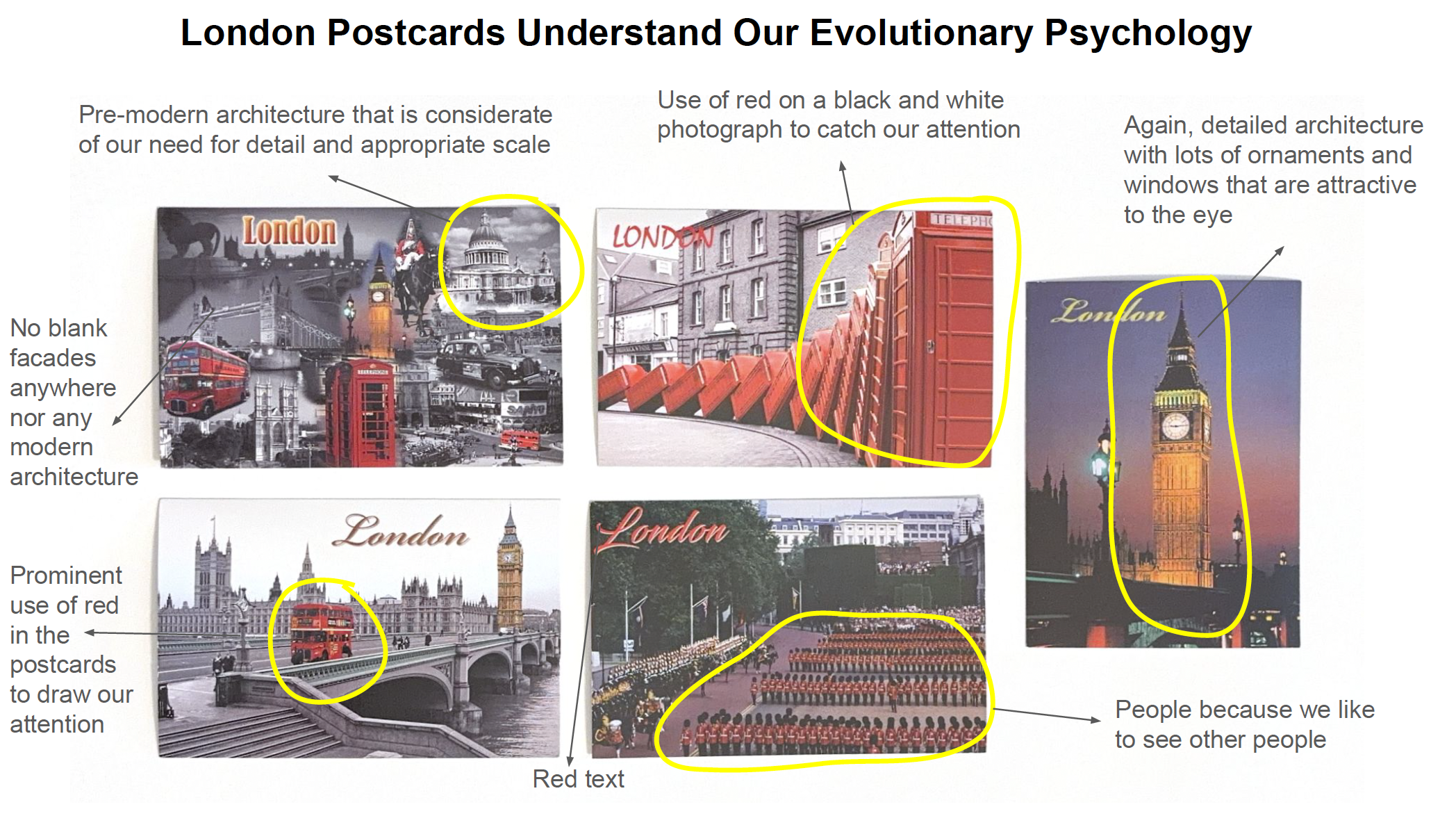
So I quickly picked out ten. But, as I stood at the register, I realized that my selection was not random. I paused, wondering why none of the postcards showed close-ups of The Shard – one of London’s newer skyscrapers. I realized these souvenirs were quietly, and successfully, appealing to my biology. Without knowing it, I had responded to deep-rooted preferences shaped by our evolution. Here’s what I noticed:
1.Traditional Architecture
At the shop I found endless postcards of the famous clock tower, Big Ben (c. 1859) but none focused on the infamous all-glass Shard (c. 2012).
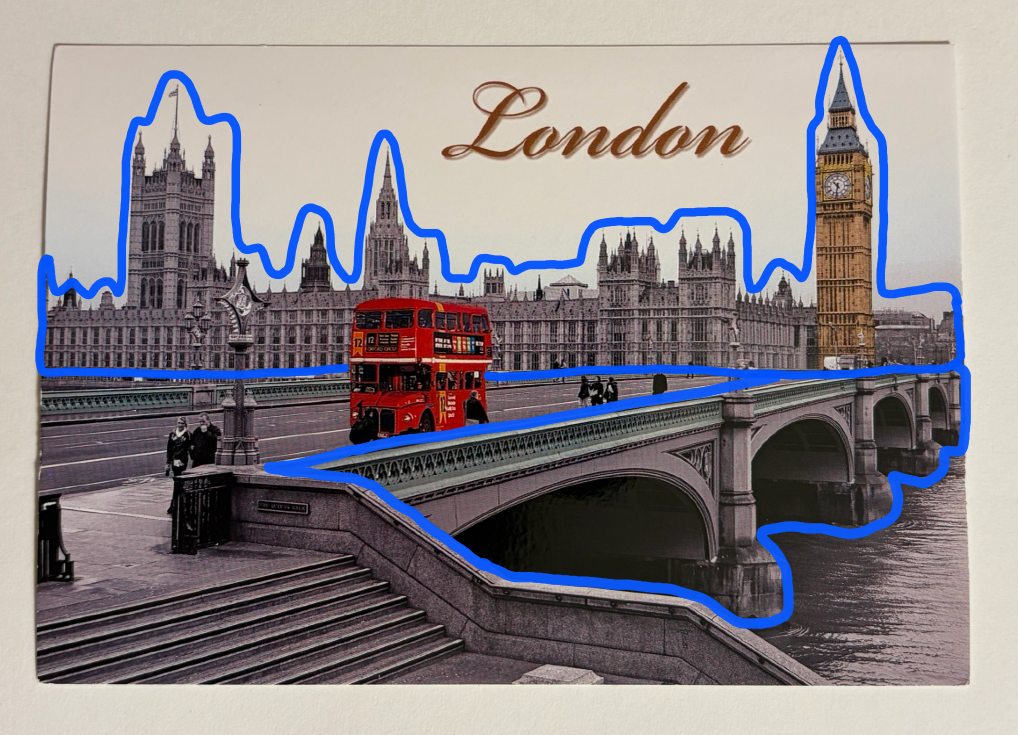
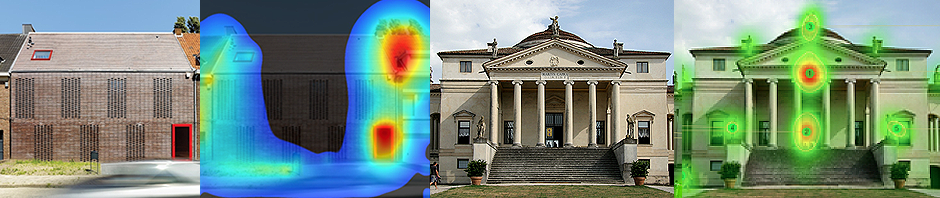
Biometric studies today show that most modern buildings do not engage us like traditional ones. One reason for this is because traditional architecture uses lots of symmetry, hierarchy, and fine detail that appeal to the eye. Just as nature is rich in detail, humans unknowingly replicated this non-conscious preference in traditional buildings worldwide, – up until the modern movement, where architecture becomes minimalist and glass-heavy, (like The Shard).
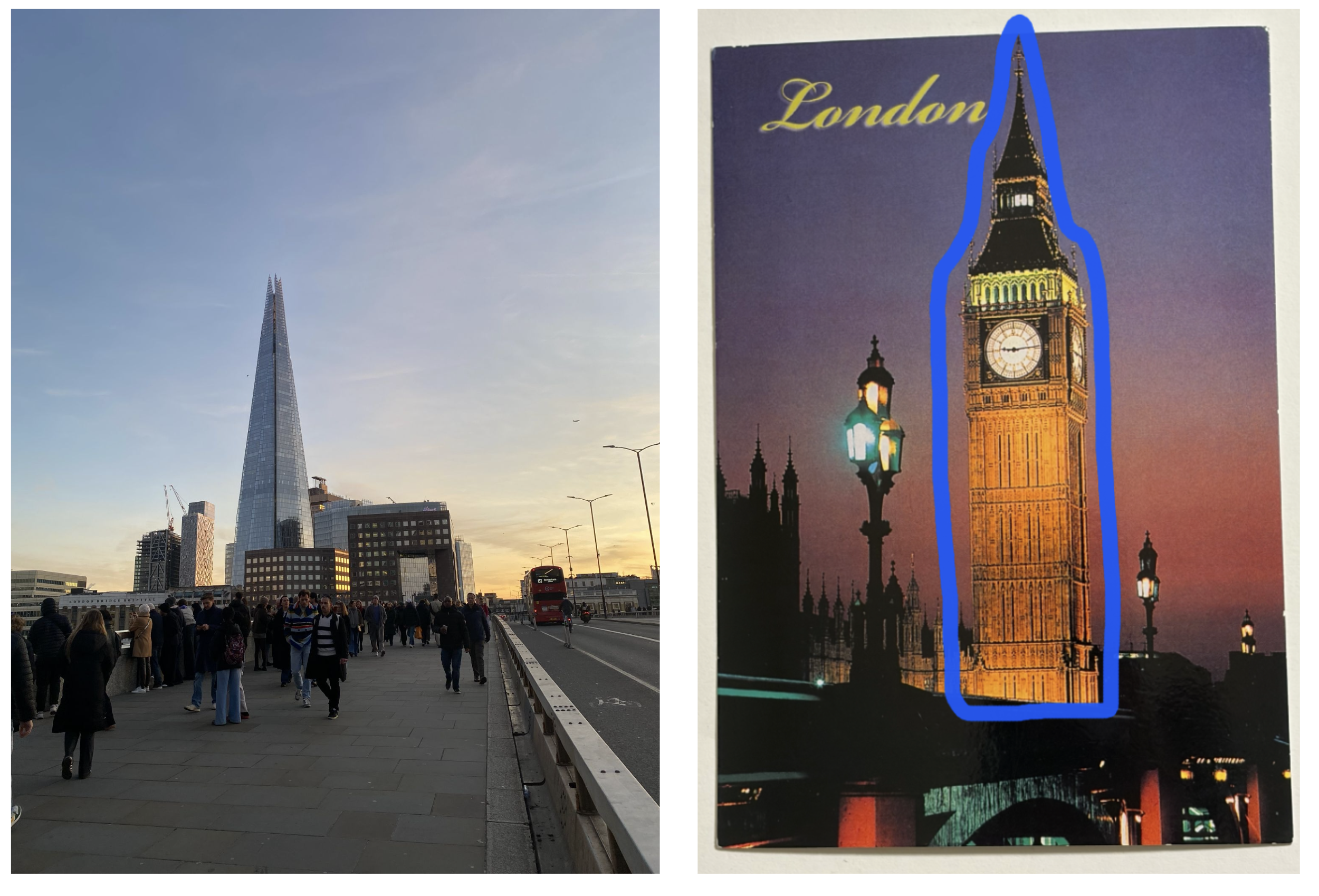
On the left, is a photo I took of The Shard; no surprise, I found no postcards focused on this building; evidently people prefer to look at and purchase a postcard of Big Ben.
2. Use of Red
Another common feature of the postcards was the repeated use of red. Red is one of the most biologically powerful colors humans perceive. In primitive times it was crucial for our brains to quickly recognize red, as it could signal danger – like a lion’s mouth!
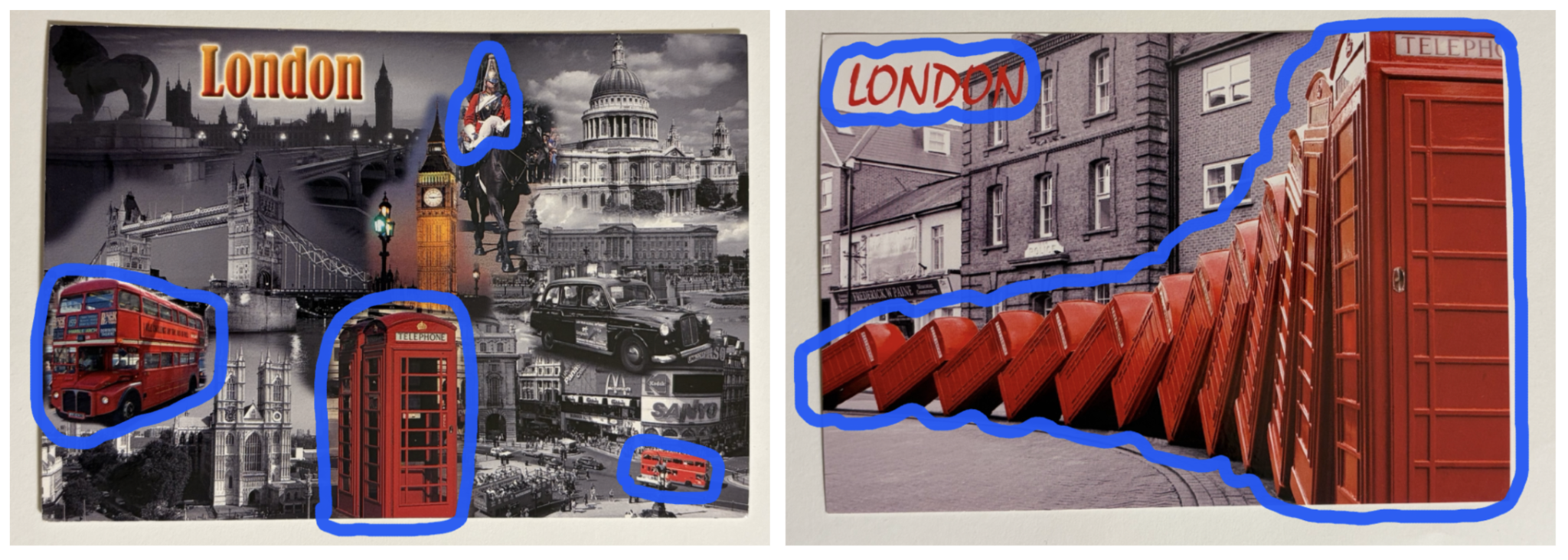
Today red continues to attract our attention and is used universally for stop signs, emergency signals, breaking news banners, and ads everywhere.
3. People and Faces
Another important evolutionary trait we share with early humans is finding and always looking for other people. Faces are among the fastest things that our brain can process and recognize, within fractions of a second.
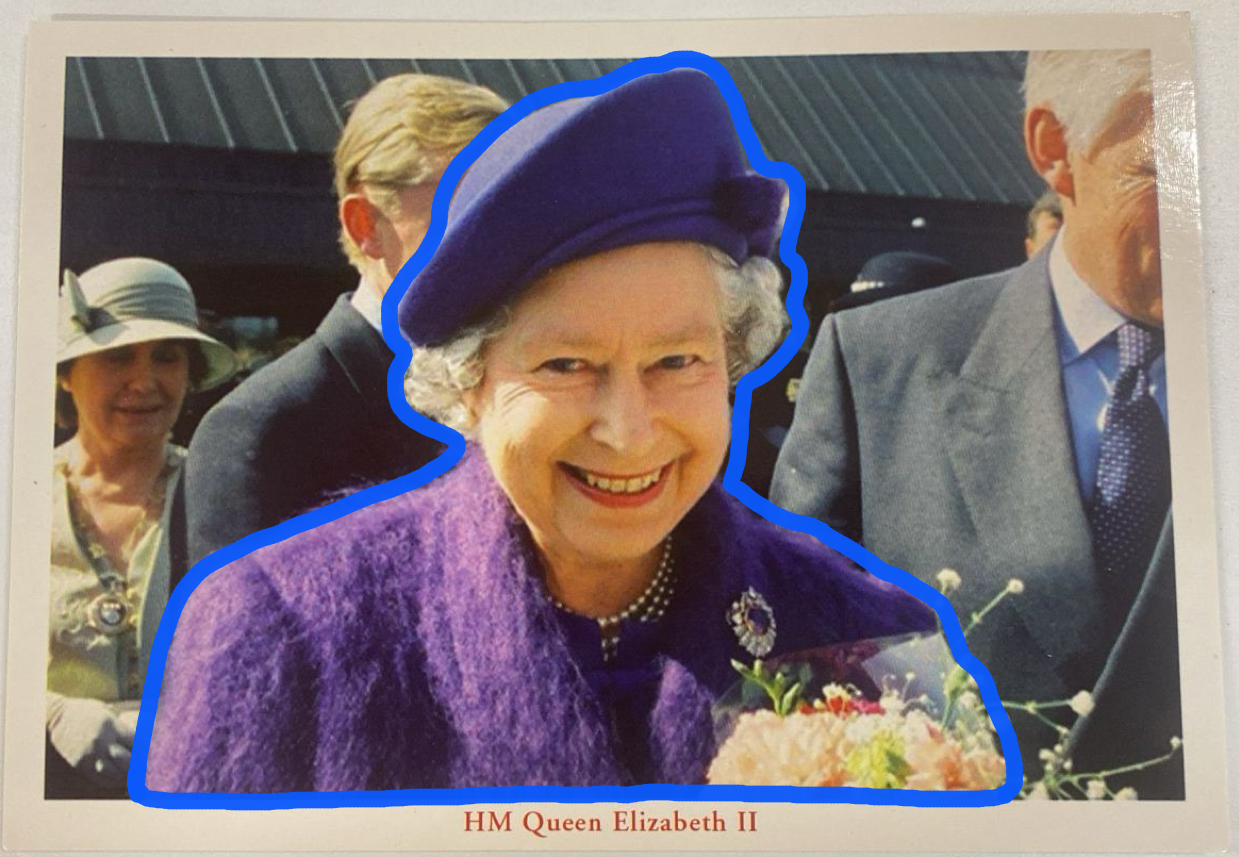
No surprise, then, faces and people are everywhere in logos, billboards and the London postcards.
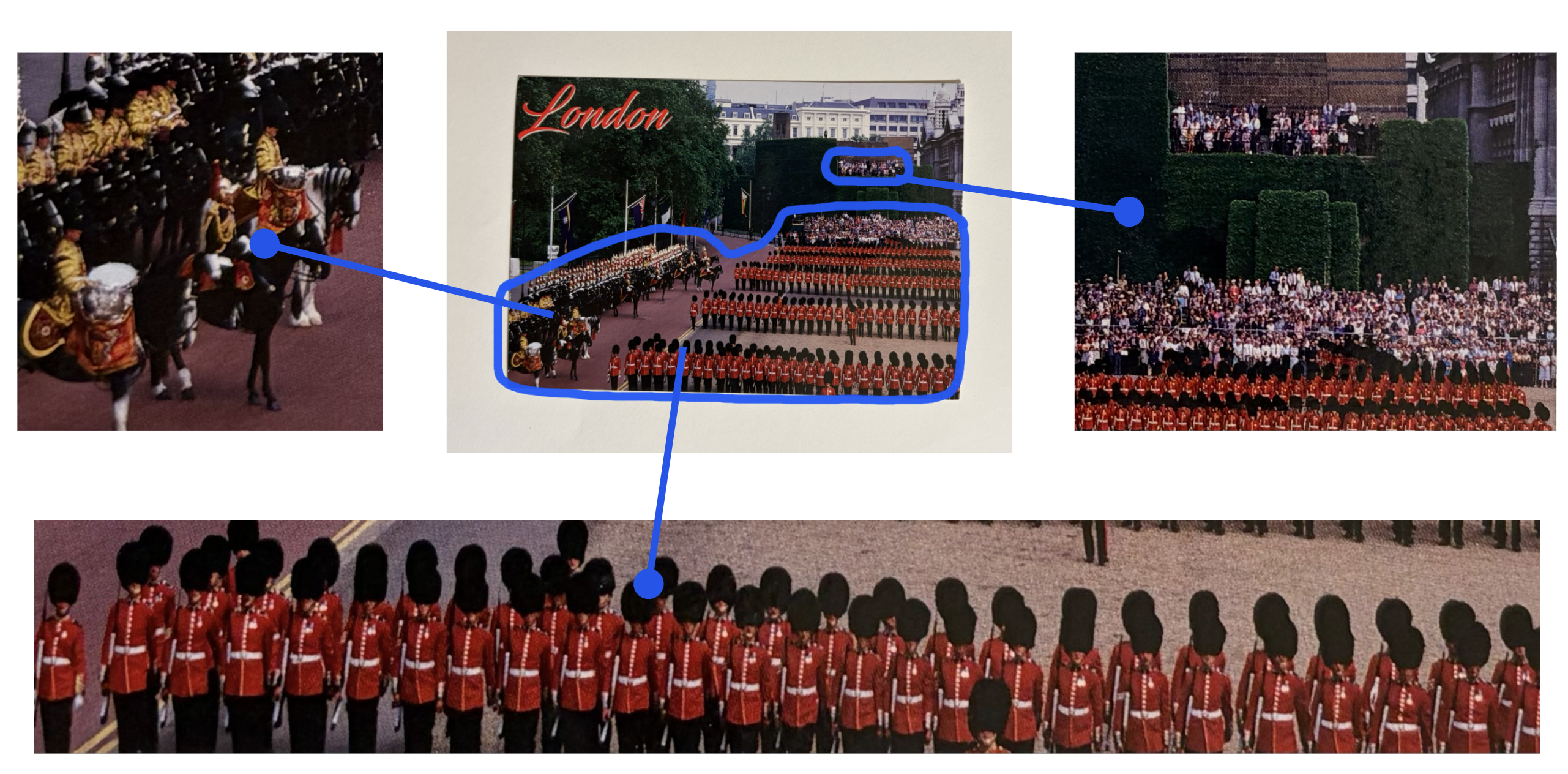
As an architecture student, I wondered how architects might use these techniques to get people to pay more attention to buildings so that we might mindfully experience the urban environment.
Here’s the ten postcards, I picked up without realizing it, take a look:
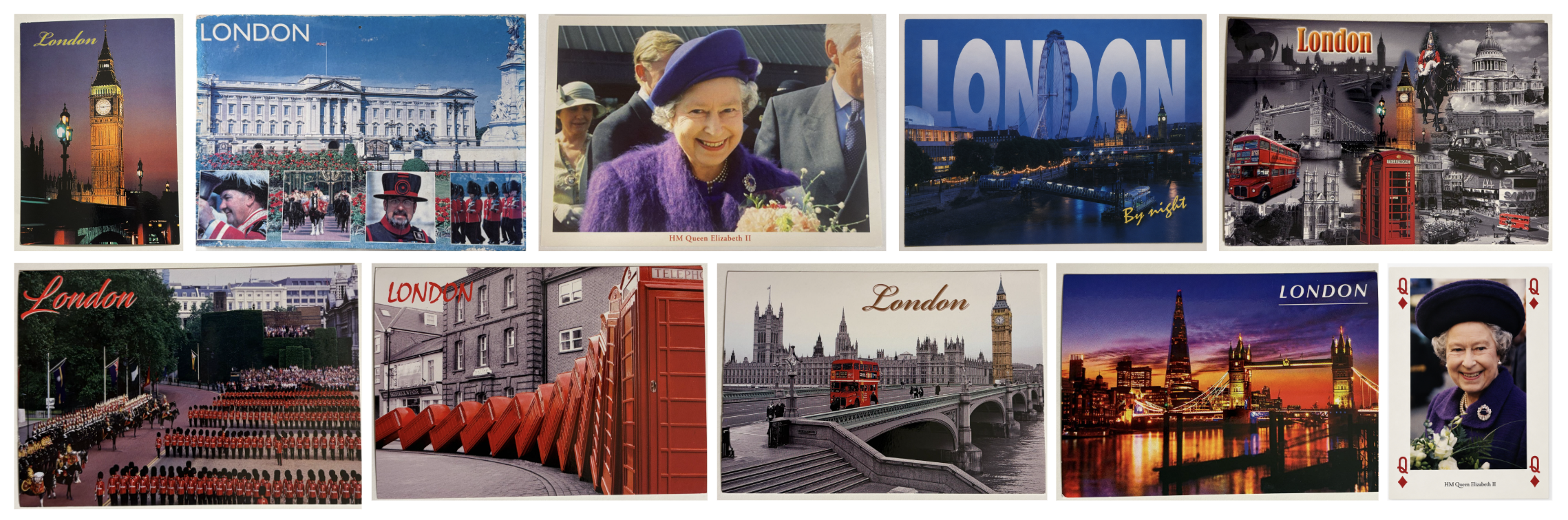
And, note that the only postcard featuring The Shard also shows London Bridge, another iconic traditional London landmark, in front of it, during a sunset where the River Thames is almost red!
Further London postcard analysis is here:
Pietra Leao is a BArch student at the Boston Architectural College (BAC)