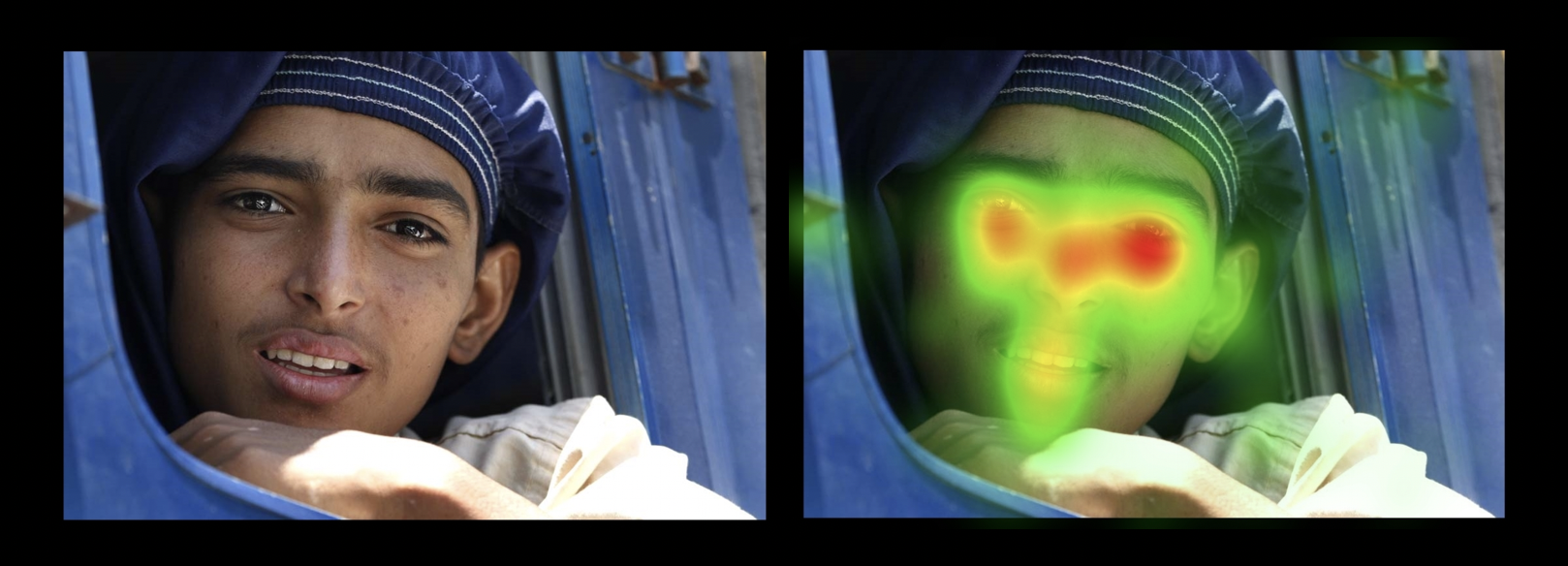
Humans are remarkable creatures, and a great way to appreciate the hidden aspects of our nature is with eye tracking, a biometric tool that measures how our eyes move to take in our surroundings—often without our conscious awareness or control. Eye tracking records what people look at and what they ignore. It’s really an amazing tool to help us understand human behavior and ultimately, better ‘see’ ourselves.
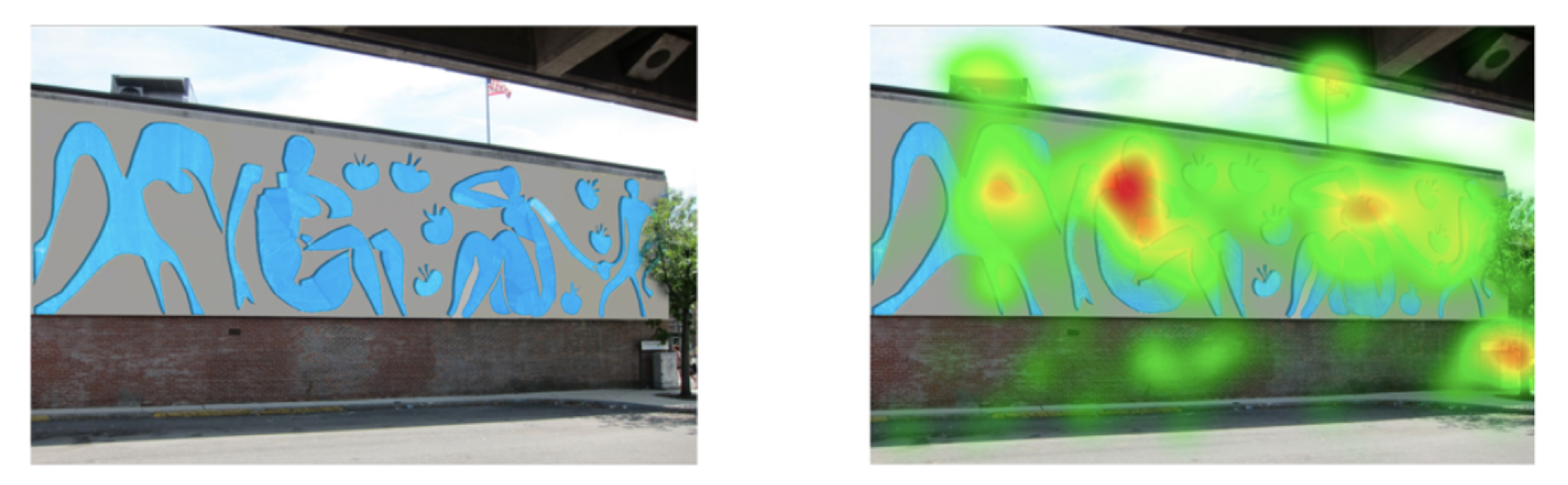
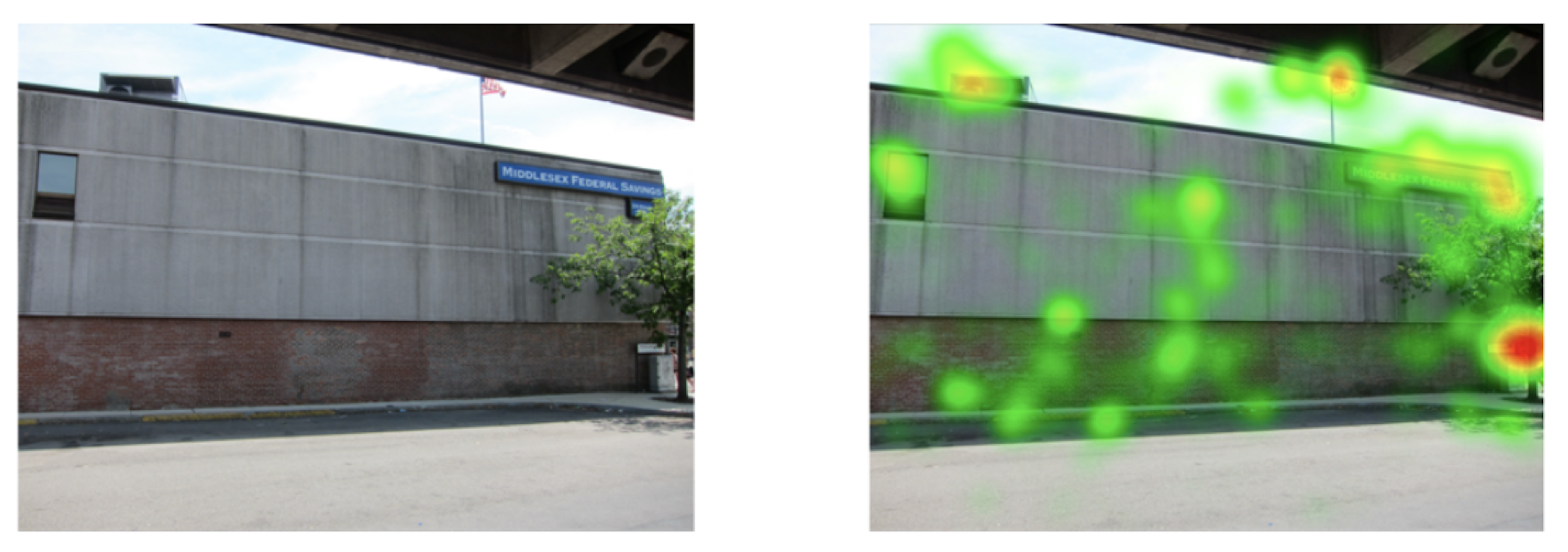
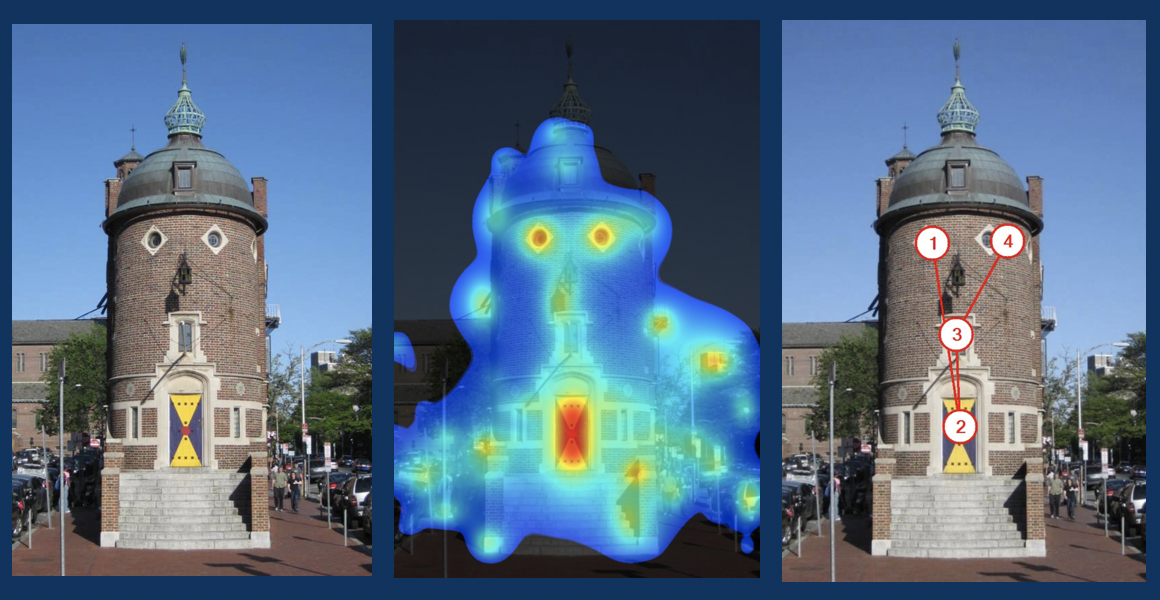
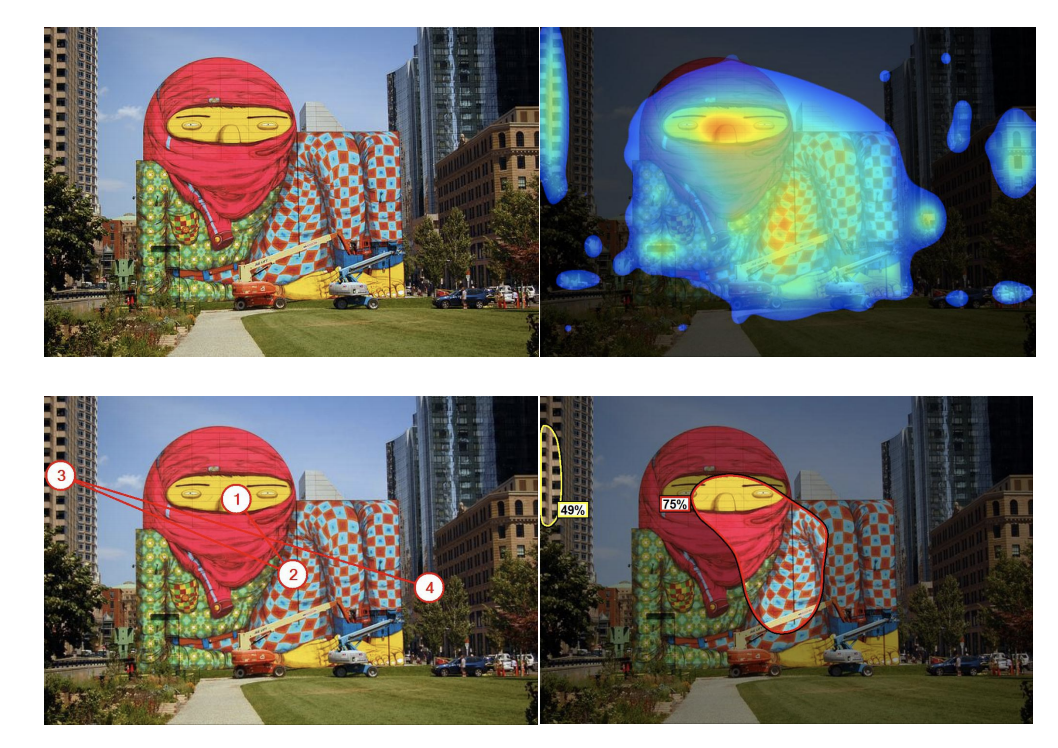
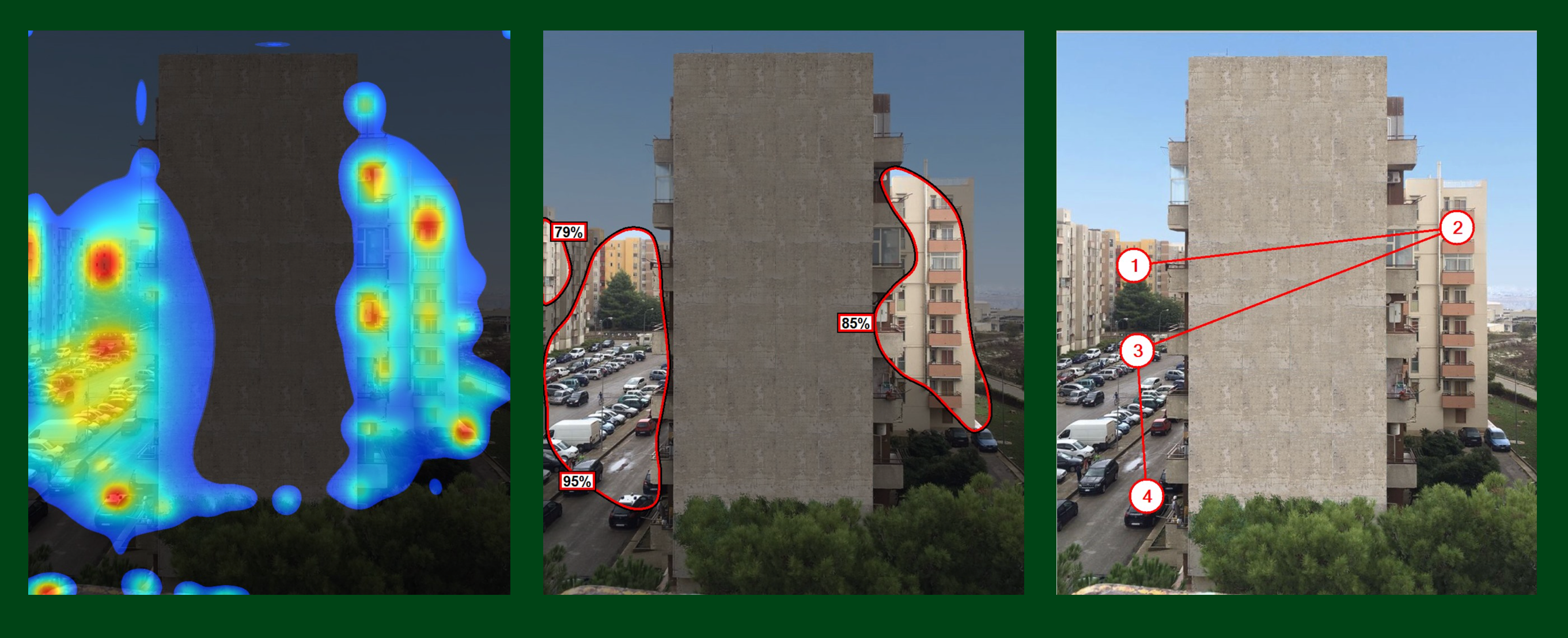
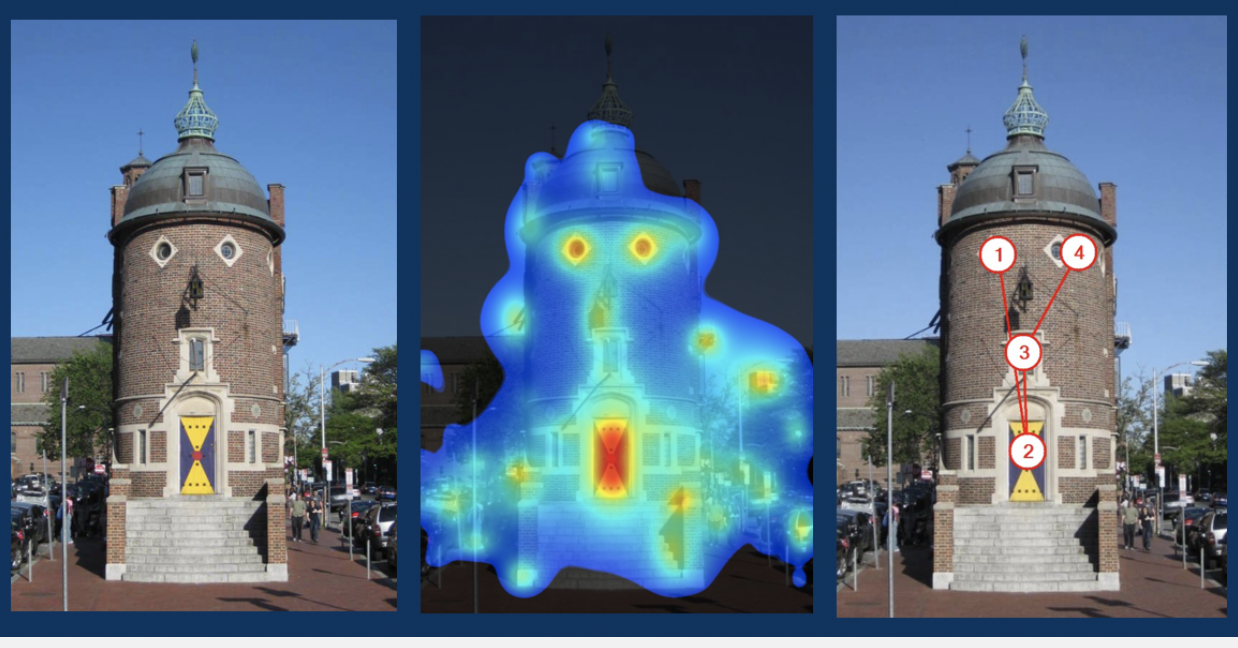
The images above, from our research, show the exit area outside the Davis Square subway station in Somerville, Massachusetts, as it exists today (at bottom) and how it might look with added art (images at top). Eye tracking—aggregating visual data to create ‘heat maps’—glows brightest and reddest where people look most. Here the heat maps show that people barely look at the wall exiting the subway, in a brief, 15-second testing interval, but with the added art they would behave much differently. They would likely approach or even linger in front of the art-filled wall and, significantly, perhaps even focus on the area long enough to create a memory of the moment.
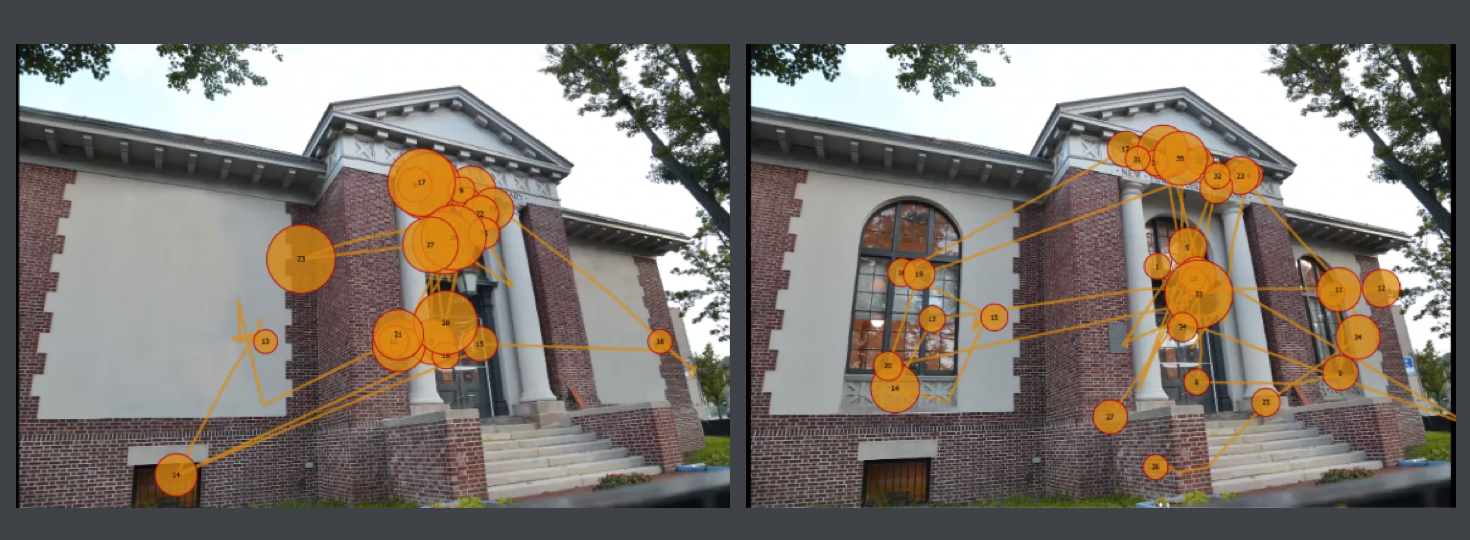
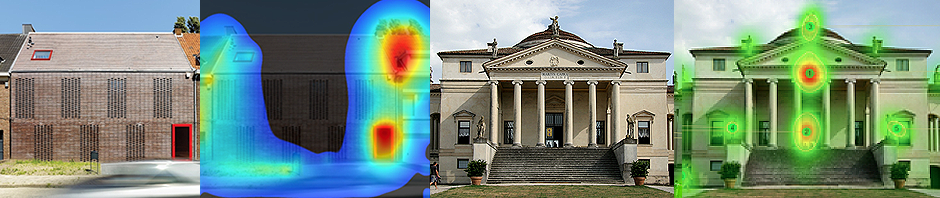
Eye tracking is fantastic at deconstructing how our experience of architecture happens without our awareness, depending on what’s in front of us. In the images above, for instance, we found people implicitly look at this library differently if it has windows. With windows, the eyes take in the façade fairly evenly; without windows (we Photoshopped them away) people ignore most of the building except its door. In these images, the yellow dots, represent fixations, spots where the eyes focus, and the lines between, saccades, tracking the movements between focal points. When asked where they’d rather wait, people always respond in front of the building with windows, and they won’t know why. (But we have an idea; the added fixations the windows provide subliminally make people feel more secure in front of the fenestrated façade.)
How unconscious behaviors direct our experience of the built environment is a theme of the new book, Urban Experience and Design; Contemporary Perspectives on Improving the Public Realm just out this month. Its introductory chapter, featuring the images and research reported here, is followed by 14 original chapters by twenty researchers and academics from the US, Europe and the Middle East. The seminal idea: we can build better places for people worldwide by better understanding the remarkable ways we work. And today’s tech tools, including eye tracking, helping us ‘see’ our animal nature as never before, give us an unprecedented opportunity to use biometrics to improve the public realm.
You can read the first chapter of the new book here; more about revealing research reported in succeeding chapters to follow in future posts.

More on History of Eye Tracking:
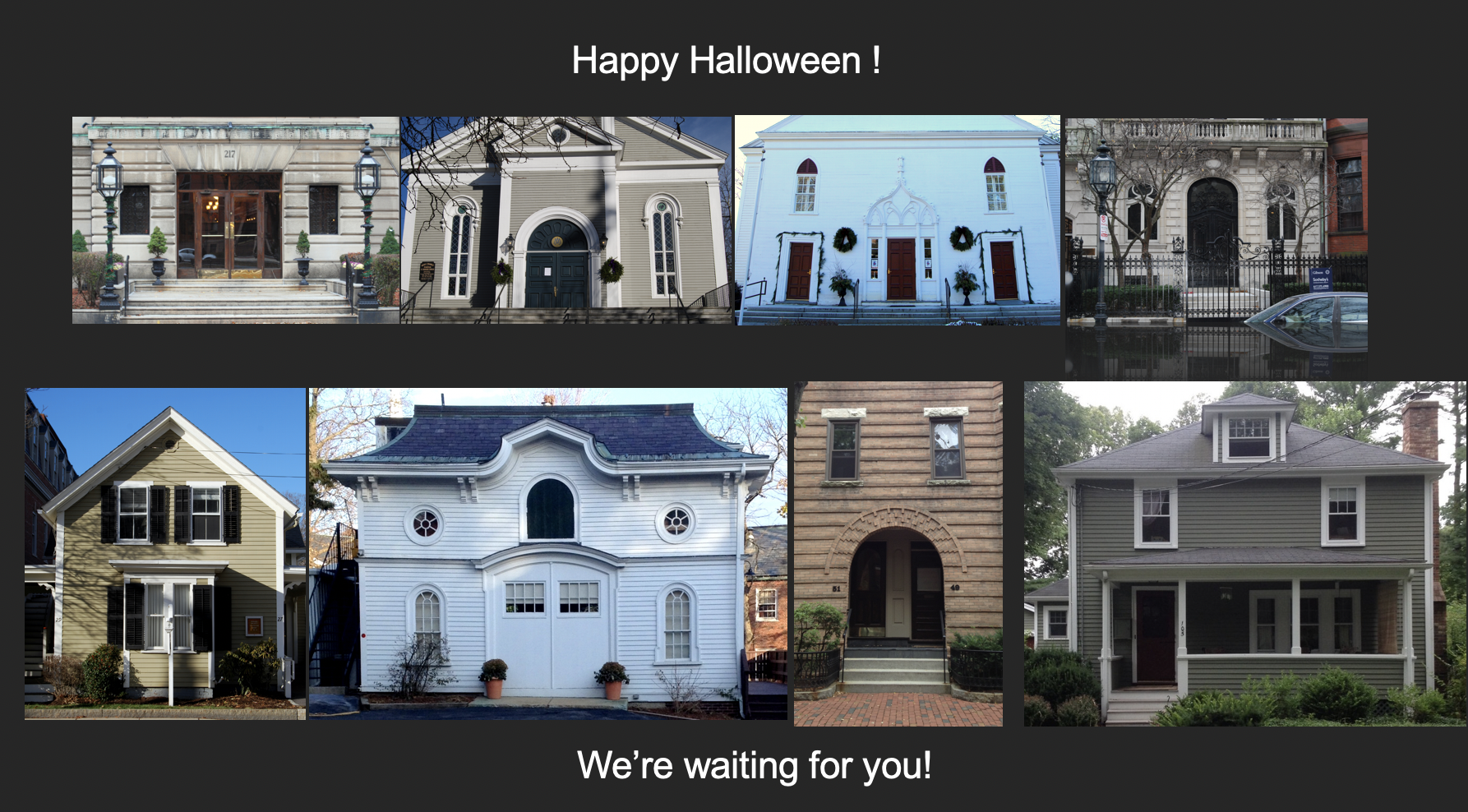
 Do you see faces in these gingerbread cottages in Oak Bluffs, Martha’s Vineyard, a popular summer retreat on this island ten miles off the coast of Massachusetts? Does it seem like they are looking at you? Built as part of a Methodist campground in the 1860s, the houses replaced the pitched tents early congregants first set up. Today over 300 of them remain on the
  And who wouldn’t find them captivating? “The homes may be some of the most photographed in the entire country,” a 2016 article in
 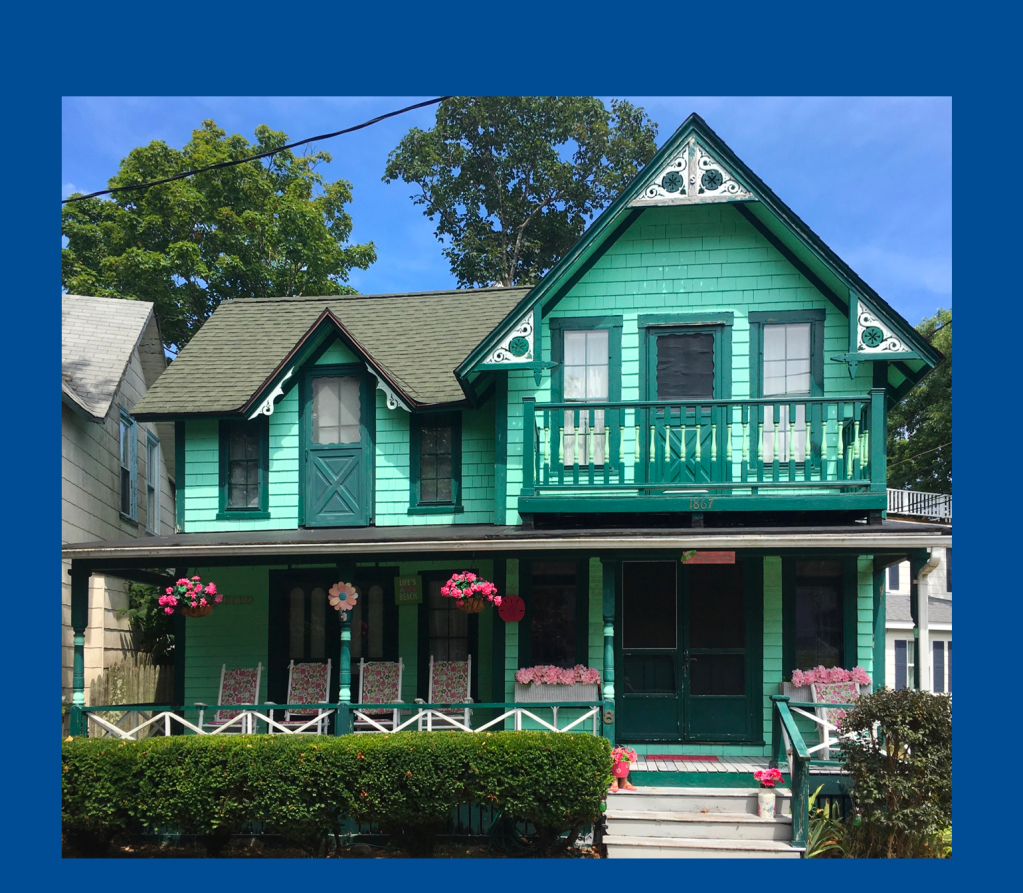 Pareidolia, the term for the very human phenomenon of seeing faces in everyday objects, is at work here. This visual illusion is an artifact of our evolution and secures our survival, explains a recent article in

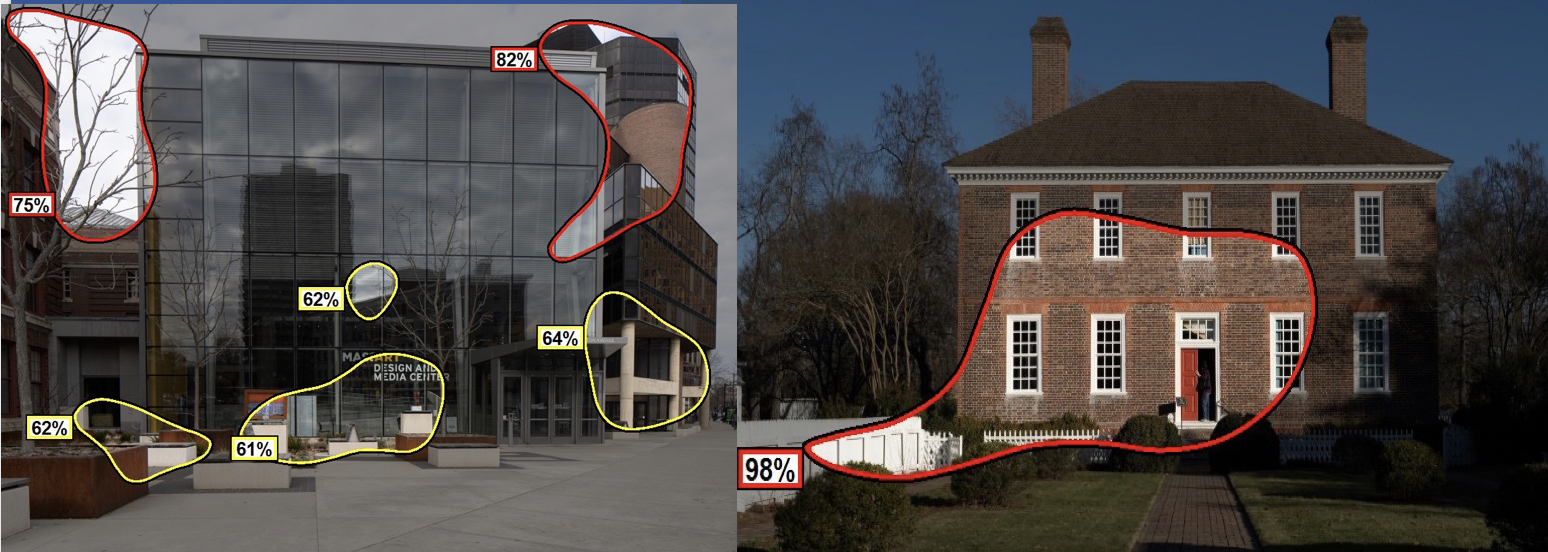
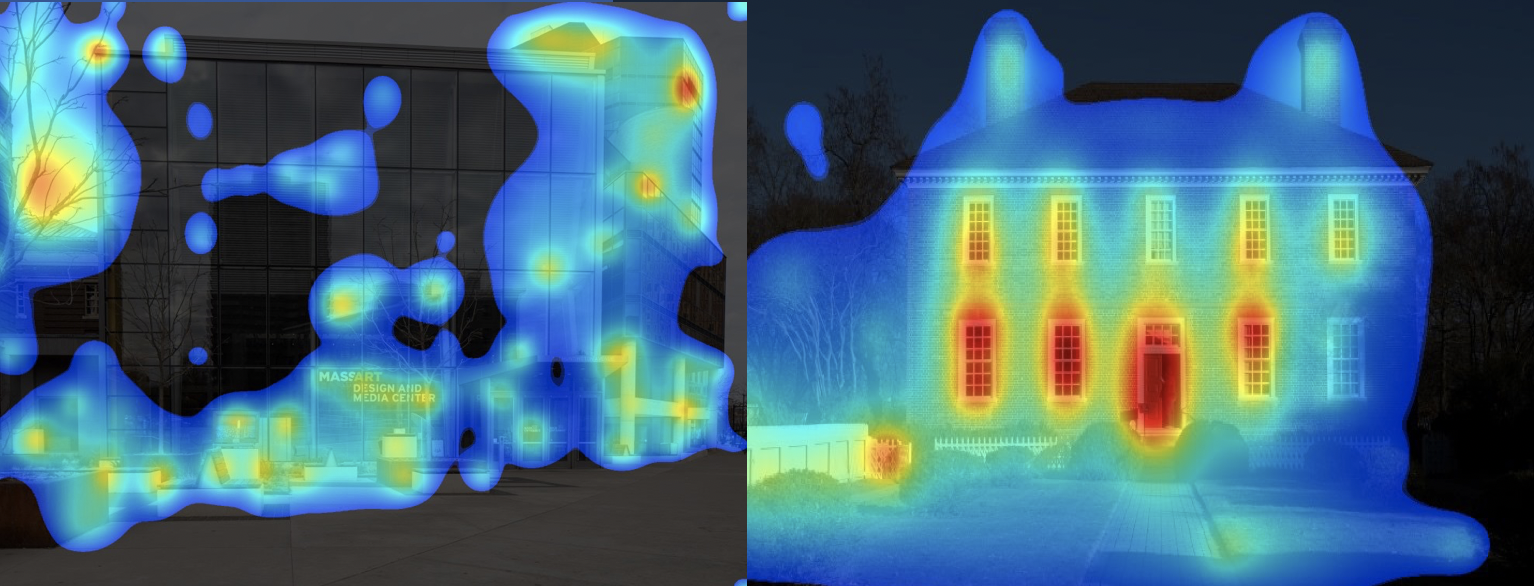 The study’s heat maps above, aggregating predicted viewing data in color, glow reddest where people look most, and fade to dark grey and black in areas ignored, again showing how the brain directs views away from most of the glass building, and does the opposite with the brick one. Note how none of the historic house shows up black, and its door and many of its windows glow red, suggesting they’ll implicitly draw the eye. Even the house chimneys appear bright blue, and will draw attention unconsciously in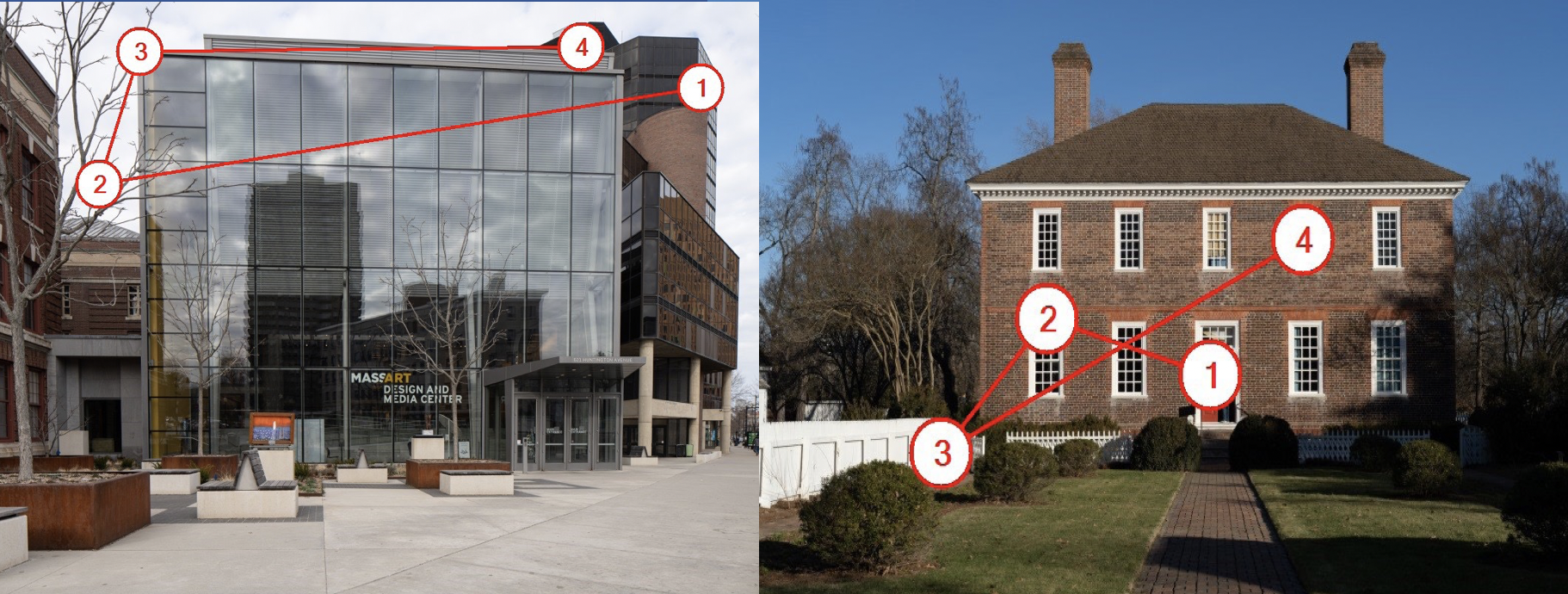
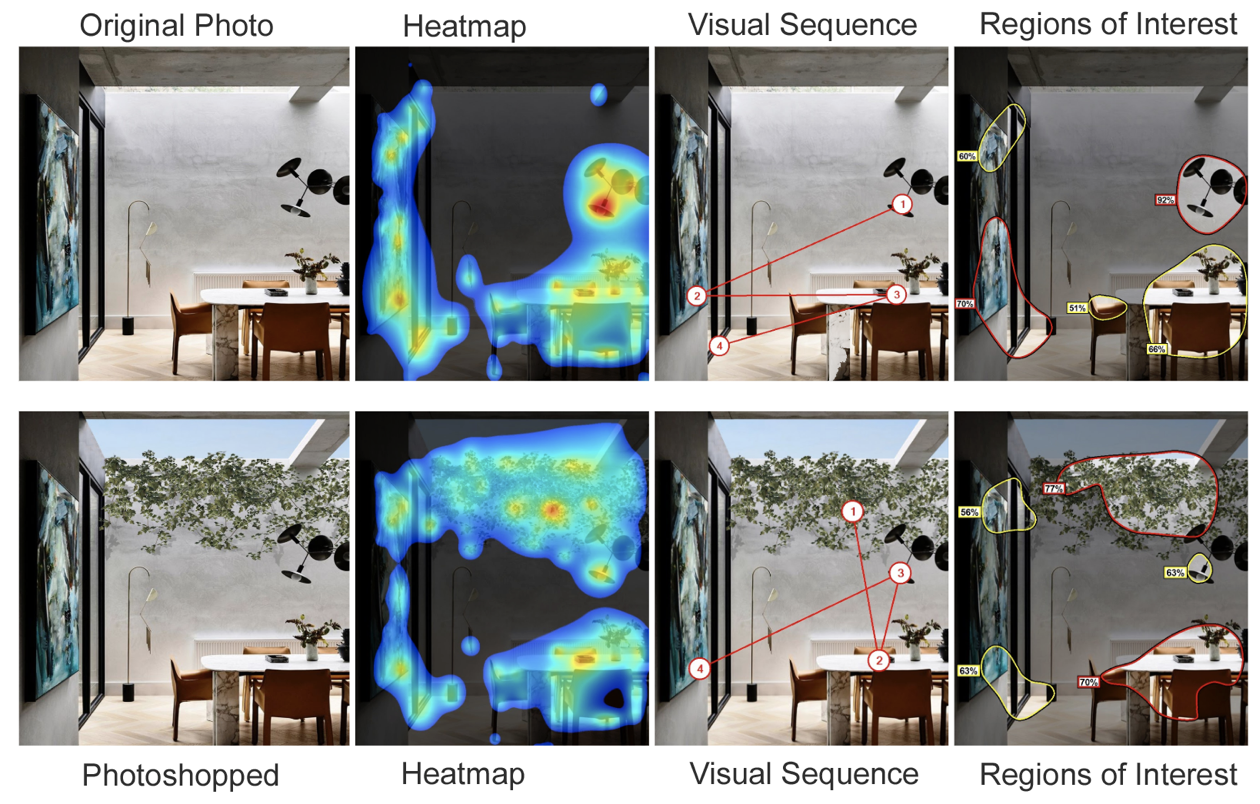
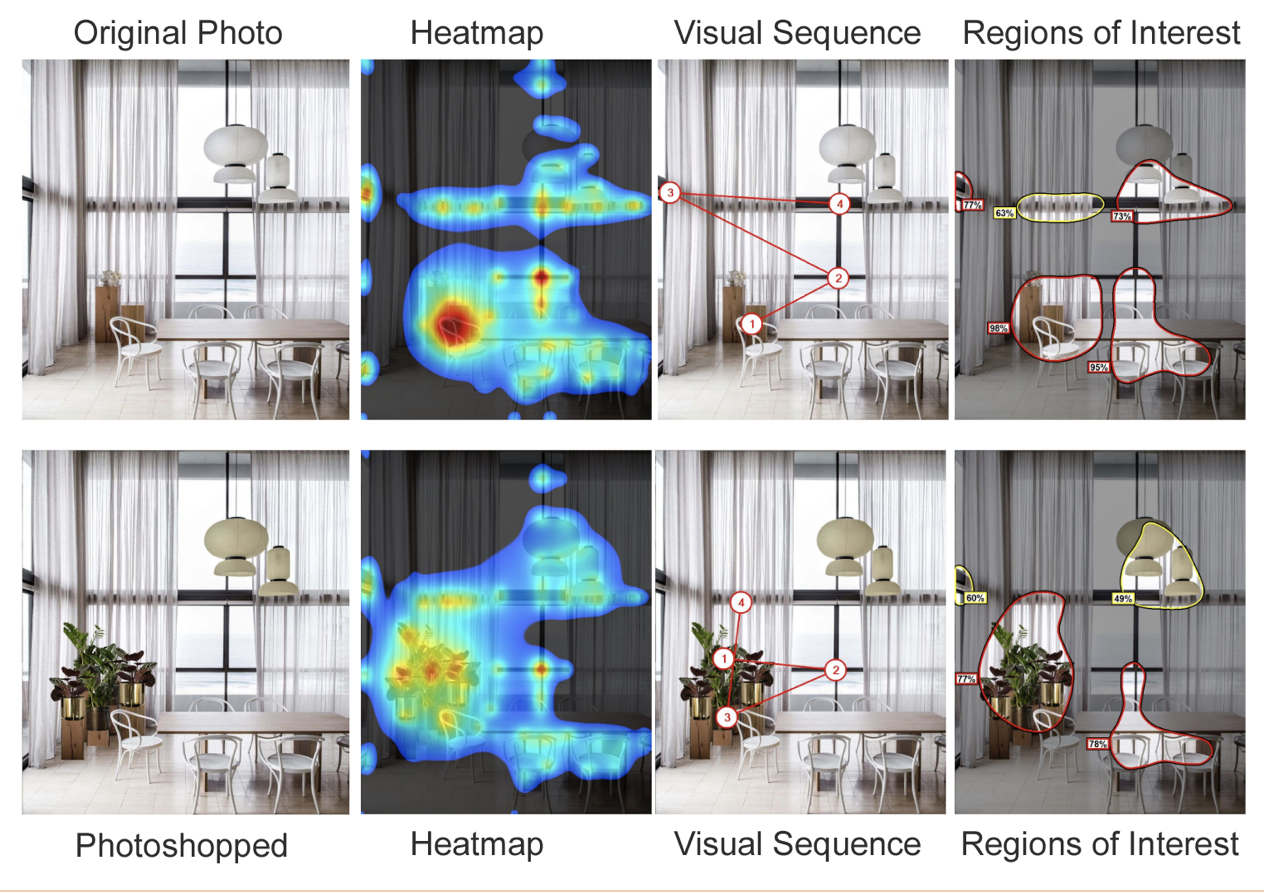
 Next this:
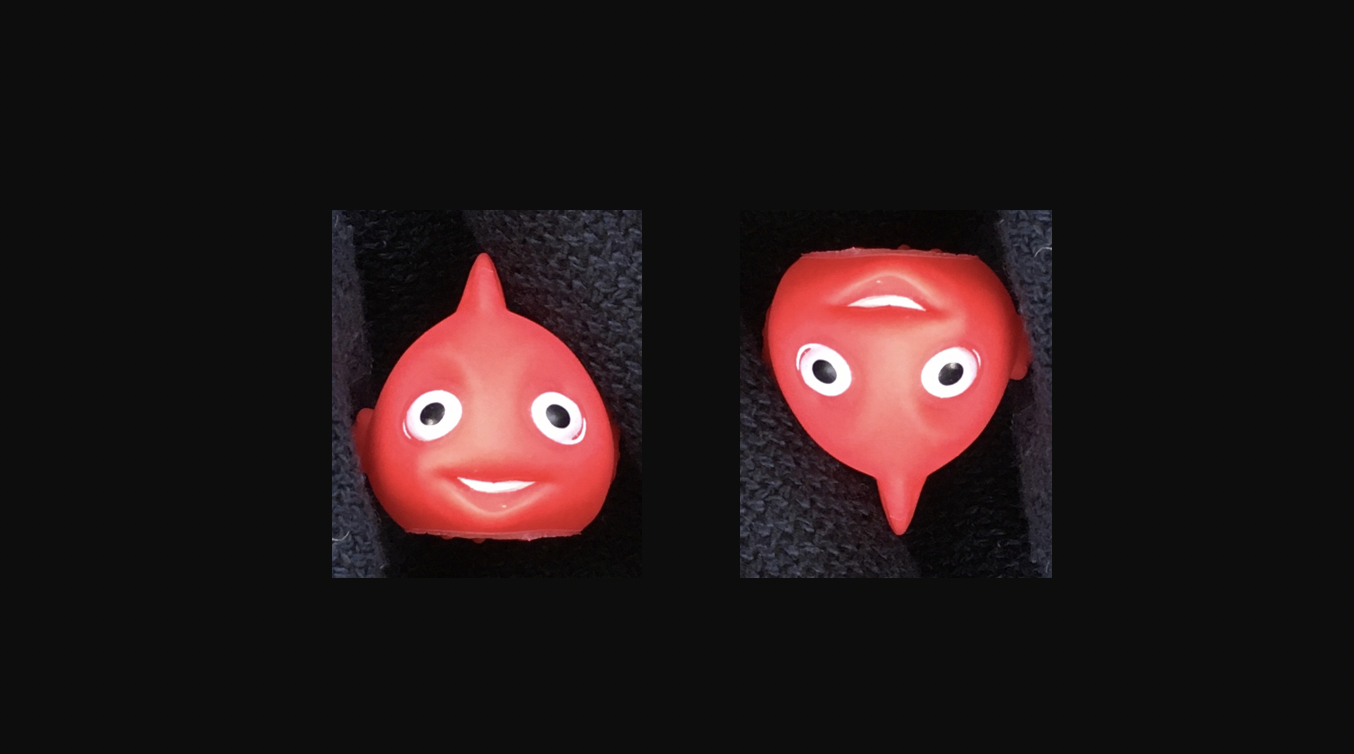
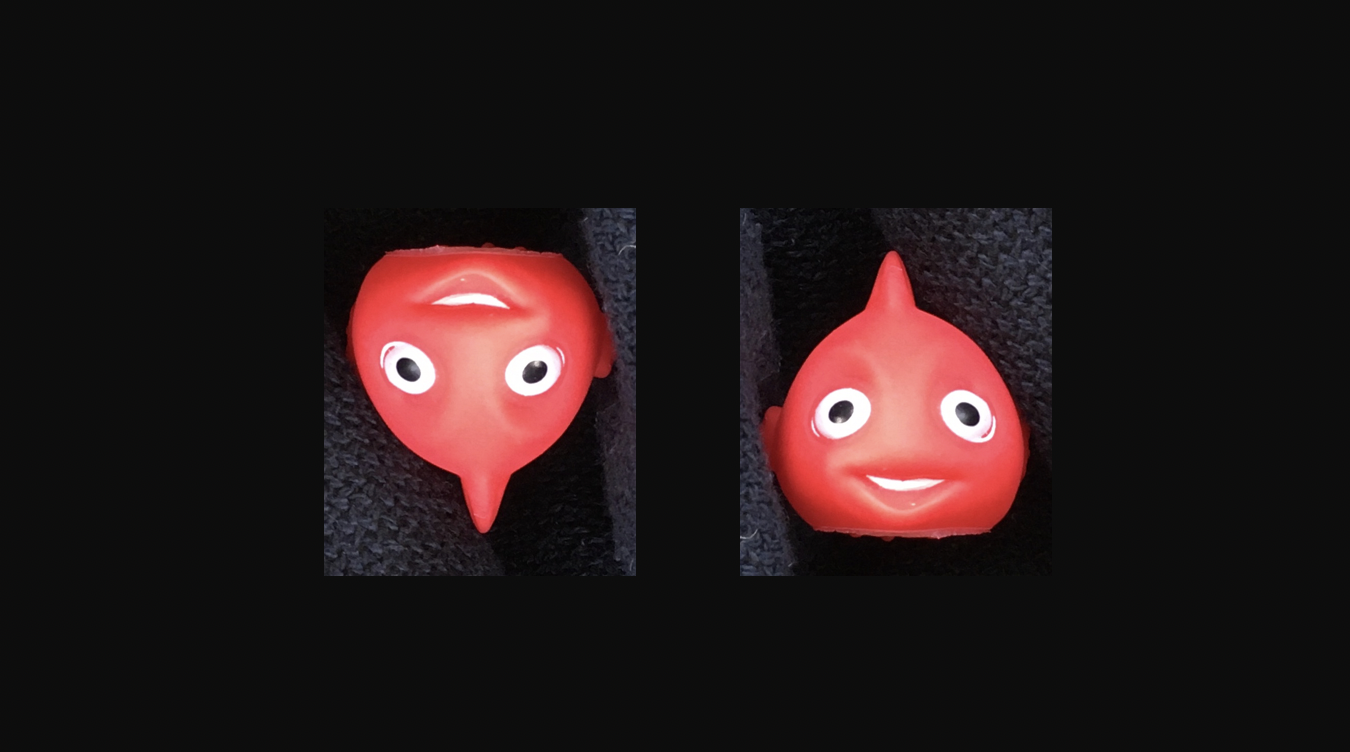 And these:
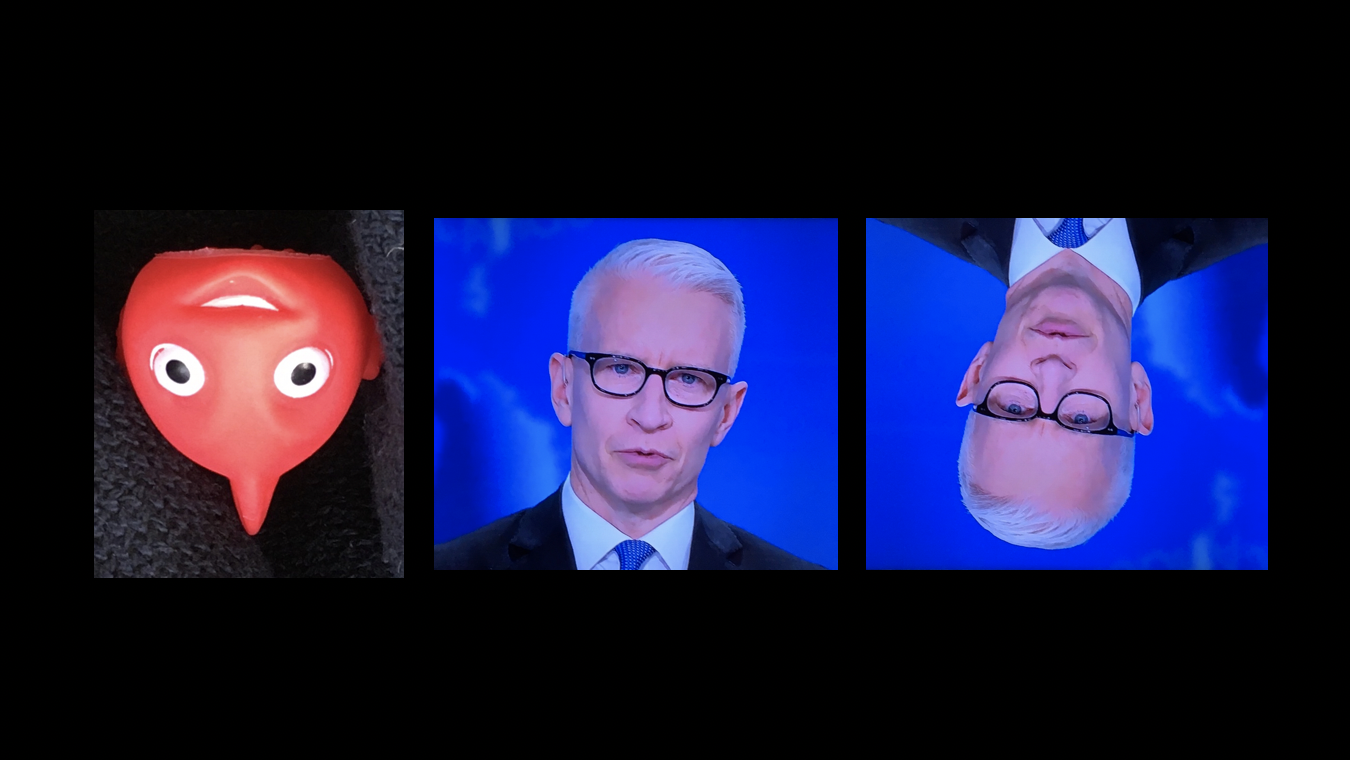
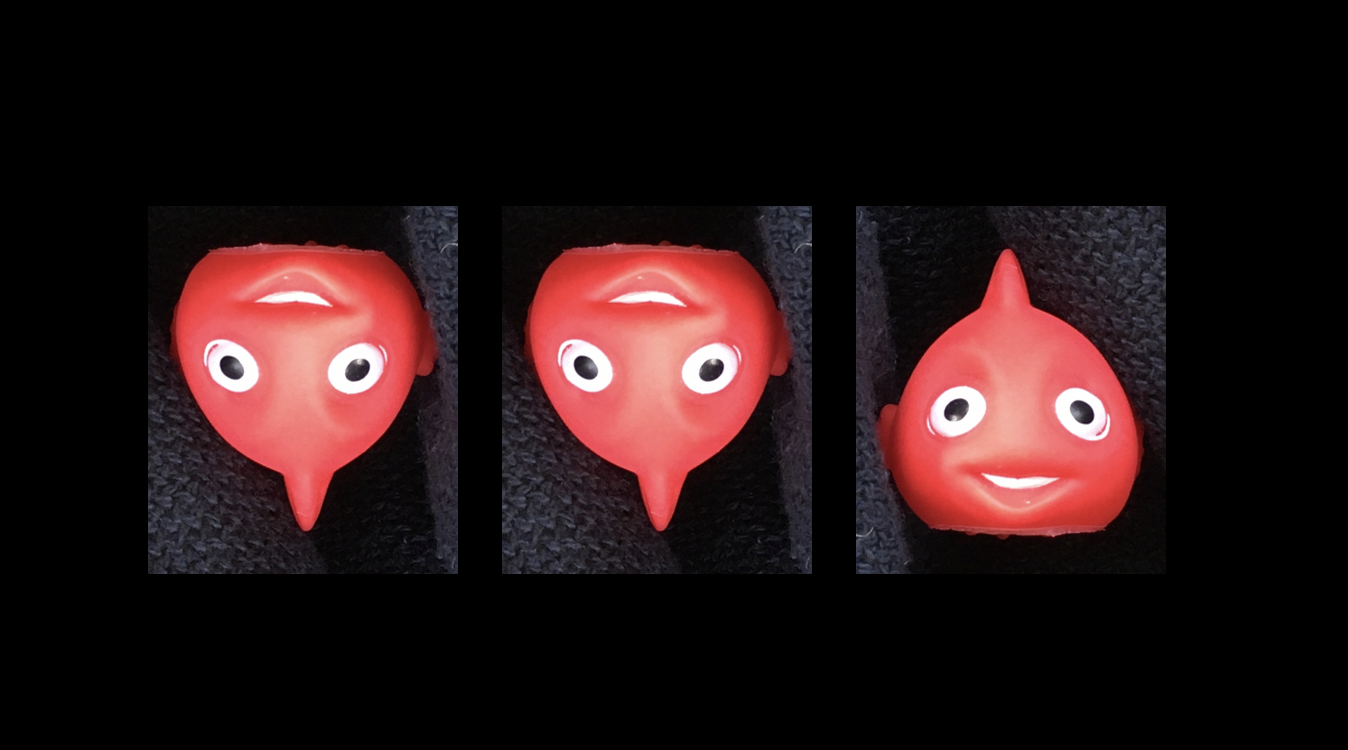 Now, note what happens when you add a human face, someone famous, like CNN news anchor, Anderson Cooper:
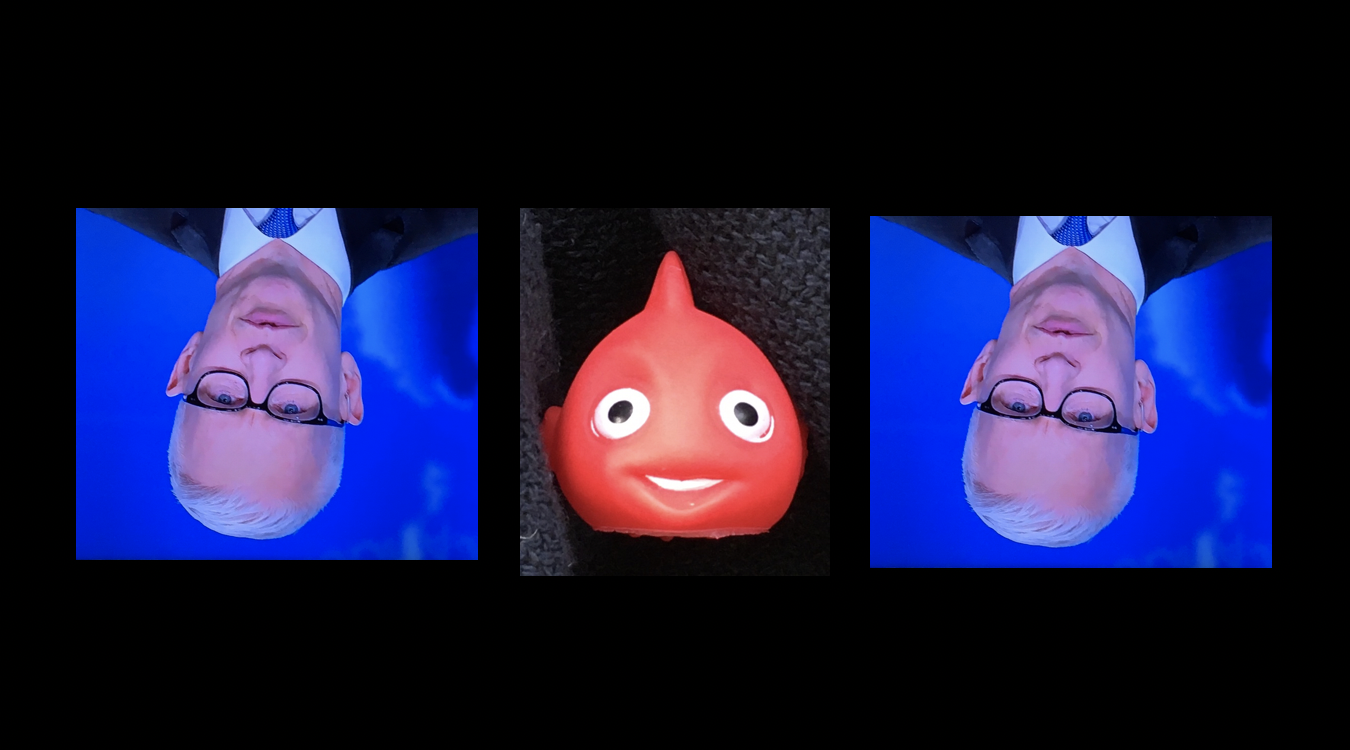 Or here:
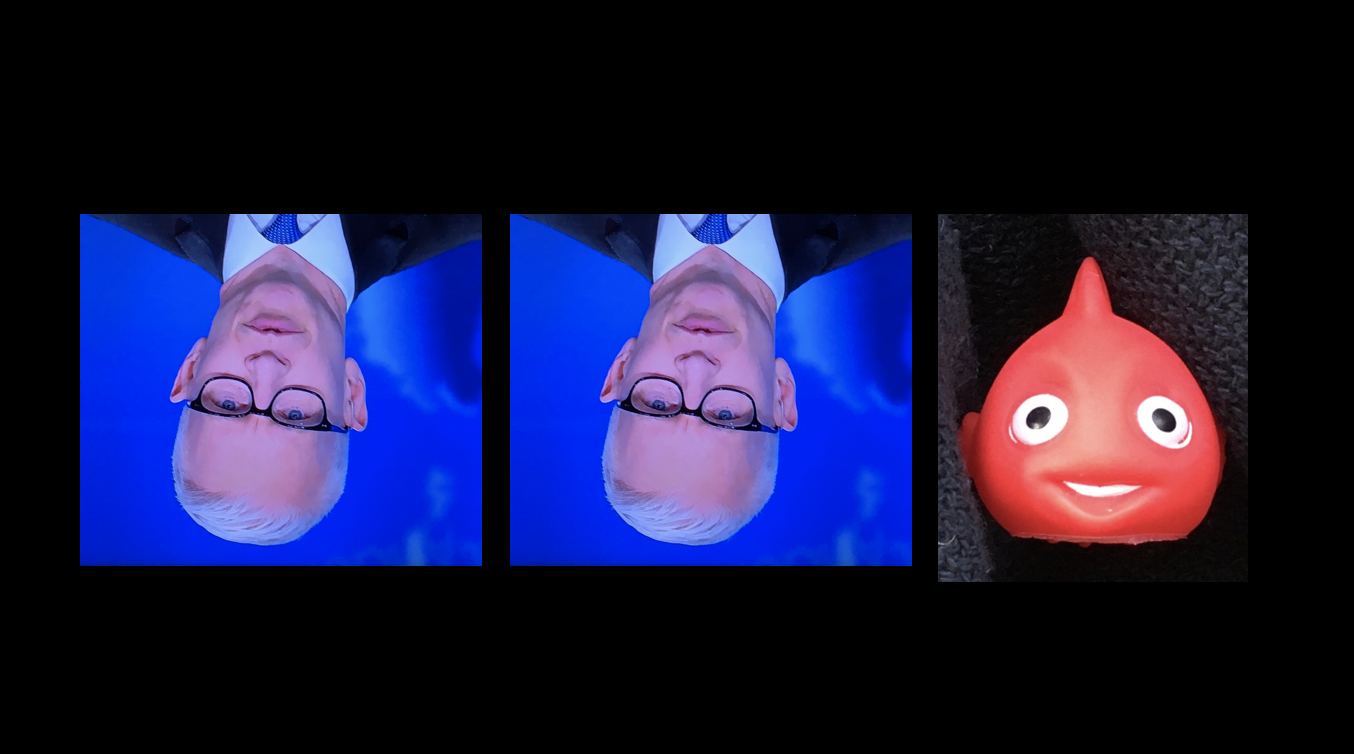 Or here:
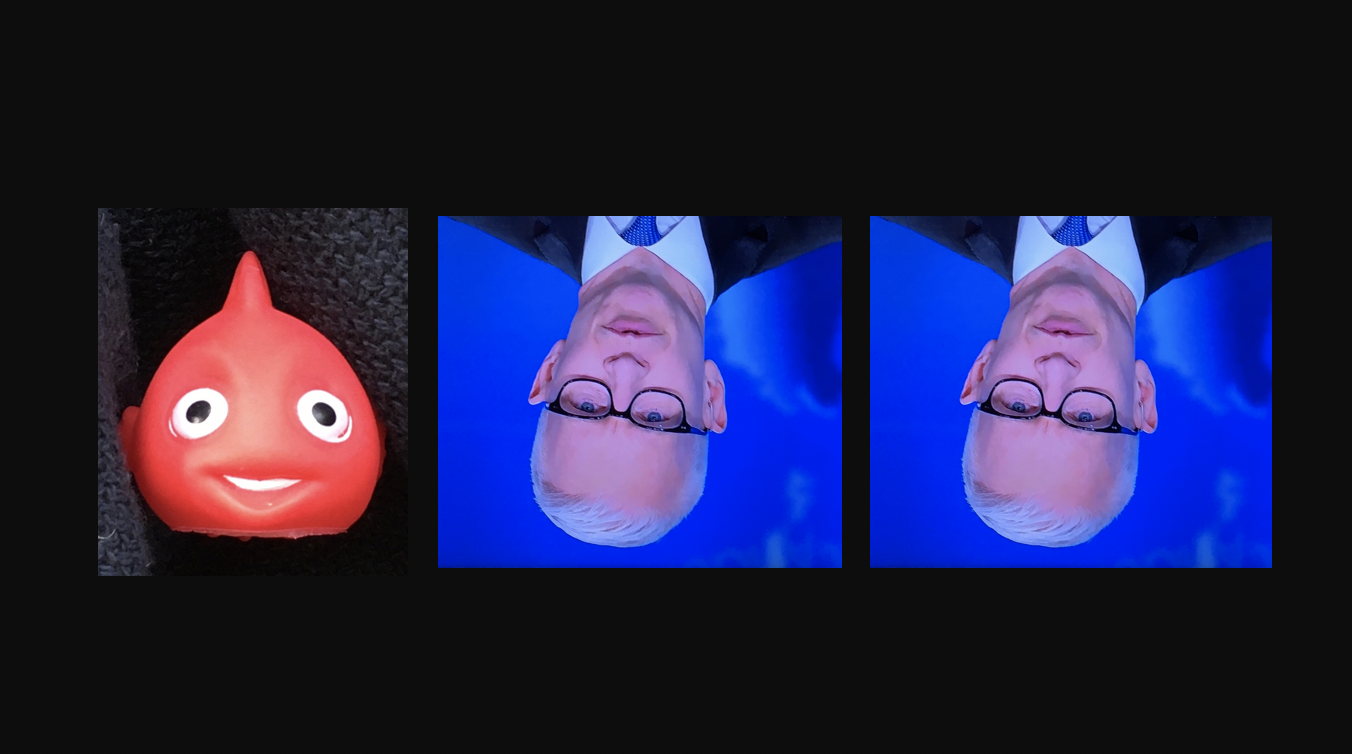 Even a well-known newsman like Cooper can’t get your attention like a red plastic fish, if the guy’s upside down. The brain’s not wired to let that happen. We’re a social species built for relationships, so much so that the brain makes it a priority to immediately focus and engage with any pattern arranged like a face—when it’s right side up.
 Why should architects and designers care? We can be as creative as we like, of course, but will always be most successful once we realize nature’s bias—what she wants us to see and incorporate—