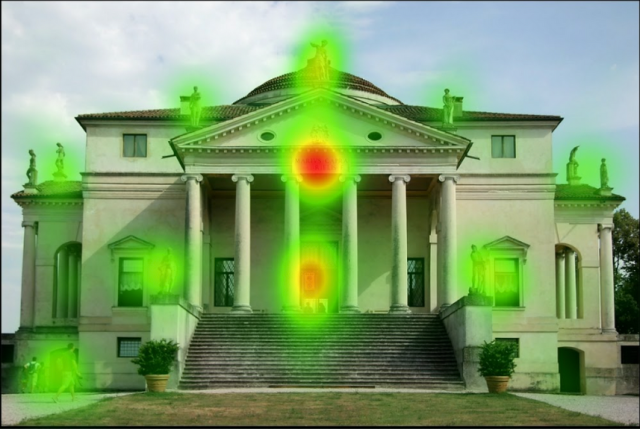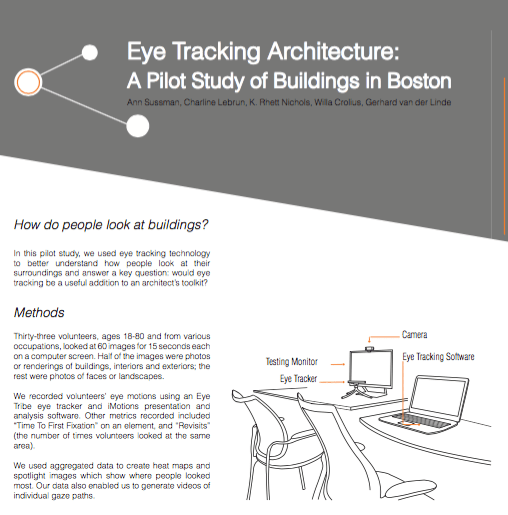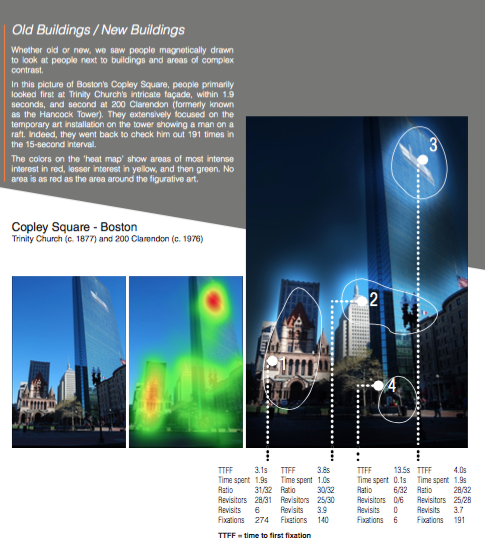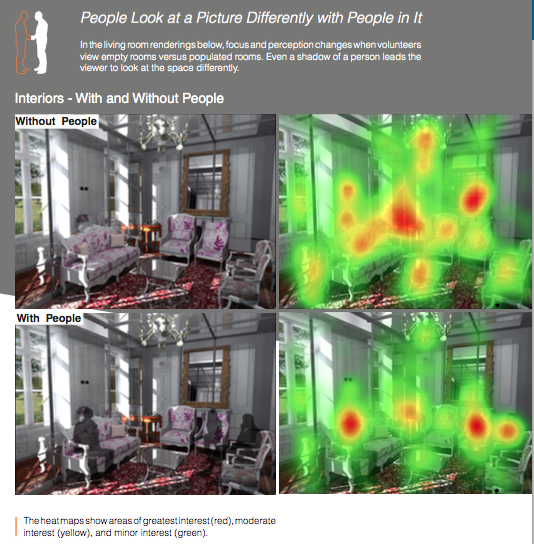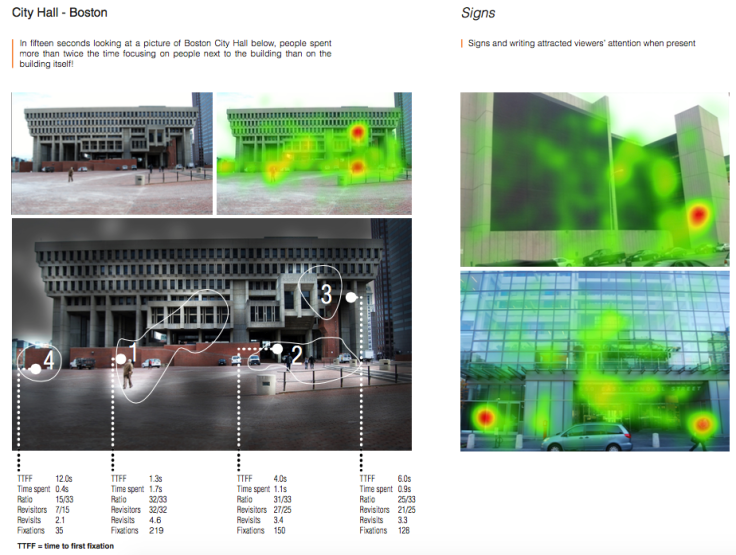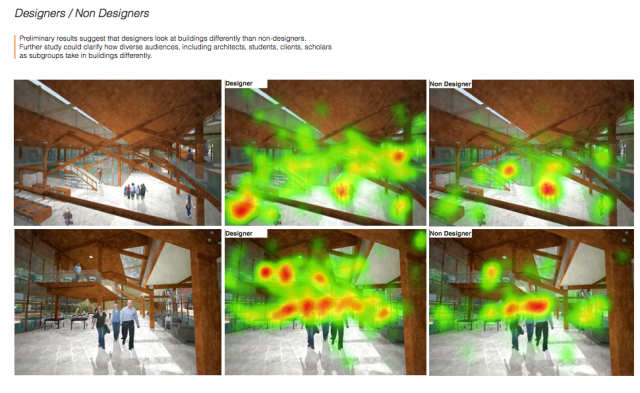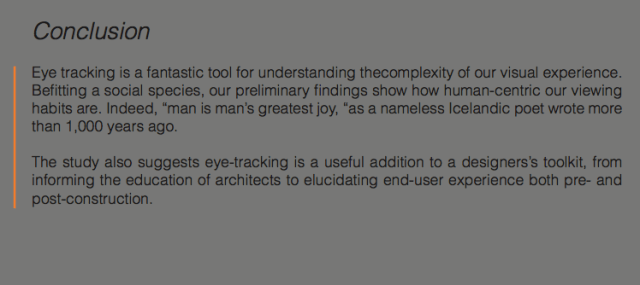
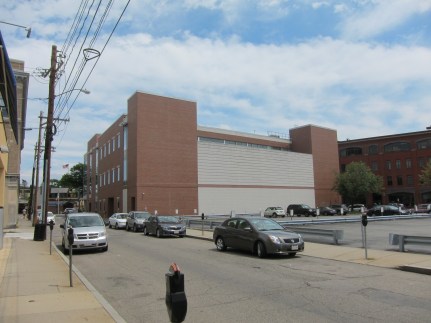
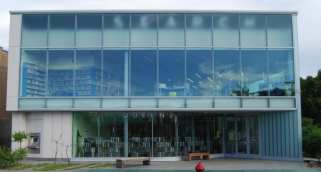
What happens when you eye track architecture? The City of Somerville provided us with some views of Davis Square to find out. Here’s one picture of an existing building there surrounded by parking.
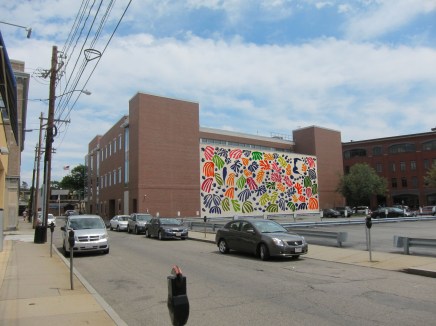
And here’s the same image we photoshopped with a colorful Matisse-like print:
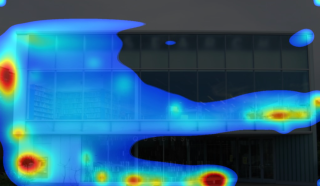
We eye tracked both of these images in a pilot-study in January at GeneticsofDesign.com to better understand how people take-in their surroundings. We learned quickly that people ignore blank facades and immediately focus on areas of high contast and detail. See heat map below, which glows reddest where people looked most, often without conscious control – they simply don’t realize what their brains are making them do: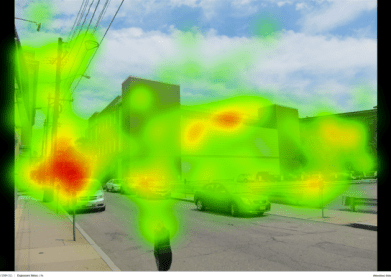
Notice how in image with the blank facade, people scan around the parking lot a lot and also put their energy to checking out the cars and buidings down the side street. With the Matisse-image affixed to the building, however, everything shifts and people experience the street in a completely different fashion – less randomly, spending far less time looking down the side street.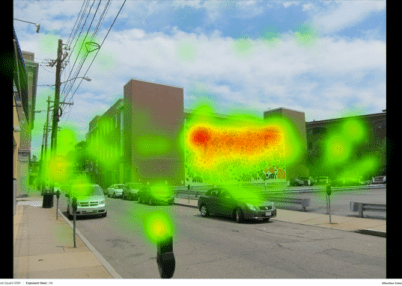
Here are the heat map images side by side. We asked two groups of university students (one at Tufts, the other at Northeastern) last month which place they’d prefer to spend time; where would they feel safer hanging out ? Hands down both sets of students voted to stand in front of the mural than the building with the blank facade. In each instance, the students made the decision quickly, unanimously, in under a minute.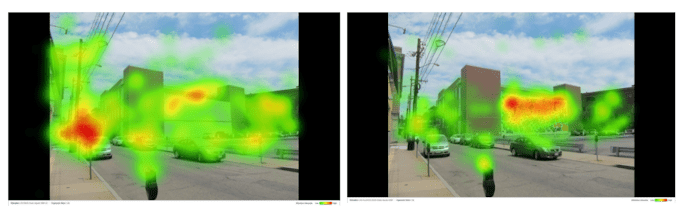 How did this happen? “Fixations drive exploration,” explains a cognitive scientist we know. The eye is hardwired to focus on specific objects in the environment; if it finds none the brain goes on alert – until it finds something to attach to. The mural provides a place for instant ‘pre-attentive’ (or unconscious) eye attachment, it fits what our brain wants to see and needs to see to emotionally regulate and move forward. The students immediately picked up on it; so did the 24 people in our pilot-study. It all makes sense, of couse, once you remember that as an evolutionary artifact, we see the world Mother Nature wants us to see in the way she wants us to see it – and she is no libertarian, but a control freak.
—-
Thanks to Janice M. Ward, Alex Purdy, for their exemplary teamwork running this study; and to the iMotions team for their help and game-changing software, as well as the City of Somerville for providing us with the sunny urban images in the middle of winter.




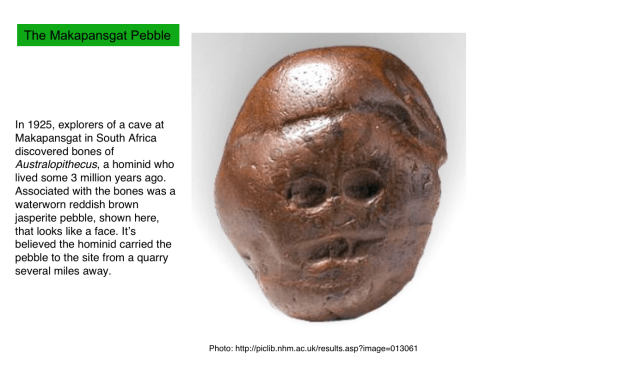 Uncovered in South Africa almost a century ago, and now in a museum there, the pebble is considered – at 3 million years old – the world’s oldest example of ‘symbolic thinking’, the ability to think in images and symbols which children develop in pre-school. This is the trait needed to create art and language, critical for the development of human society.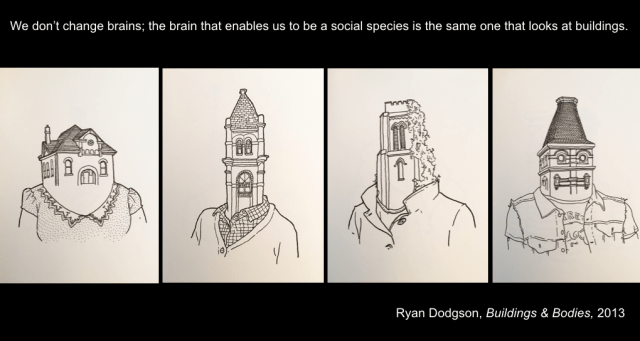
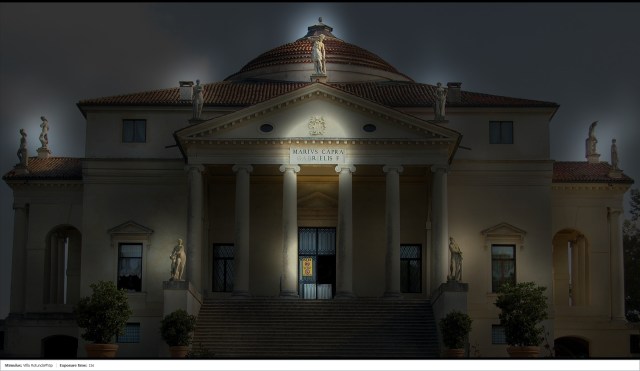
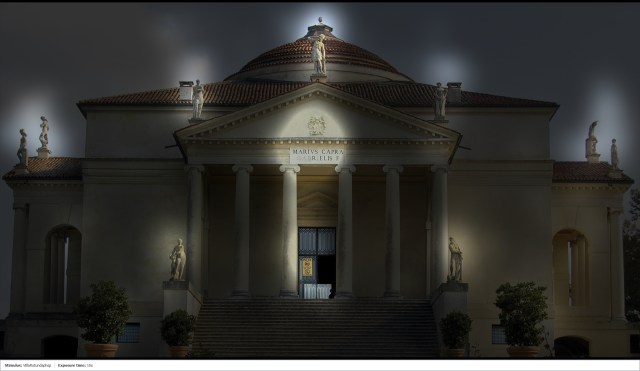
 Interested in ‘seeing’ your brain subconsiously take in the buildings around you? Then come to
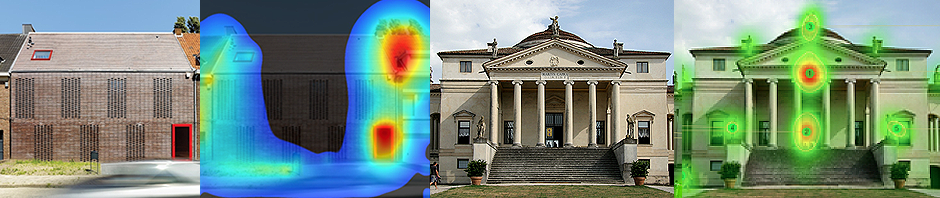
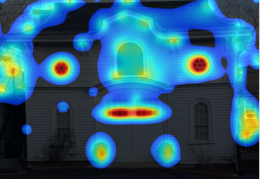
  Yes, we’ll demonstrate how your brain is not oriented to take in blank facades; indeed, how it barely lets you look at them and we’ll talk about why. (It’s not critical for survival the way areas of high contrast are.) We’ll observe the same phenomenon looking at a photo of the Dunker Church at the Antietam Battlefield at left below, and with windows removed, at right. This is a ‘shadow’ image, designed to distill where an aggregrate group of testers look most when given 15 seconds to take in a picture. Notice how they barely ‘fixate’ on the building at all once windows are out?
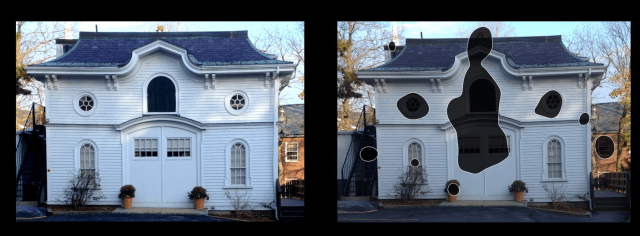
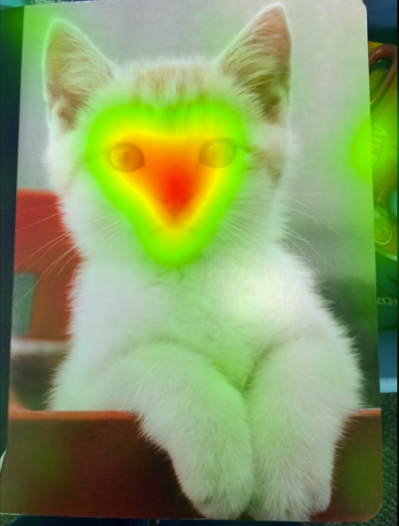
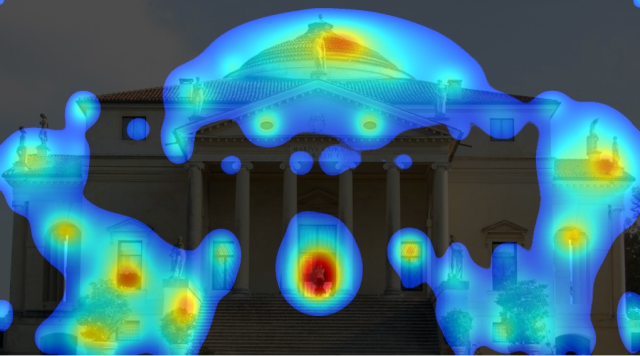
 We’ll also talk about a recurring theme at geneticsofdesign.com, how important it is for people to see faces and how we do this – consciously and unconsciously – all the time. Check out the ‘shadow’ study below…showing how unconciously our brain will observe a face-like image in the carriage house within 15 seconds – whether we want to or not!
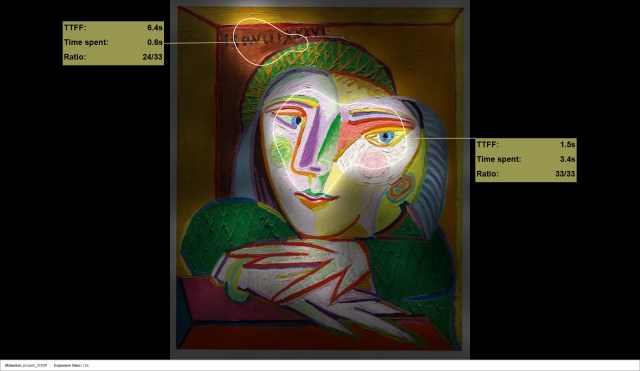
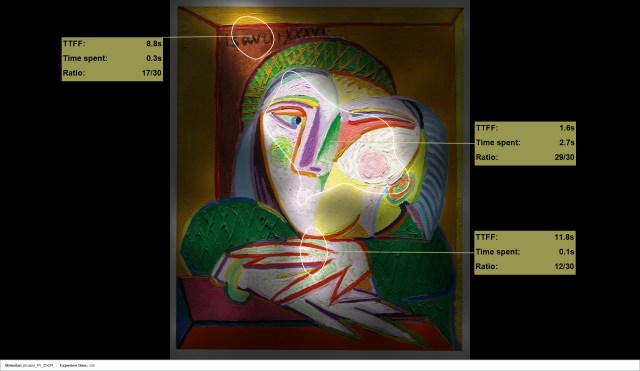
 And just as importantly we’ll check out how our brain takes in ‘actual’ faces. Here’s a Picasso portrait of wife, ‘Marie-Therese’.


 all photos copyright Ann Sussman