For Tufts link see: https://sites.tufts.edu/uxdesign/
For ArchNewsNow.com link: 11.06.2018


What grabs our eye first, second + third?
Come find out at the Discovery Museum in Acton, MA on Friday, October 5, 2018, from 4:30 – 7 PM. Admission’s free. It’s fun for all ages.
Our thanks to the Acton-Boxborough Cultural Council (ABCC) for providing Genetics of Design with funding to create this program; our high-school interns, Christopher Duncan, Siraj Chokshi, and Anindita Lai for helping run it; and 3MVAS.com for the software making it all possible, bringing science to life.
How does architecture catch the eye?
The 2018 Acton-Boxborough Photo Contest, an art-science project, run by Genetics of Design, with help from high school students and supported by a local Cultural Council (ABCC), came up with these intriguing answers.


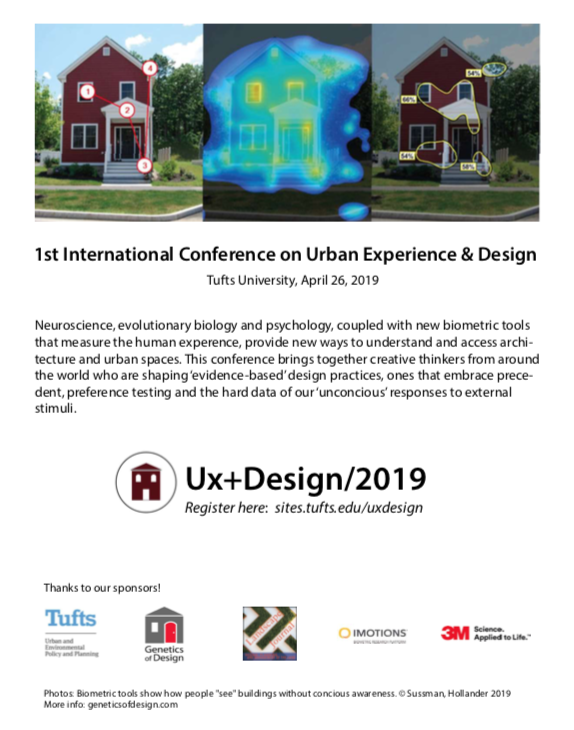
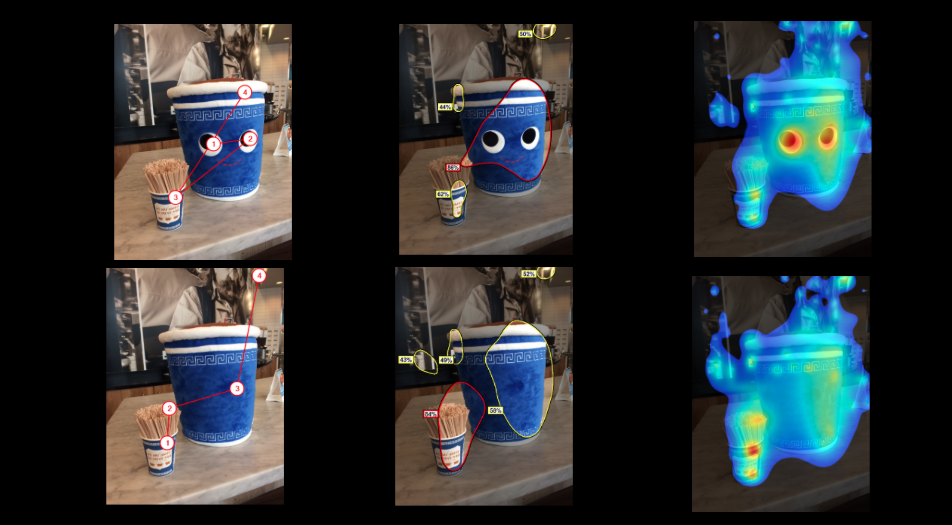
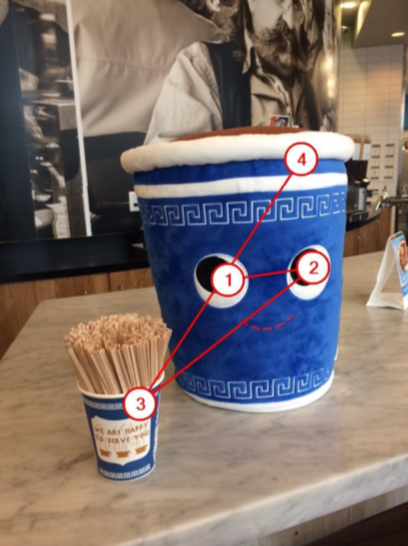
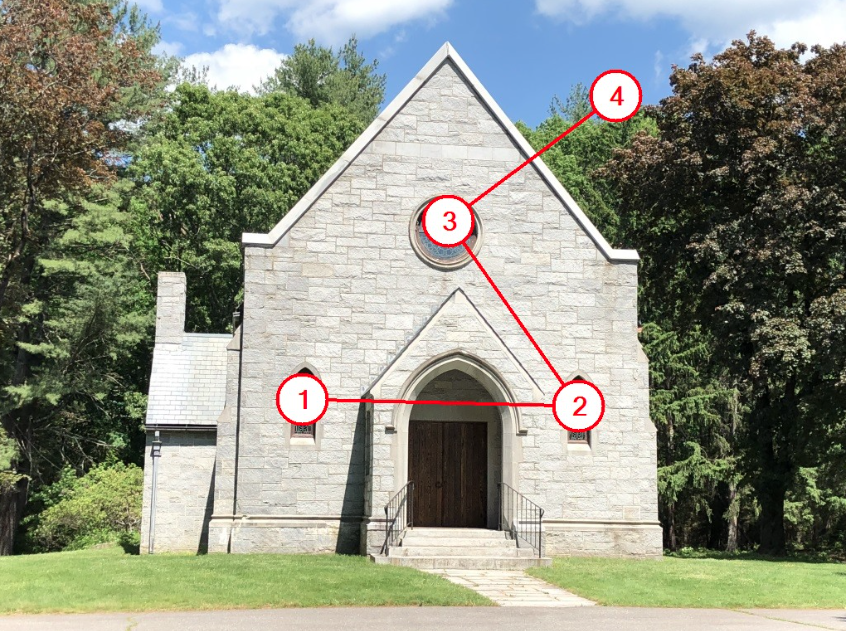
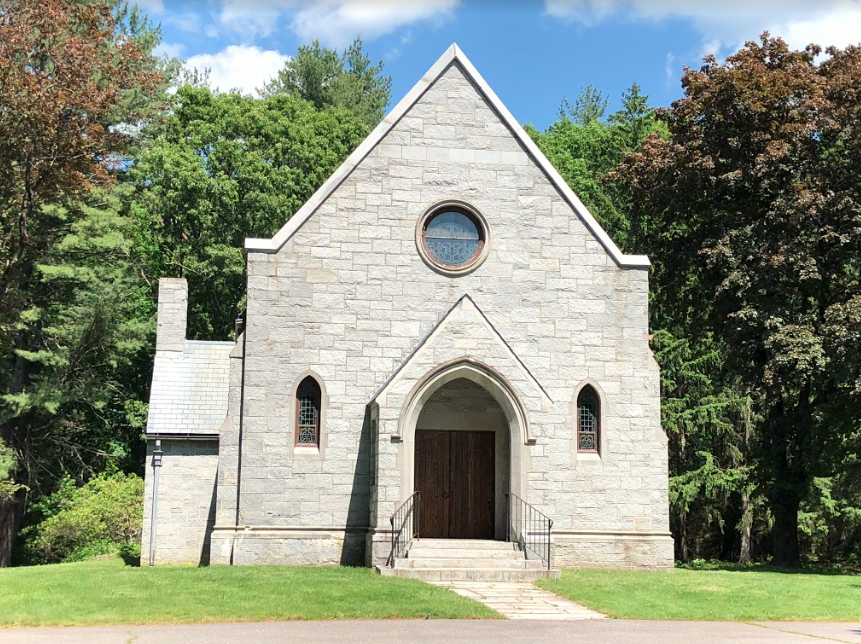
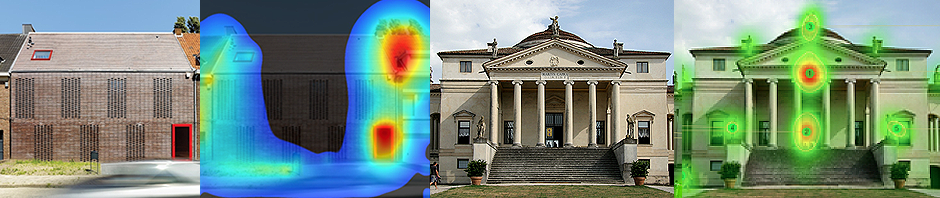
In 1stPlace, Woodlawn Chapel, Acton, by Sandra Hinds predicts the visual sequence people will likely take the first few seconds they see the building, at left; the original photo’s at right.

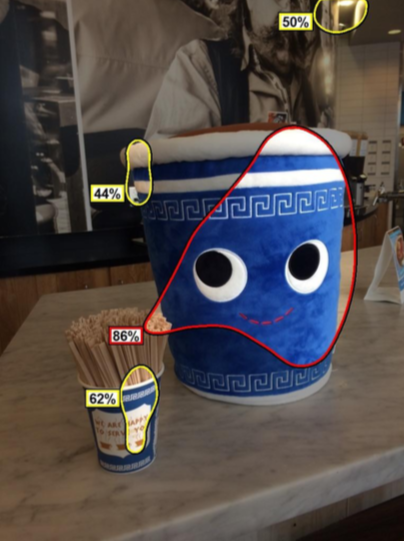
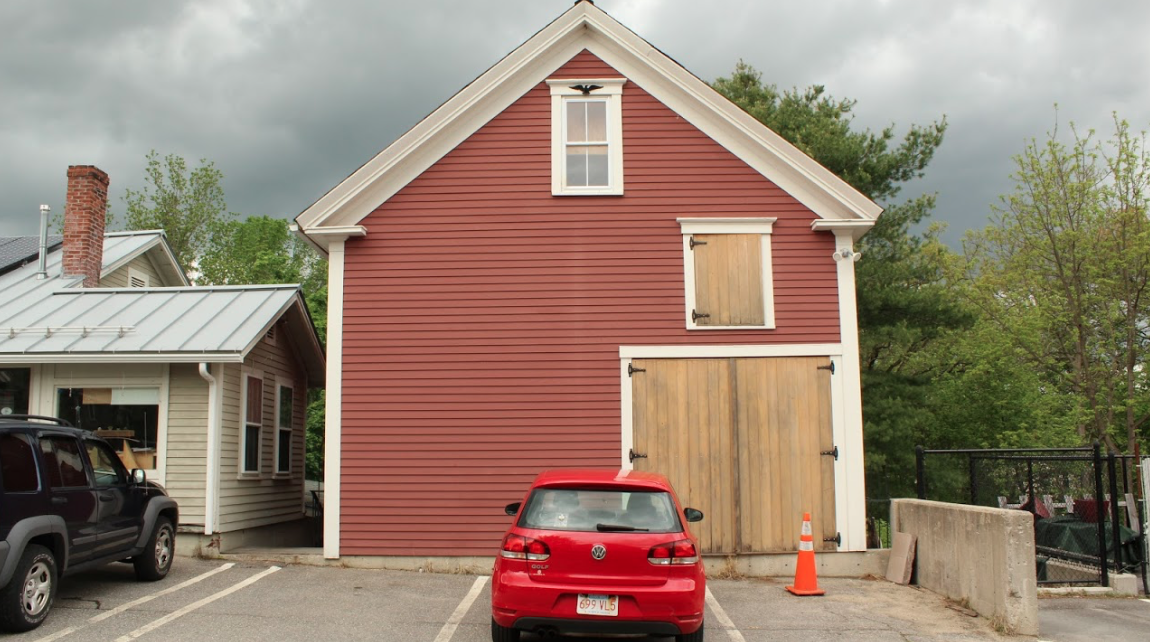
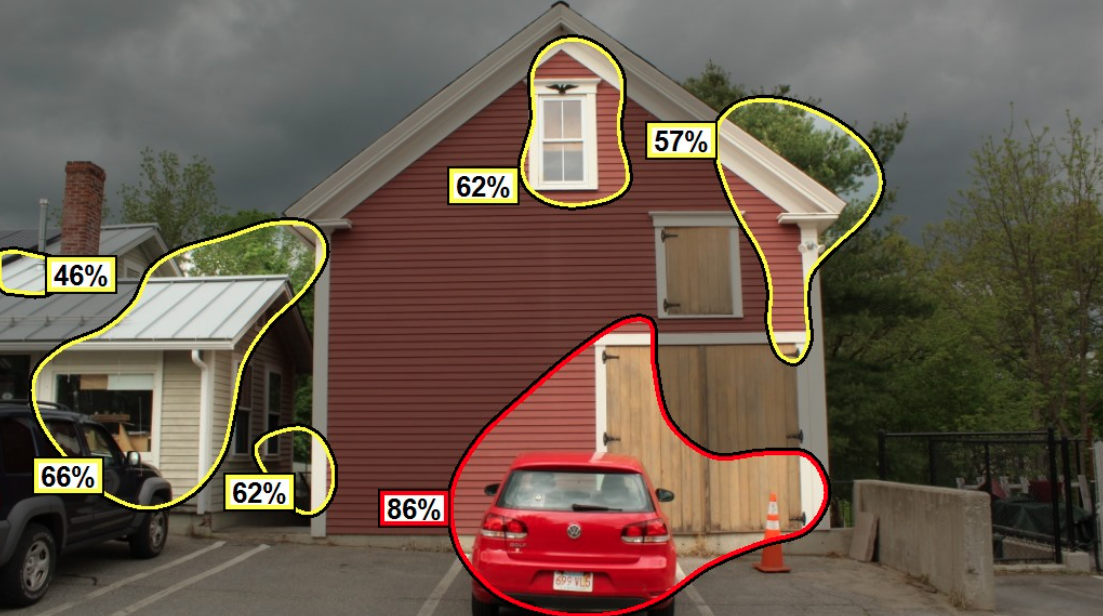
In 2ndPlace, Red Barn in West Acton, by Christopher Duncan shows the ‘regions’ which draw in the eye, and likelihood of doing so as a percentage (areas outside delineations are ignored); the original image is at right.
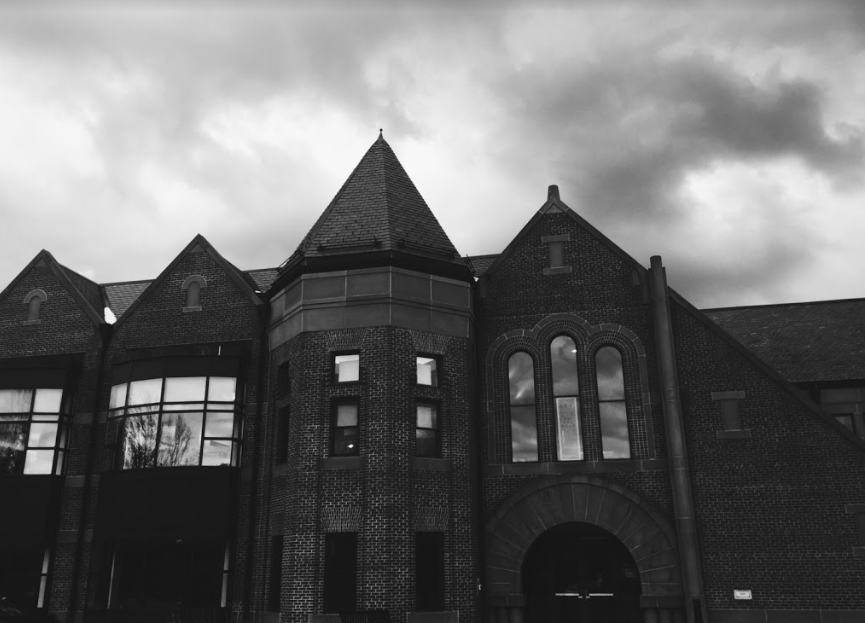

In 3rdPlace, Acton Memorial Library, by Sanjana Cheerla, above, shows a heat map glowing brightest where people will likely look most, fading to grey and black in areas they’ll ignore; the original is at right.
High school students took the photos and interns Anindita Lal and Siraj Chokshi, working with Genetics of Design, selected them from more than three dozen entries. Winning photos were chosen based on composition, originality and the quality of images they generated using software that predicts how people look at things during pre-attentive processing, that’s in the first 3-5 seconds before the conscious brain can get into the act.
3M’s Visual Attention Software (VAS), based on 30-years of eye-tracking research studying how human eyes move, created the heat maps, visual sequence and regions of interest diagrams shown here. Interns Anindita Lal, Siraj Chokshi, and Christopher Duncan ran the original photographs through the VAS to display these intriguing findings. They help us understand how the human brain is hardwired without conscious control to seek out areas of contrast, edges, faces and has an affinity for the color red.
The images and others like them will be on display at the Discovery Museum in Acton, MA this August. The intent is to make learning about science and biology fun; studies like these can also be useful in understanding way finding and walkability and implementing designs that improve it.
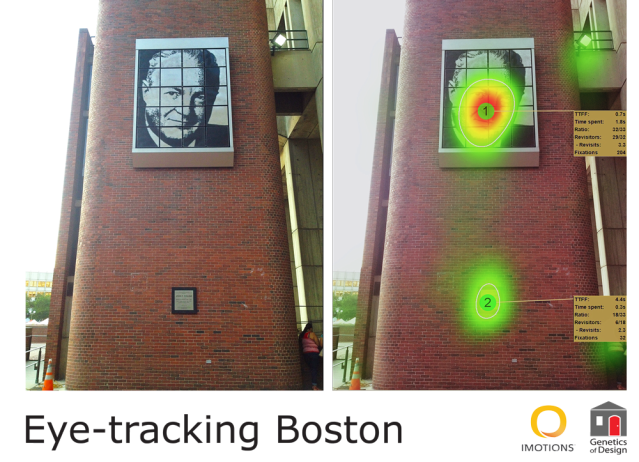
We’re sharing a new post from iMotions, a bio-metric aggregating company based in Boston and Copenhagen, on the emerging field of neuroarchitecture, and how high tech tools can help us better understand human responses to the built-environment and improve design. (Full disclosure: we’ve successfully used iMotions in our studies.)
Neuroarchitecture or cognitive architecture, is an emerging field that provides an empirical basis for the design choices made by architects. Rather than settling for purely theoretical debates about test prices in design, research is showing the way, and guiding the creation of actual evidence-based design.
Continue reading this post to find current trends in eye-tracking and how they inform our world today.
When I asked the concierge for directions to cafes and shops, he told me to walk three blocks to the traffic lights, then turn right to California or left to Nevada. “You’ll see the difference,” he said.
Indeed.
Little did I know when I booked a vacation to Lake Tahoe that I would straddle two states on opposite sides of the street with such different walking and safety experiences. The photo below shows California’s alpine architecture on the right and Nevada’s polished glass on the left. Not only did I find the left-hand side of the street scary, I couldn’t find a door with all those mirrors.
Believe it or not, the California side led to a place called “Heavenly Village.” Did Nevada lead to “Sin City?” Maybe. The next picture shows the corner where I turned right to see California’s wide, walkable sidewalks with patterned pavers leading to open spaces, outdoor cafes and flowery landscaping. The sign said “welcome,” the bright colors beckoned, and I felt safe.
Then I turned 180 degrees to take the photo below of the Nevada side. Notice the skinny cement sidewalks, lack of pleasing outdoor space and absence of greenery. The casino’s neon sign against the black and brass building felt like Darth Vader beckoned; I turned away.
The differences were palpable. The decision—easy. Avoid the stressful street in Nevada and embrace the welcoming one in California. That’s where I turned.
And, of course, we face that same decision building everywhere in America today; do we want to make more ‘approachable’ places or ‘avoidant’ ones? South Lake Tahoe makes the answer clear; build places people want to be—inside + out. It will be better for us all, and our descendants will thank us.
All Photos Copyright: Janice M. Ward
What makes Paris so walkable? The 18th and 19th-century architecture, the shops, the cafes-on-every corner, the human-scaled development – yes, yes, yes. All true. But there’s more, something not as celebrated and a key secret to Paris’ walkability and engaging street-life: the road construction itself. The pavers of Paris – like these:


These stone blocks surround the Louvre, the 2nd-most-visited museum in the world, (after the Palace Museum, Beijing), and literally knit together a visitor’s uplifting experience there. Everyone sees them entering, leaving or lingering around the museum. They’re colorful, look hand-hewn and create an eye-catching, unostentatious visual fabric. They anticipate our human need for pleasant visual stimulation – even before people set foot inside the museum – and they complement the color of the surrounding palace, too – everything a uniform all asphalt or concrete drive could never do.
Even the newer museums in Paris, like the hi-tech style Pompidou Center, (c. 1977) boast antique style pavers and patterns that move you forward and invite you to linger. Here are the ones surrounding this modern art museum; it’s a timeless look that acknowledges our human love for repeating patterns and undulating shape:


The pavers not only anticipate our need to always have something to look at, but the fact – see person walking down hill, above right – that most of the time we hold our head about 15% downward as we walk, making sure the path’s safe ahead. It’s an old habit, that got us safely out of the savanna 70,000 years ago and is not going to go away soon.
In sum, the pavers of Paris tell a story, not just about what we like to see but about who we are – a bi-pedal mammal pre-occupied with the patterns at our feet. It’s all understandable, once you stop to think about it, and provides the next step to improve walkability everywhere moving forward. People aren’t cars; we need to accept that to build the best places for them.
Our new poster shows the kind of photograph that works well with our Art + Science Photo Project and the resulting heat map. Please take some pictures. Join the fun. Find out what really draws us in with no conscious control. We’ll use the 3M VAS (Visual Attention Software) to find out.
Click on images above or the link here to read this recent post on Common\Edge.org, a non-profit site dedicated to improving the design of our built environment.
Ann Sussman and Janice M. Ward from geneticsofdesign.com co-authored the piece with Tufts professor Justin Hollander and editorial savvy from Martin Pedersen.

Capitol Building, Havana, Cuba ©wikimedia
What are attributes of great design? It draws the eye. And you delight in taking it in—no matter your age, background or the times you live in. The buildings wordlessly beckon.
But how?
Turns out to understand why great buildings and streetscapes, like the one above in Havana, have timeless appeal, you need to know something about architecture—specifically the architecture of our nervous system. As mammals, we’re hardwired to look at the world and approach or avoid things instantly. Our survival depends on it. If we had to stop to consciously ponder our every move, we simply couldn’t and wouldn’t exist.
Enter oxytocin, sometimes called ‘the cuddle hormone’. This neuro-chemical not only has a significant role to play in parental bonding and significant-other relationships (including ones with our dogs), making us the social creatures we are, but is at work getting us to move towards things in our environment too.

Villa Rotunda, Vincenza, Italy, ©wikimedia, ©geneticsofdesign.com
Take a look at the two versions of Palladio’s Villa Rotunda above, a 16th-Century UNESCO World Heritage Site in Vicenza, Italy. Which would you rather head towards, the real one with windows or a photoshopped-version without them? Don’t think too much, just choose!
We’ve asked hundreds of people the same question at lectures, and no matter their age or demographic, we always get the same answer quickly: the building at left. Why? Humans as social animals are hard-wired to respond to direct gaze, this is when oxytocin, that hugging-hormone, is released (from the pituitary gland) getting us to move toward another person or, as in this case, an inanimate object that suggests one.
It can’t be any other way, of course, once you stop to think about it. After all, our brain and nervous system are artifacts of 3.8 billion years of evolution, and for most of that time (say 99.9% of it) there were no man-made buildings—just animals and nature—so that’s what we’re built to see—no matter how modern we may think we are!
In many fields, including advertising, travel and graphic design, it appears they’ve intuited the science, if not actually figured it out. The Havana photo above, for instance, was on the cover of a recent Tufts Travel brochure.

Architects, for the sake of their future and ours—should take note!
We’re thrilled to announce our grant from the Acton-Boxborough Cultural Council (ABCC) for a unique art + science study of two Massachusetts towns.

This study uses photography, biometric tools and new findings in neuroscience to show how our unconscious behaviors govern our experience of the built environment.
To engage the public, we’re starting with an open call for photos of buildings + houses + streetscapes (no people) that people love – or don’t like so much – in Acton and Boxborough.
Many thanks to our collaborators for this first-of-its-kind STEAM (science | technology | engineering | arts | math) study; AB PIP STEM (actonpip.org), the Discover Museum of Acton, Green Acton and the ABCC, a branch of the Massachusetts Cultural Council (MCC). Without their support and appetite for creativity, it wouldn’t have happened!
Where The Eagles Fly . . . . Art Science Poetry Music & Ideas
Knowledge transfer engineering
Cool stuff in construction
The Biology behind Design that Delights
A blog by Gehl Architects
The Biology behind Design that Delights
Style Wars: classicism vs. modernism