
-
Recent Posts
- In New York City? Visit the Taylor & Francis booth at the Greenbuild Expo Hall, Javits Center, October 21–22nd, 2026!
- Upcoming Workshop in Boston: Eye Tracking for Architects!
- Looking for a happy Fall? Check out these HAPI courses bridging the Arts + Sciences!
- How do People take in Buildings + Interiors? Take part in this quick Eye-Tracking pilot-study to Find out!
- Finding Biology in London Postcards!
Blogroll
-
Join 2,699 other subscribers
Author Archives: Genetics of Design
Designing for the Subliminal Brain: Architecture & the 21st Century Paradigm Shift, at the ICAA, December 3, 2021
How do buildings make people feel? How do they influence behavior? This talk at the ICAA (Institute for Classical Architecture & Art) in NYC reviewed new findings in neuroscience and psychology and new technologies that can help us better understand … Continue reading
Posted in Uncategorized
1 Comment
Architecture in Transition: New Findings from the Sciences: Webinar, Nov 11, 2021
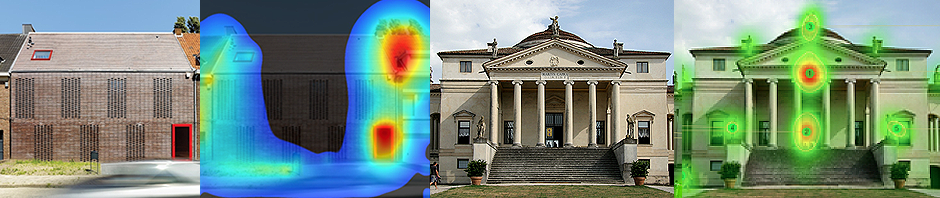
This free talk, live-streamed from India, featured biometric studies of buildings, like the one below, by geneticsofdesign.com! Click here for more info on the event, sponsored by the non-profit, INHAF: Architecture in Transition: New Findings from the Sciences And the … Continue reading
Posted in Uncategorized
Leave a comment
How Modern Architecture Takes Us Up – to the Sky (literally!)
by Ann Sussman It’s fascinating to look at how we really look at buildings – or not. Indeed, it can be revealing to see how modern buildings draw us to look at things around them – their surrounding trees, sky, or roof line … Continue reading
Posted in Uncategorized
1 Comment
Cognitive Architecture, 2nd edition, is out!
This just in: Cognitive Architecture, 2nd edition, by Ann Sussman and Justin B. Hollander, is out! The book reviews new findings in psychology and neuroscience to help architects and planners better understand their clients as the sophisticated mammals they are, … Continue reading
Posted in Architecture, Biology, Eye Tracking, Neuroscience
2 Comments
Why Ornament + Detail Really Matter in Architecture
“Details make perfection, and perfection is not a detail.” – Leonardo da Vinci Details really matter in architecture, and today we have the high-tech tools to show why and how to make the case quickly. For instance, below are two … Continue reading
Posted in Architecture, Eye Tracking, Neuroscience
1 Comment
Using Biometrics + Instagram in Design
Given two interiors, how do people experience them and which do they prefer—the wallpapered room at left or the one with a living plant wall at right? That’s the question designer Amanda Grinley looked to explore. Starting with a simple, … Continue reading
From CommonEdge.org: How Biometric Software is Changing How We Understand Architecture—and Ourselves
by Ann Sussman + Janice M Ward It doesn’t matter where they are—city, state, country, continent, it makes no difference. When it comes to big and boxy glass buildings, the human brain is hardwired to take them in the same way: as … Continue reading
Posted in Uncategorized
Leave a comment
Students Changing Design with Biometrics
Welcome to the New Age of Biology where students familiar with biotech tools change design outcomes. That’s what happened this spring, when architecture students at Catholic University of America, suggested changes to a new dining hall on campus and used biometric … Continue reading
Posted in Architecture, Biology, Design, Education, Eye Tracking, Health, Neuroscience, People-centric Design, STEM
5 Comments
Nature’s Patterns + Designs in Architecture, April 27, hosted by The National Arts Club
This free webinar, hosted by The National Arts Club, featured Nikos Salingaros, PhD and Ann Sussman, discussing the importance of patterns and ornament in architecture and their impact on our health and well-being. The speakers reviewed the science of natural … Continue reading
Posted in Architecture, Fractals, Health, Nature, Neuroscience, Patterns, People-centric Design
Leave a comment
Webinar: Designing for the Subliminal Brain
Curious to understand how we see the world like animals? Want to learn how evolution presets what we focus on, and how we take in our surroundings? Here’s link for public media event from WSKG, an NPR-radio affiliate in New … Continue reading
Posted in Architecture, Biology, Neuroscience
Leave a comment

