
-
Recent Posts
- In New York City? Visit the Taylor & Francis booth at the Greenbuild Expo Hall, Javits Center, October 21–22nd, 2026!
- Upcoming Workshop in Boston: Eye Tracking for Architects!
- Looking for a happy Fall? Check out these HAPI courses bridging the Arts + Sciences!
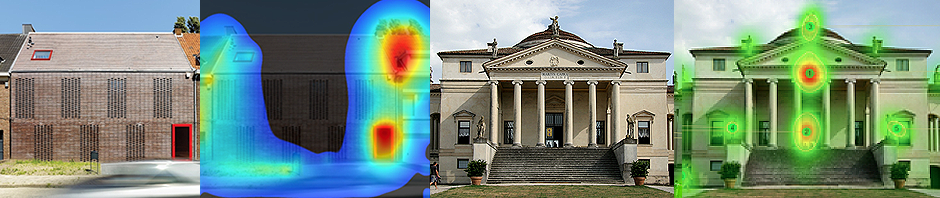
- How do People take in Buildings + Interiors? Take part in this quick Eye-Tracking pilot-study to Find out!
- Finding Biology in London Postcards!
Blogroll
-
Join 2,699 other subscribers
Author Archives: Genetics of Design
The Big Reveal: How Adding Art Changes the Office
by Ann Sussman, RA + Abigail C. Sekely In this pilot-study, we looked at how adding biophilic art, which shows scenes of nature, changes how people see and feel about an office space. The study, sponsored by theHapi.org, used state-of-the-art … Continue reading
Posted in Uncategorized
Tagged Architecture, biometrics, Biophilic Design, Design, Eye Tracking, Neuroscience, wellbeing
Leave a comment
If They Build It, How Will You Feel? Take the HAPI Certification Course to find out!
We’re thrilled to announce the launch of the 7-part HAPI Certification Course, open to all, live here and on the AIA website. Based on the book Cognitive Architecture, 2nd ed, the Certification course reviews key findings in psychology and biology … Continue reading
Posted in Uncategorized
7 Comments
How does adding Biophilic Art change an Office? Take part in this biometric study to find out!
The study is out for analysis; we should have results out soon! And thanks to all participants who took part! – – – Biophilia refers to the human need to connect and interact with nature to be at our best. … Continue reading
Posted in Uncategorized
Tagged Biophilia, biophilic-design, lifestyle, mental-health, Nature
1 Comment
Announcing the HAPI Podcast: Where Design + Humanity Meet!
We’re thrilled to launch the HAPI Podcast as part of the Human Architecture + Planning Institute’s nonprofit mission to improve the design of our built environment through education and research Hosted by Jo Riddle, the HAPI Podcast “brings urban design, … Continue reading
How Eye Tracking Reveals What Really Makes Streets Walkable
by Ann Sussman, RA Interested in learning how adding trees and greenery improve the pedestrian experience? Or how it increases the likelihood that people will even consider walking down a suburban street? Then check out the work at the Devens … Continue reading
What Happens When You Eye Track Buildings + Bus-Stops? Check out these Talks to find out!
These free webinars took place Thursday, February 15, 2024. And the contents may change how you ‘see’ yourself and our world – bus stops included; From Amsterdam: Neuroarchitecture Book Seminar link: https://www.eventbrite.co.uk/e/neuroarchitecture-book-seminar-tickets-777710441867 From NYC: Beauty & the Bus event link recording … Continue reading
Posted in Uncategorized
Leave a comment
When asked to draw ‘a House’ people often add – a Tree!
by Ann Sussman + Abigail C. Sekely At the SNEAPA conference in New Haven this fall, we asked more than two dozen planners to draw ‘a house‘. Participants took part in the House Experiment, a study where they are asked … Continue reading
Biometrics + Bus Stops: What Eye Tracking + Facial Expression Analysis Reveal
by Abigail C. Sekely + Ann Sussman, RA, theHapi.org How do people look at bus stops? What catches their eye? What makes them happy? In this pilot study prepared for the City of Chelsea with ITDP-US (Institute for Transportation Development … Continue reading
Posted in Uncategorized
1 Comment
Interested in Eye-tracking Architecture? Check out these latest Studies using Biometrics!
How do we look at buildings? Eye-tracking is one of the tools we can use to understand how our brain directs our behavior in the built environment, without our awareness, more than most realize. Check out these talks, presented at … Continue reading
Posted in Uncategorized
Leave a comment
How do we see Bus Stops? This eye-tracking study is out for analysis now – will have results soon!
These studies use state-of-the-art software from iMotions.com, a global purveyor of biometric tools for human behavioral research. They are co-sponsored by theHapi.org (the Human Architecture + Planning Institute) a nonprofit dedicated to understanding the human experience of the built environment and improving its … Continue reading
Posted in Uncategorized
Leave a comment

