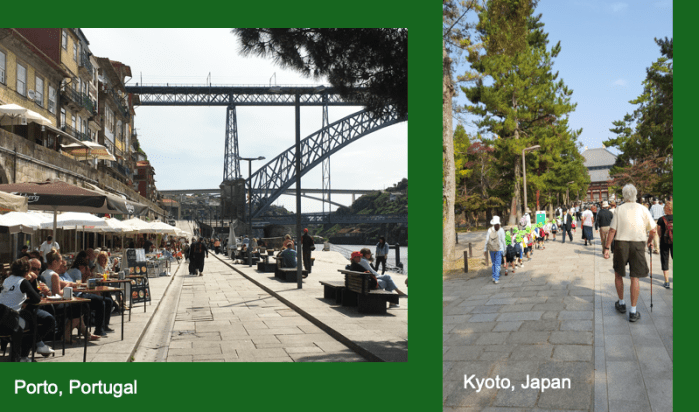
A recent article in the Boston Globe Magazine, 15 Things to Love and 11 Things to Loathe about Boston, labels the newest glassy section of the city “soulless” something people “loathe,” calling Boston’s Seaport District a “bland cityscape, a tract of straight lines, hard surfaces, and glass boxes.” A harsh critique, but there’s now science to back it up.
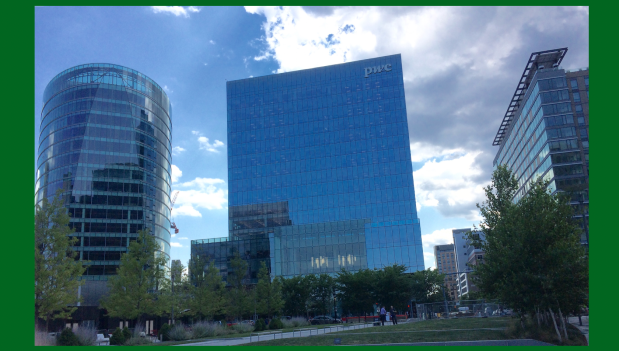 “When the neighborhood first rose on a stretch of industrial waterfront, signs were promising,” writes journalist Joanna Weiss. “Then the towers popped up like Monopoly motels. Now, much of the time, you’d never even know you were near the sea.”
This newest part of Boston simply doesn’t work as an example of place-making people feel good about and want to have in their city.
Why? A quick biometric analysis reveals intriguing answers, suggesting a key reason the district is loathed.
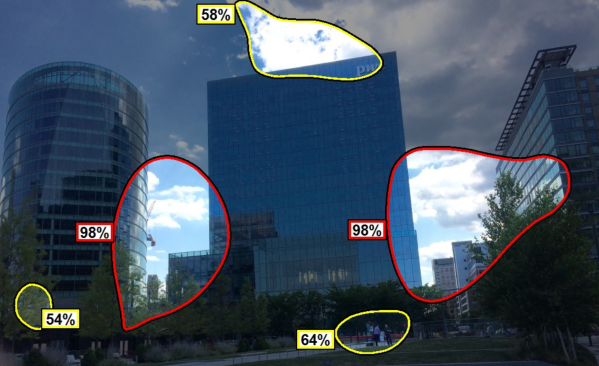
It turns out that the new glassy exteriors, whether boxy or round, are really tough on the brain—difficult for it to take in. In fact, our ancient brain architecture, directing our experience of the built environment, tells our eyes not to focus or even think of moving toward those buildings!
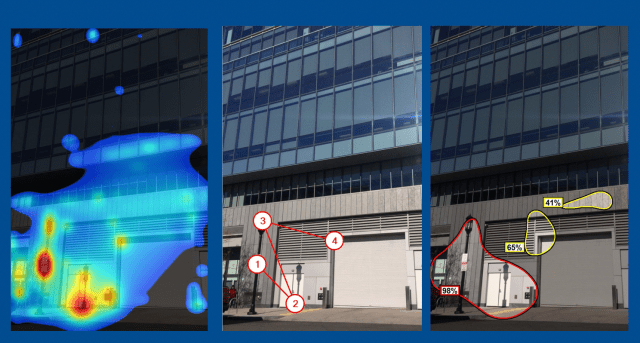
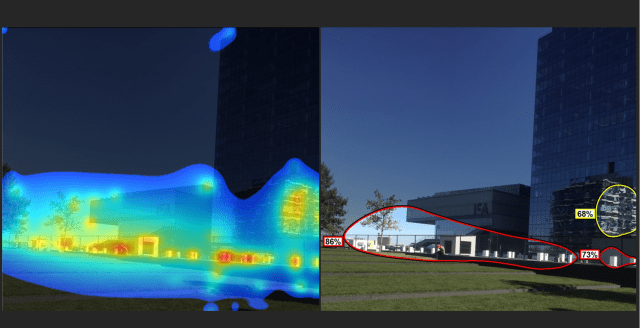
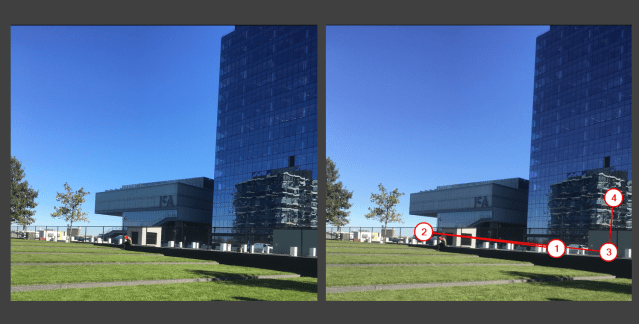
Need proof? Look at the image above made with 3M’s VAS (Visual Attention Software). It predicts where people will look in the first 3-to-5-seconds during pre-attentive processing—before conscious thinking comes online. The red regions (Regions of Interest, or ROIs) indicate that 98% of viewers will look beyond the buildings, mostly at the sky, while 54- 64% of viewers (the yellow ROIs) will also focus on trees and clouds during the same time period.
Our brain subliminally directs us to initially ignore the new Seaport buildings! They are ‘avoidant’ structures from the brain’s perspective.
The heat map below, glowing reddest where people look most, fading to black in areas ignored, displays the same findings more graphically. Note how all the new towers are shrouded in black—indicating how our brain unconsciously moves us not to focus on them. Overcoming this pre-attentive input, which creates the foundation for all our human perception, emotional experience and behavior that follows, is enormously difficult—if not impossible.
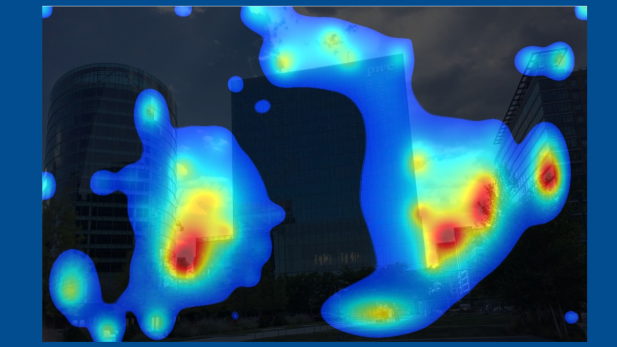
In sum, we see here, how a single biometric tool reveals why the new Seaport can’t create a sense of place in Boston. Mother Nature, the architect of our perception, with a good 3.8 billion years of design experience, won’t allow it. We simply do not readily connect to a place she initially informs us isn’t there or worth looking at!
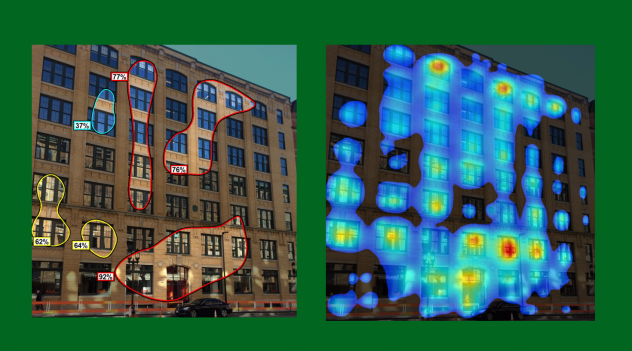
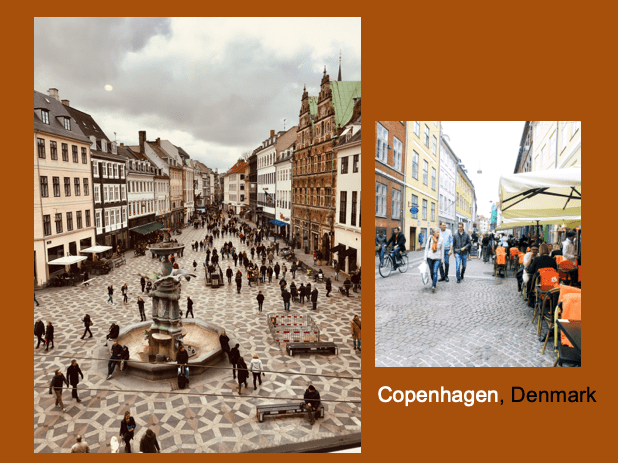
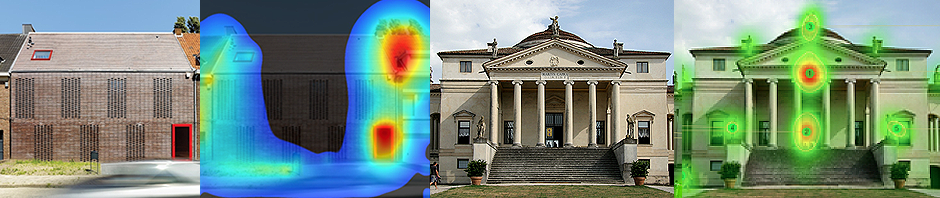
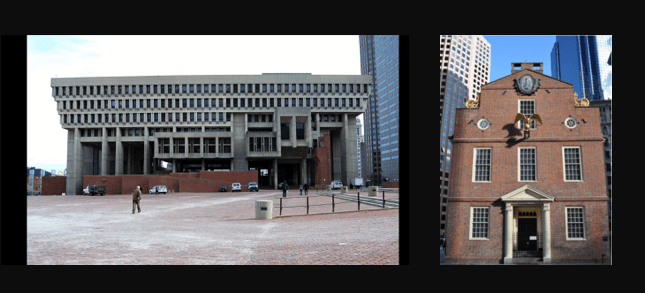
It’s equally instructive to see how the older parts of the Seaport (above) original 19th-C commercial buildings on Seaport Boulevard, for instance, fit well within the city. Biometrics reveal the brain directing us to fixate on them, so they help locate us in space and make us feel in a place.
Conclusion? Not only is it ‘not nice to fool Mother Nature‘ as the old commercial used to say, but it’s extremely difficult! And all Bostonians, residents and visitors alike, pay a steep price when we try to.
ps
To understand why modern architecture is ‘avoidant’, subliminally stressing the brain…while traditional remains ‘approachable’, check out: https://geneticsofdesign.com/2020/09/23/how-neuroscience-reframes-architectural-history-on-youtube/
It all calls to mind the quote from Buddhist teacher Daisaku Ikeda: “A healthy vision of the future, is not possible without an accurate knowledge of the past.”
Thanks to Hacker News for making this their top story on August 5, 2019.
Thanks to ArchNewsNow.com for linking to this post, October 8, 2019.
all images ©geneticsofdesign.com
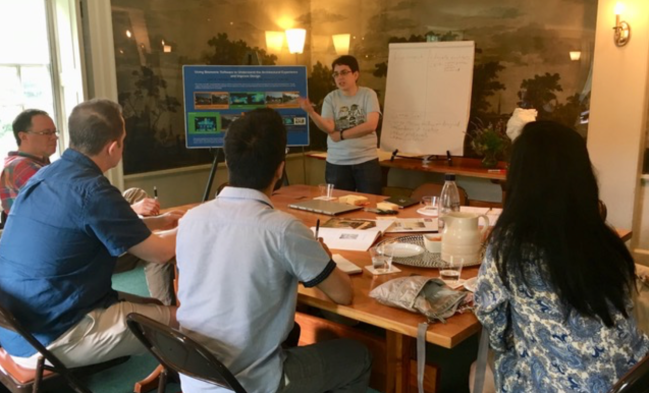
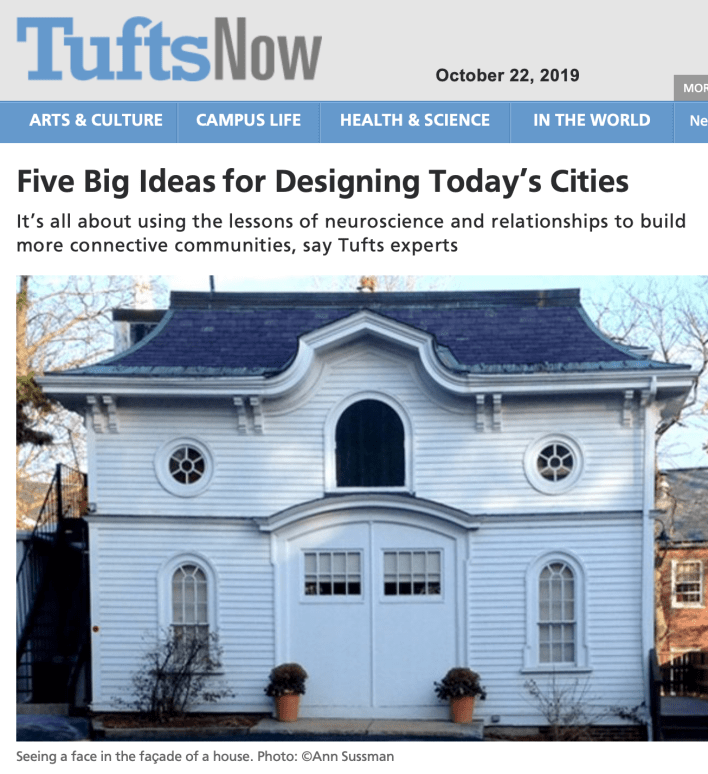 Too fun! Collaboration’s key. More info here: https://now.tufts.edu/articles/five-big-ideas-designing-today-s-cities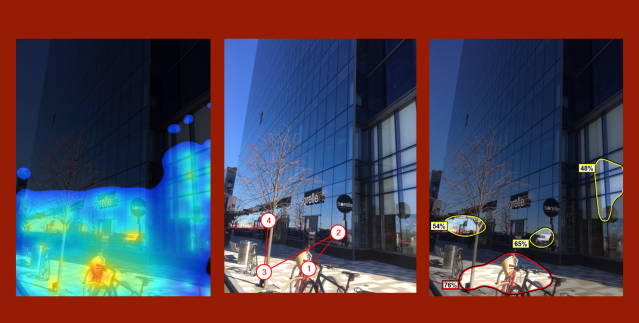
 *Entry Logistics: After arriving at Perkins Eastman, call 609-649-2388 for access to 8th floor!



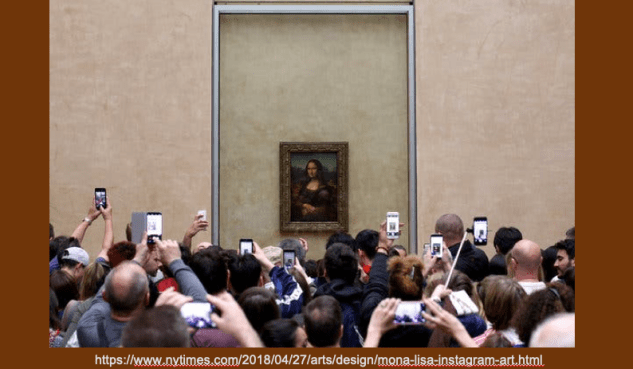 Another remarkable thing about viewing Mona is watching all the people from all over the world watch her – it’s a scene, as the