by Ann Sussman, RA + Abigail C. Sekely
In this pilot-study, we looked at how adding biophilic art, which shows scenes of nature, changes how people see and feel about an office space. The study, sponsored by theHapi.org, used state-of-the-art eye-tracking software, to follow how people looked at a series of slides of the office with and without the art.
By assessing engagement and attention, we can measure how people interact with their environment, and importantly, also gain insights into our emotional experience, which influences wellbeing overall. This tech, visualizing the ‘unseen’, becomes an important tool for assessing the built environment and understanding what we need to see – and be in – to be at our best.
Here are some preliminary findings:
- Blank walls don’t get much attention:
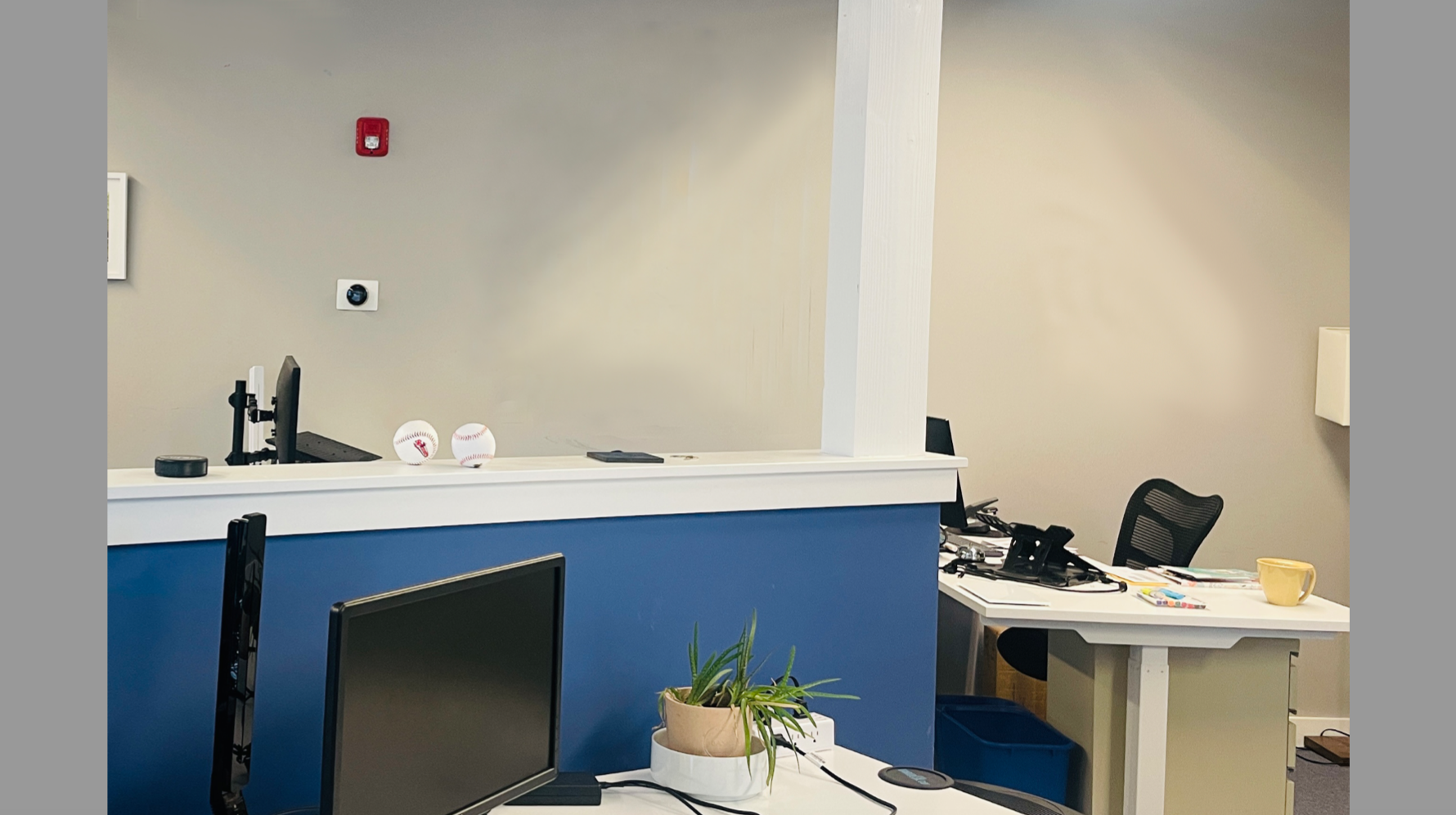
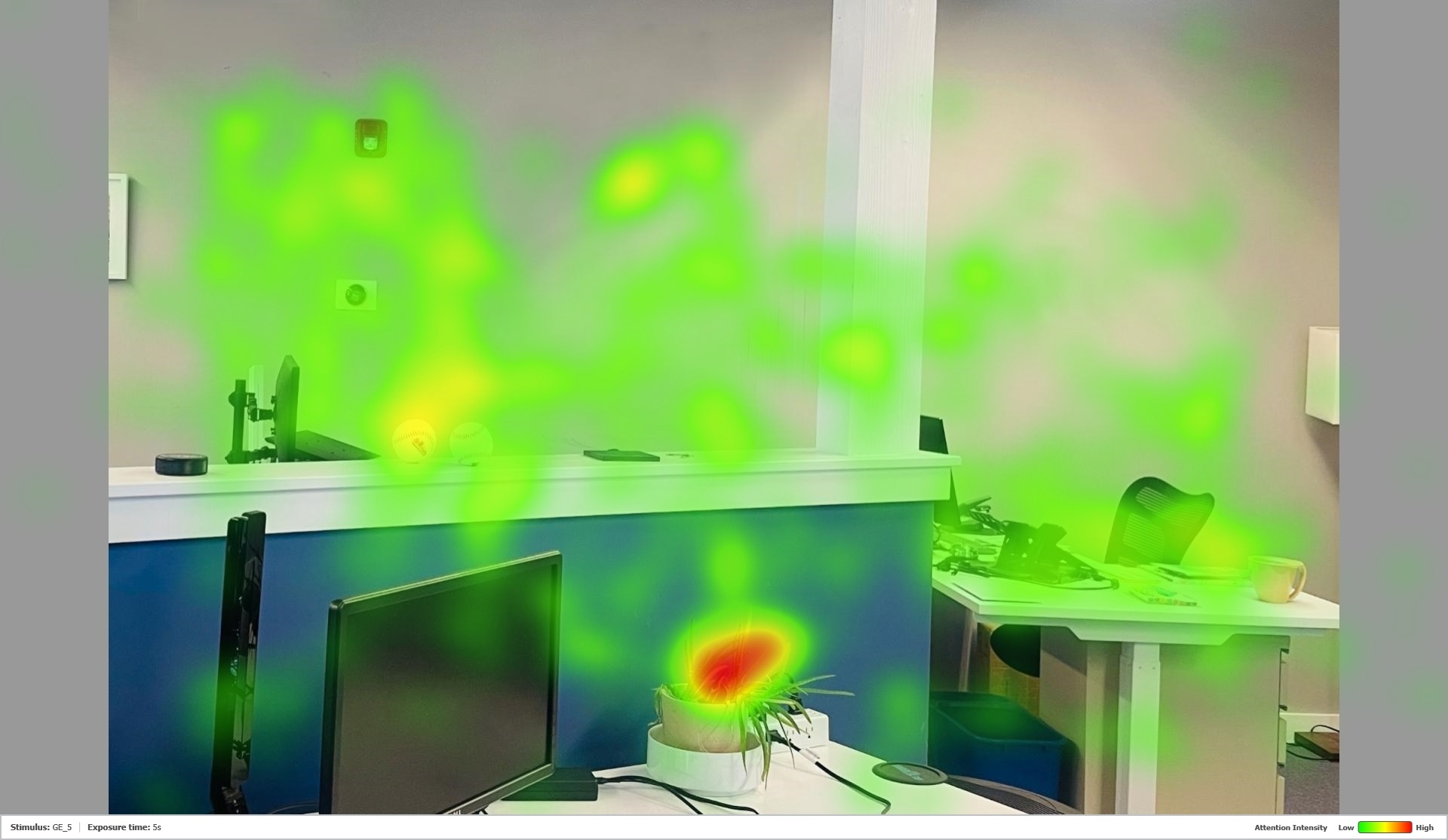
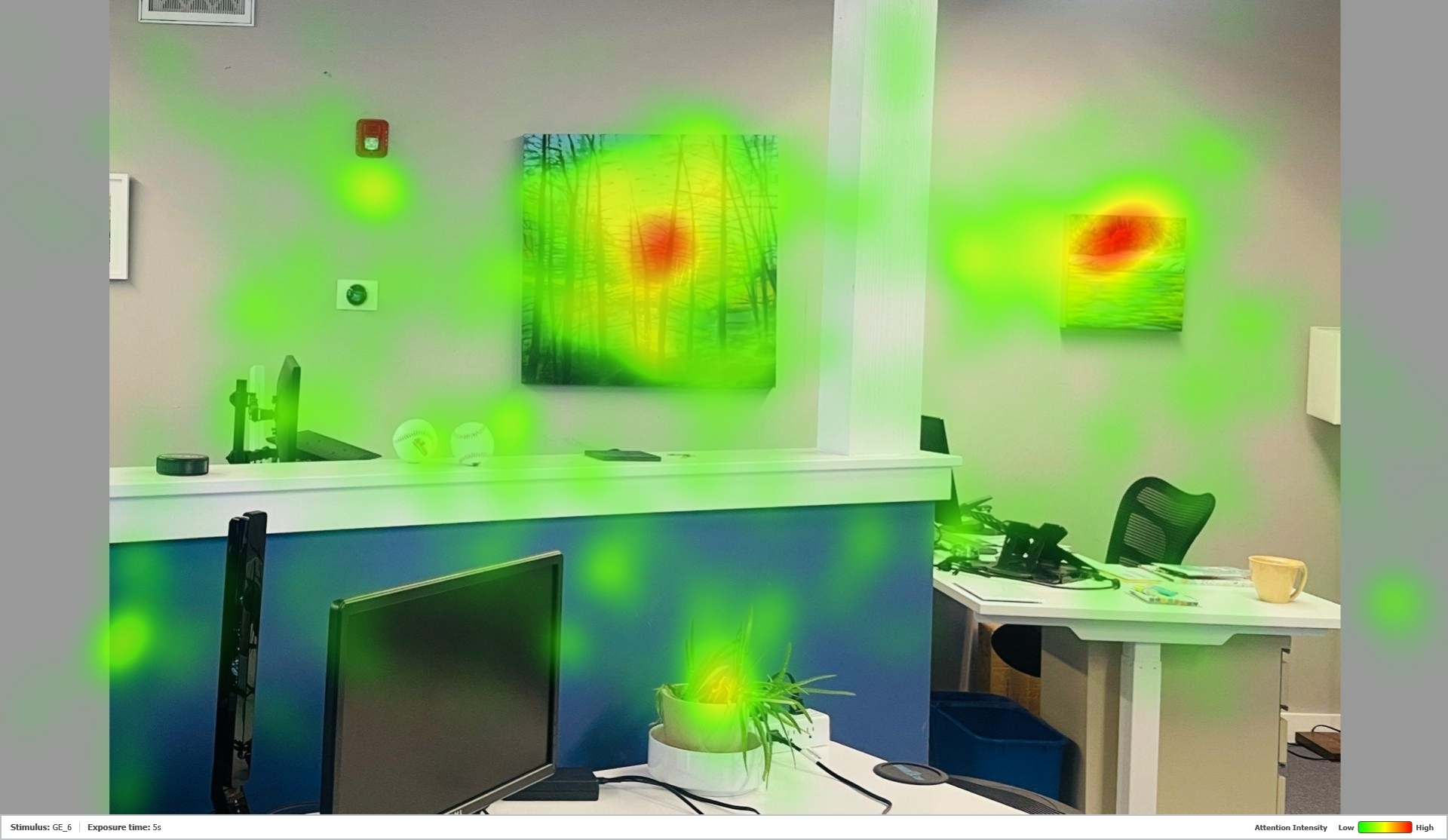
In this study, 50 participants looked at single images, like the one above, for short (7 second) intervals. In the scene here, we found that people initially focused mostly on the plant, rather than anything else in the office! Note how the heatmap, below, aggregating the eye-tracking data, glows reddest on the leaves in the image, showing where participants looked most – fading to yellow, then green, where they looked less, and displaying no overlay color at all in the areas ignored.
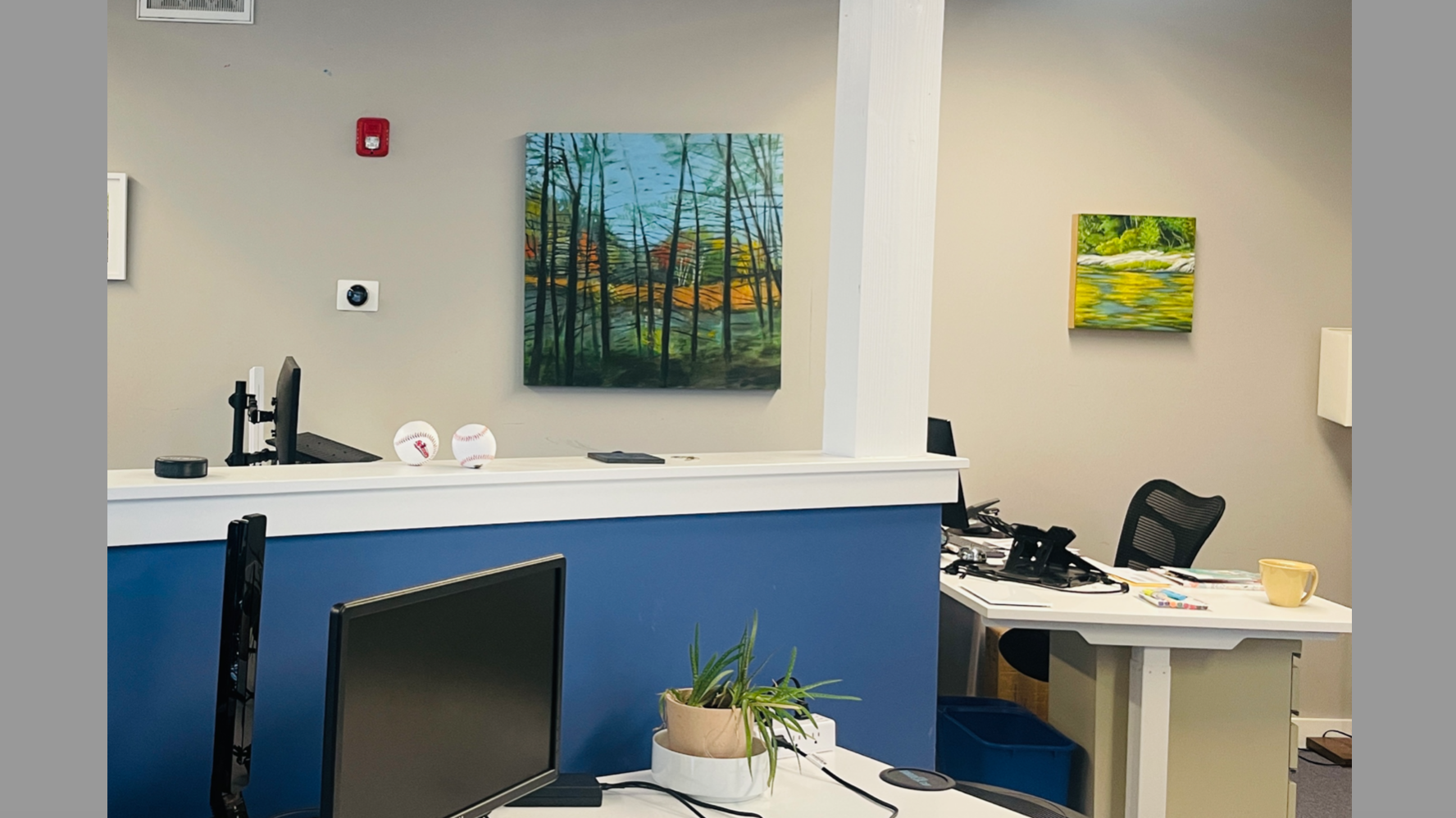
And what happens when colorful art, depicting woods and water, is added to the office?
Attention shifts; the paintings grab the views, in this case removing them away from the plant, and much of the area around the art. The visual experience seems focused and less random. (Scroll down and back up to appreciate the difference!)
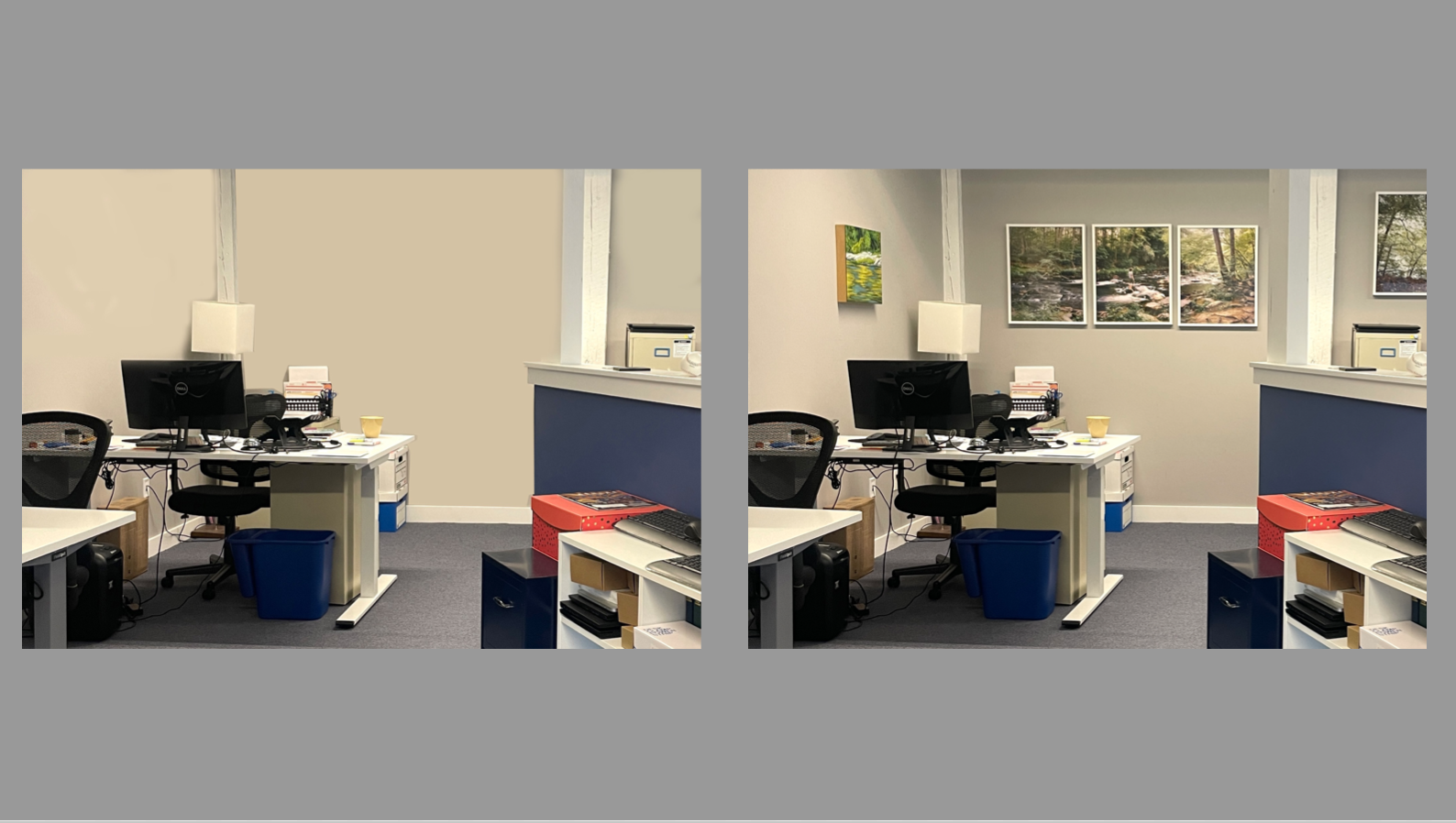
And, what happens when people look at paired images of the office, showing the before-and-after images together?
- With the paired slides, showing the office before-and-after adding art, the bias to avoid blankness becomes more apparent:
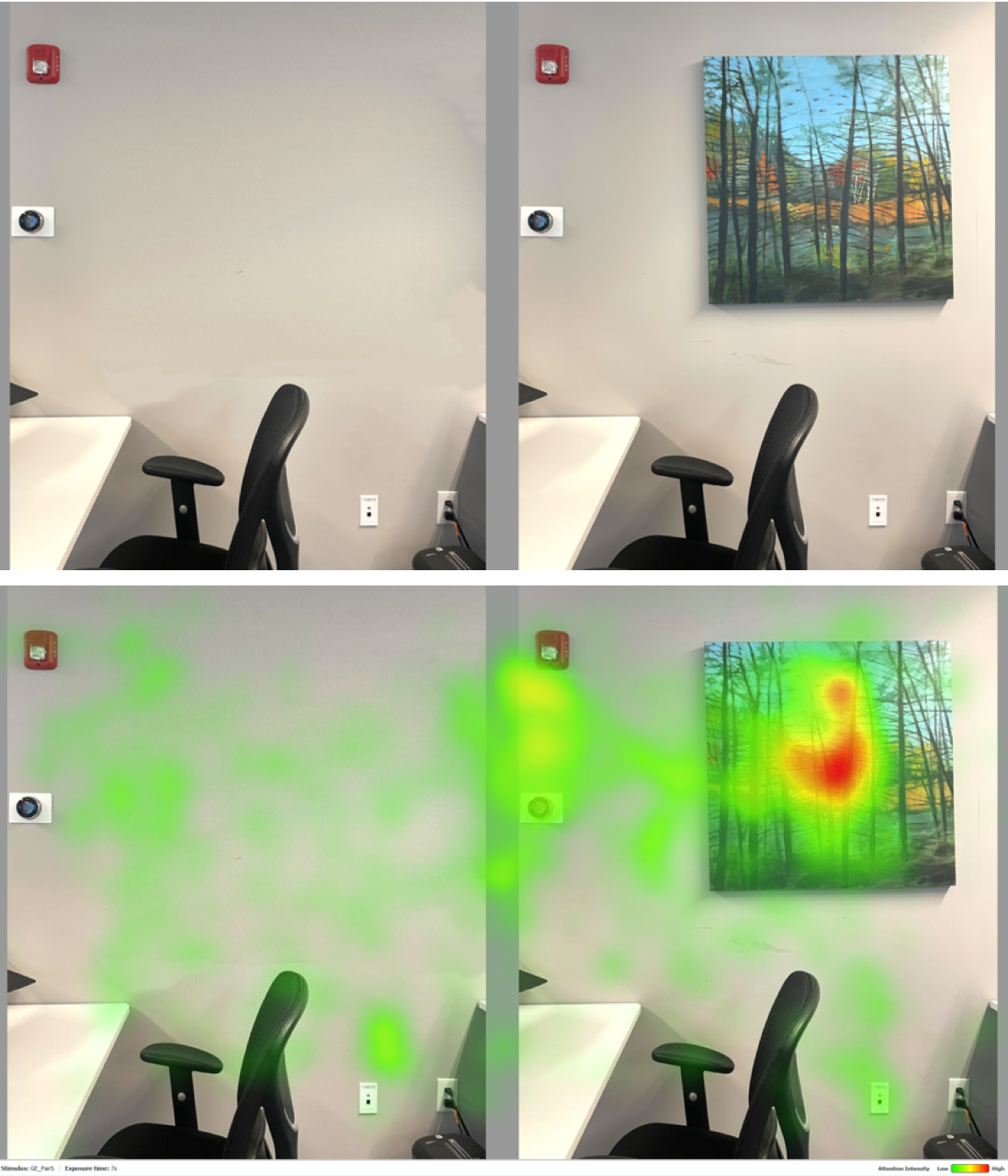
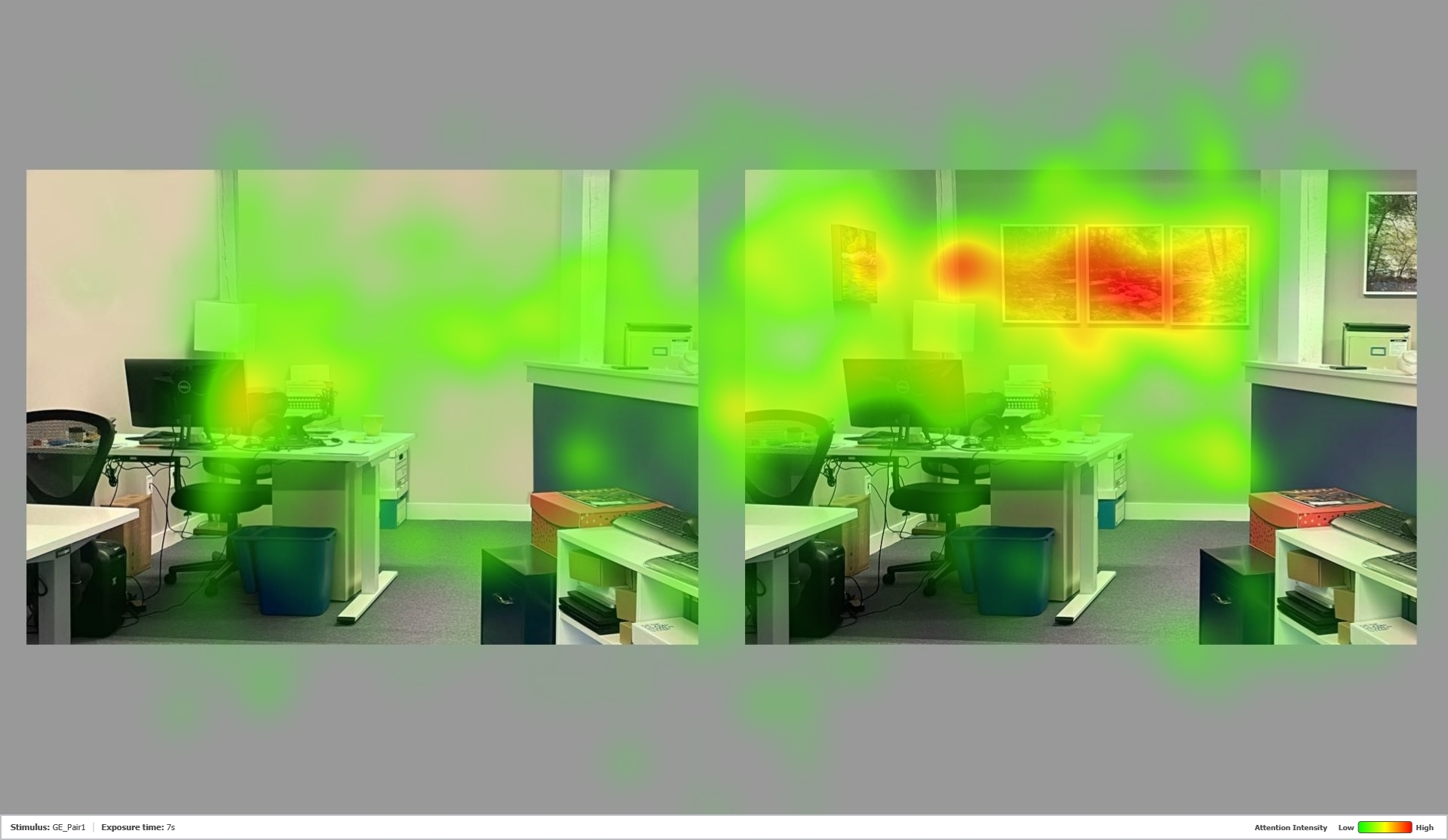
Presented in a 12-second interval, participants gaze focused on the office with the art, effectively ignoring the office at the left, without it. Note how the heatmap glows reddest at the center of the painting, and there is more green overlay here as well, indicating how the space attracts more attention generally.
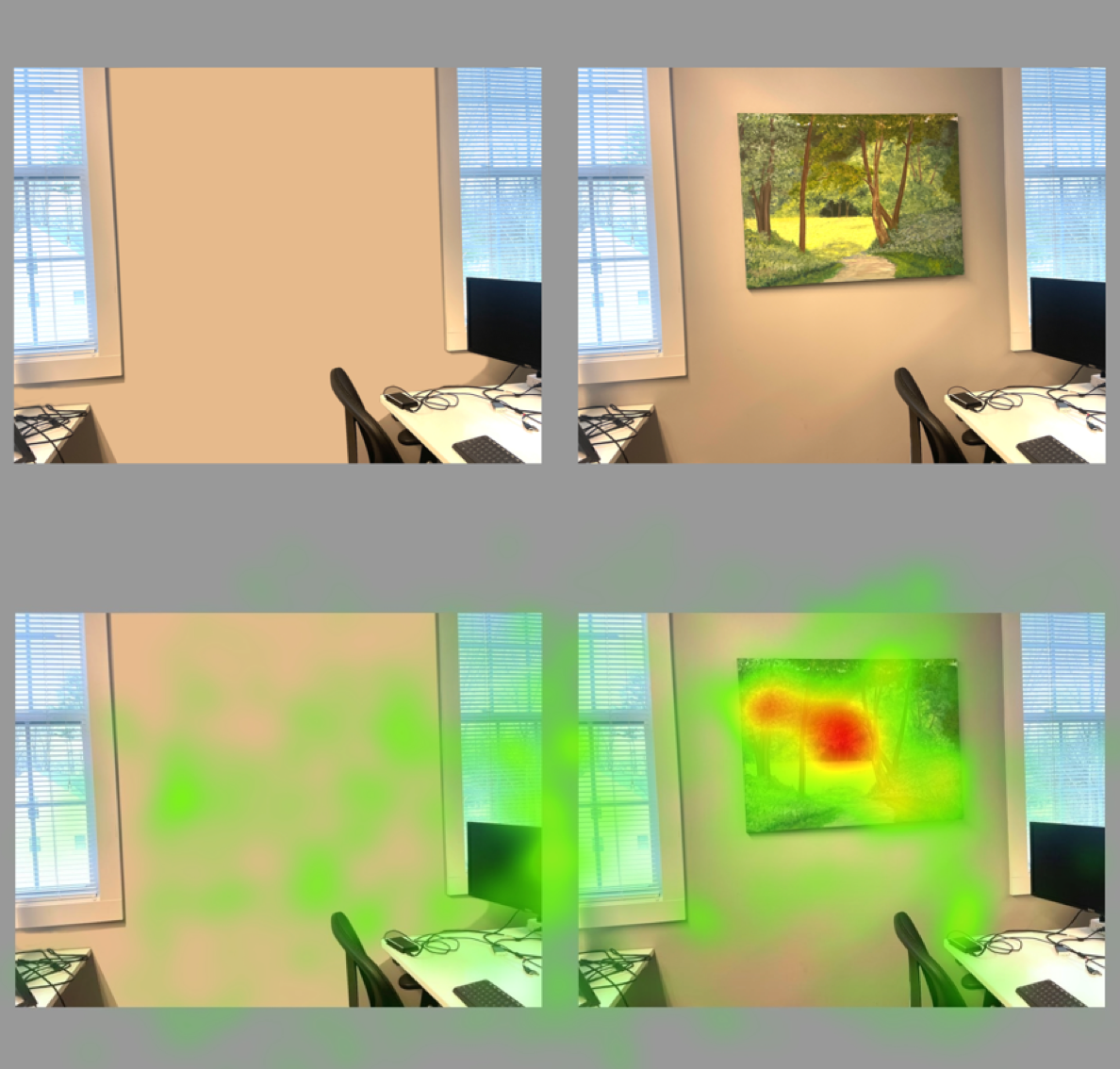
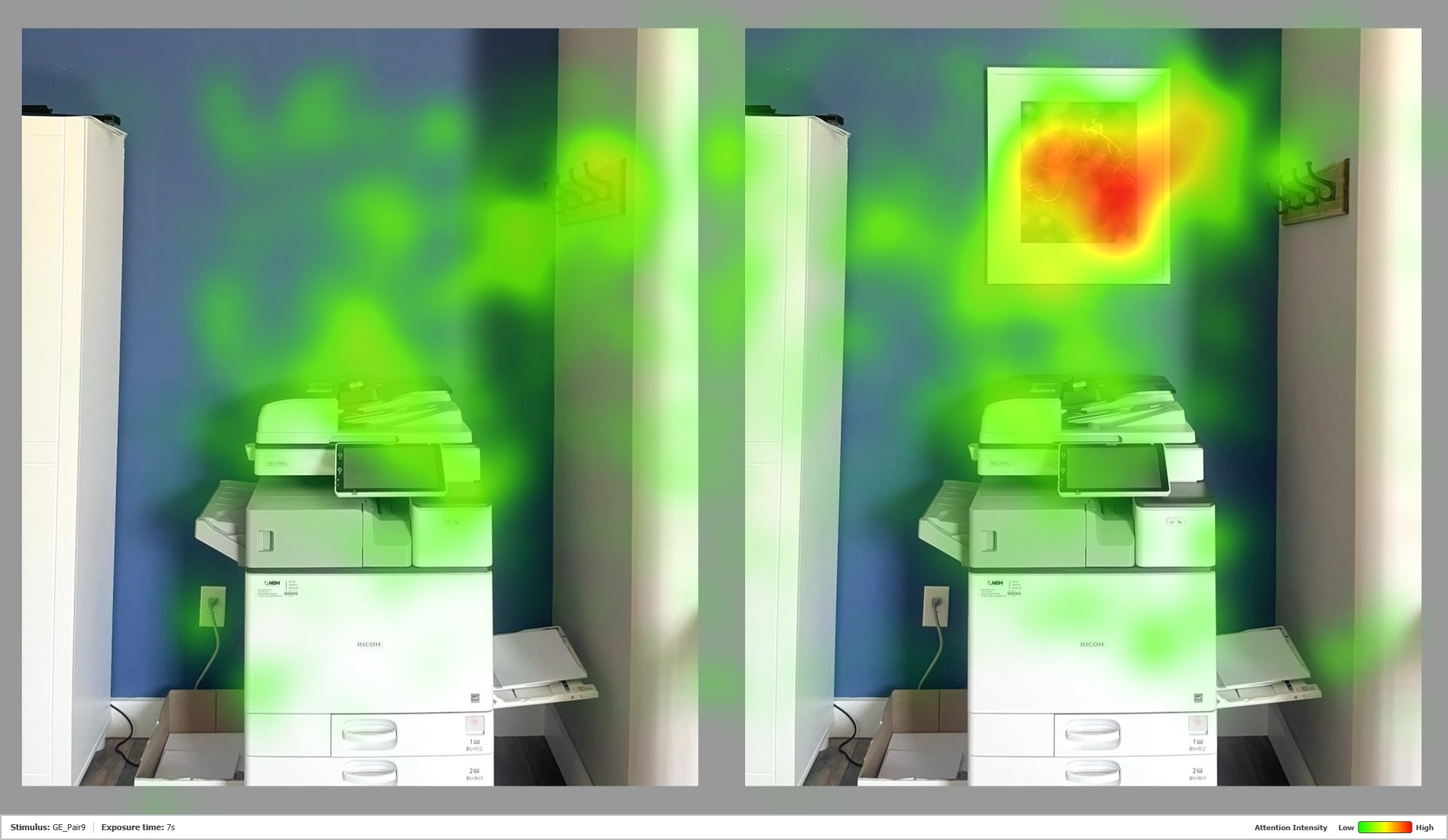
We found similar results above and throughout the study (see more results below); the art attracting the most views and drawing attention to the area around it.
Why does this matter? What people see in an office influences their behavior – faster than we may realize. People are more likely to head towards a place that attracts them and makes them feel good.
And here’s where biometric tools become even more useful; combined with facial expression analysis software eye-tracking studies can create emotional heatmaps, which indicate how people feel as they take in their surroundings. Did looking at the art make them smile – or frown?
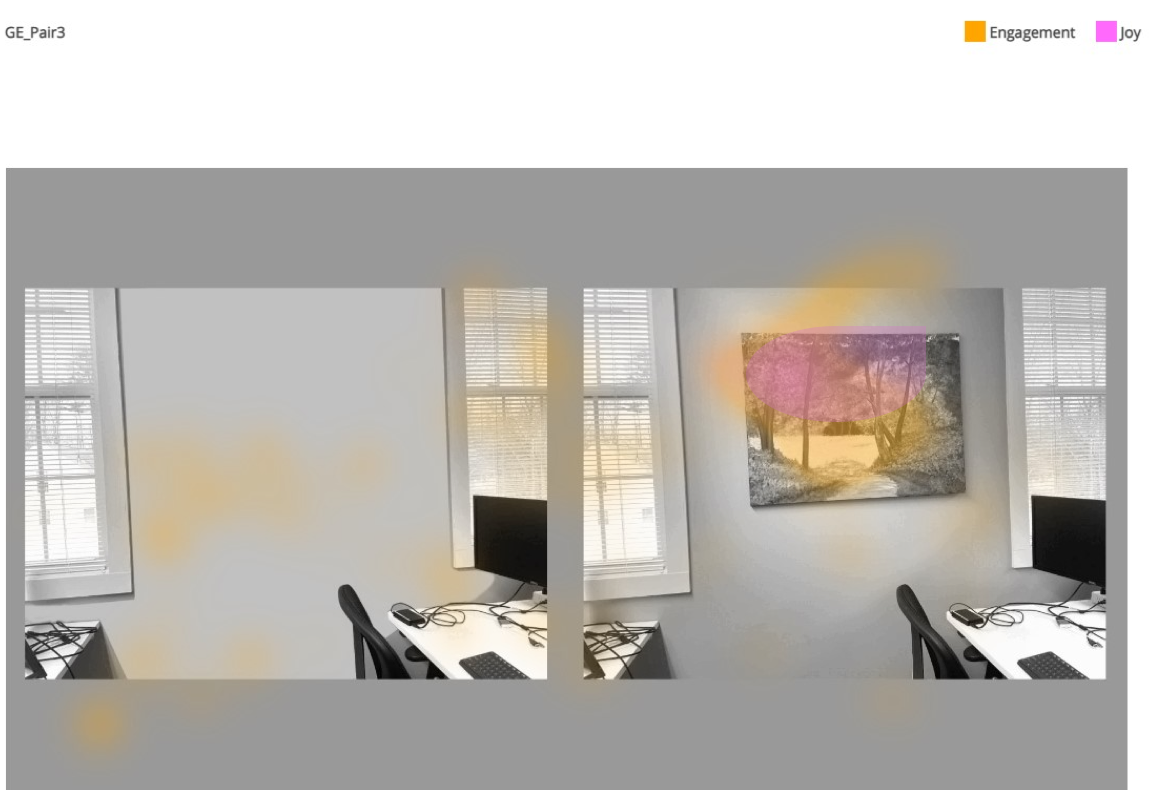
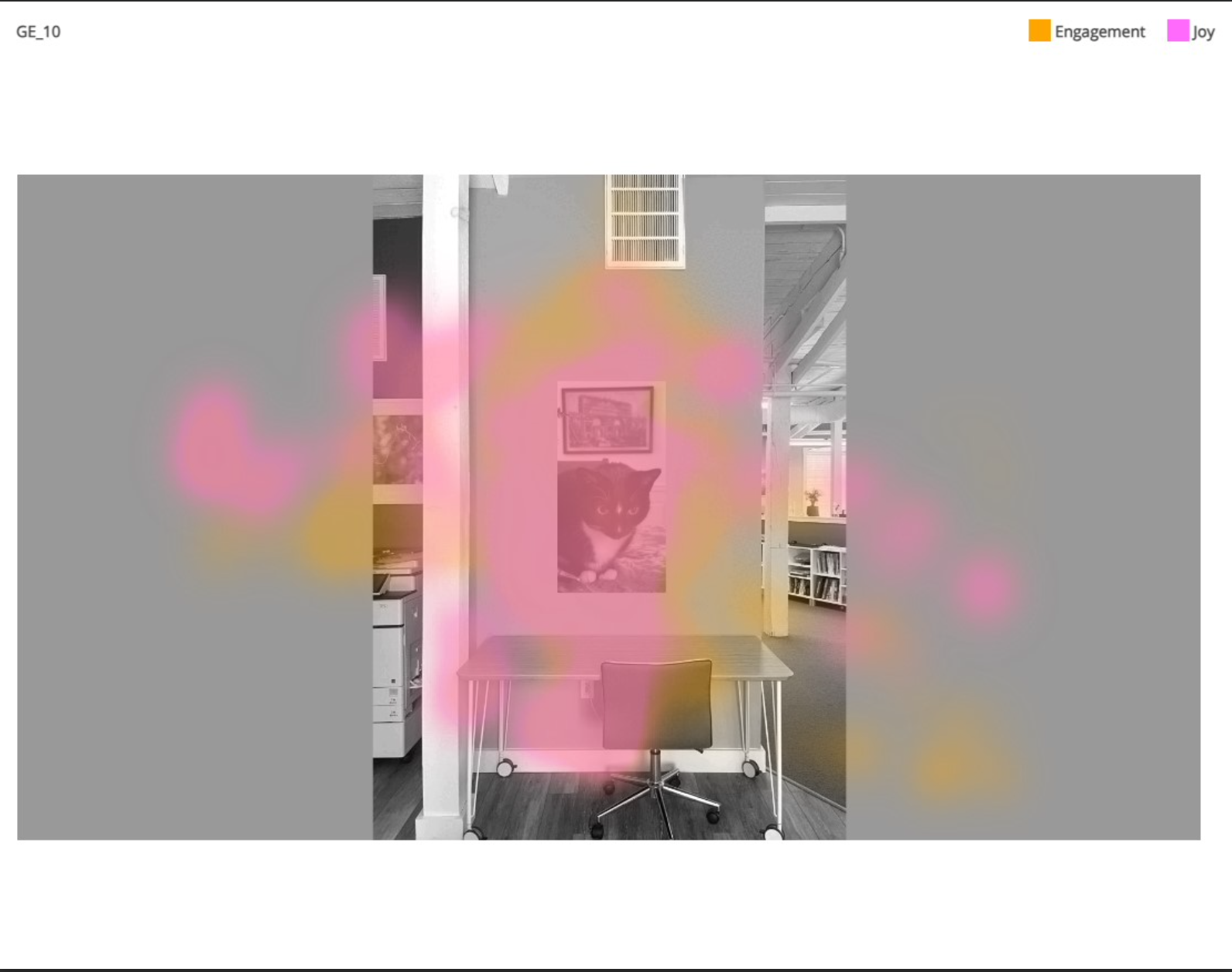
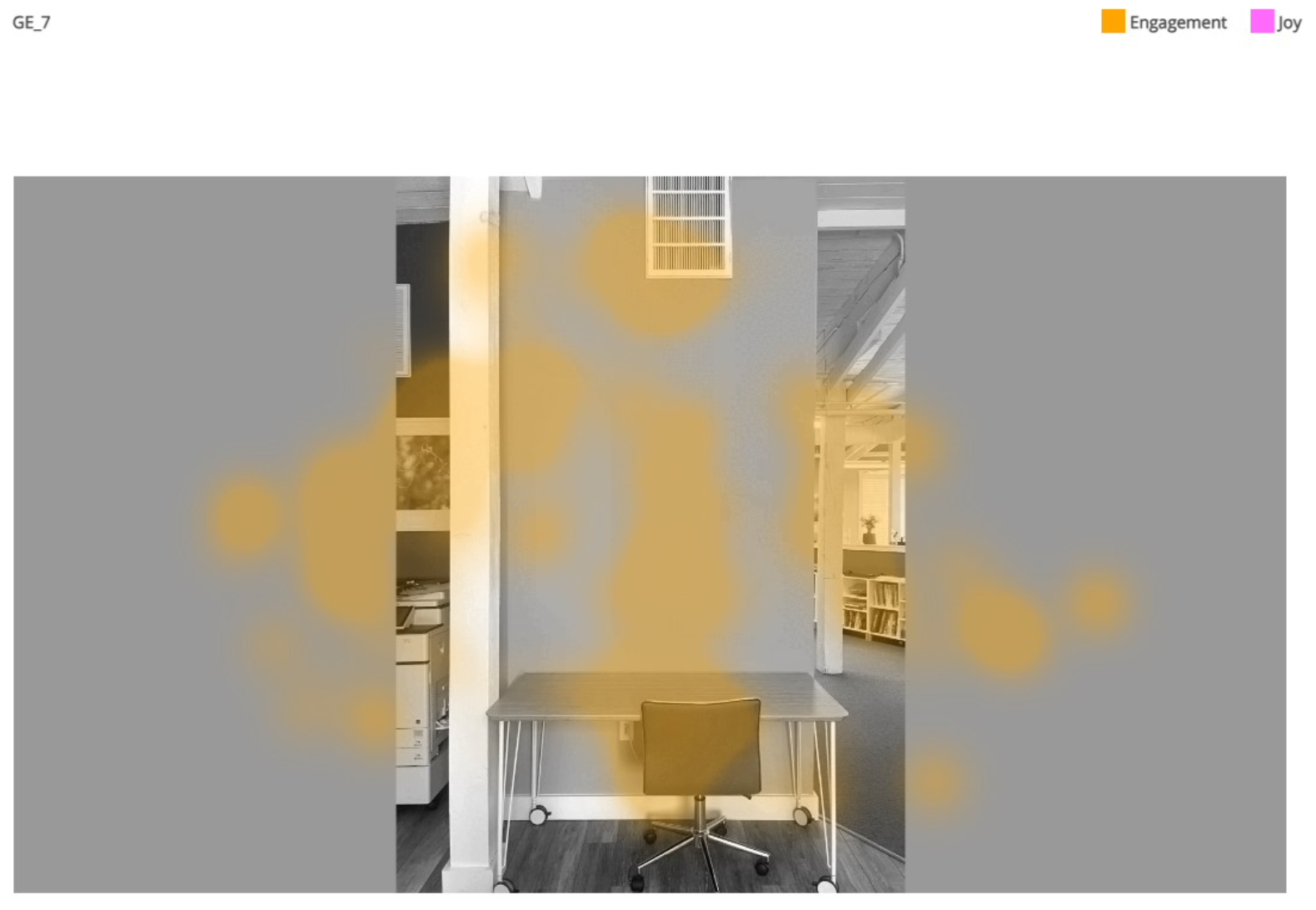
The sample ’emotional heatmap’ above indicates, with a yellow hue, where viewers most engaged with the paired image, and with a pink hue, where they expressed joy! Note how the pink hue only shows up on the painting, indicating where they smiled – and not at all in the office space without the art!
And what happens if viewers see an image of a cat?
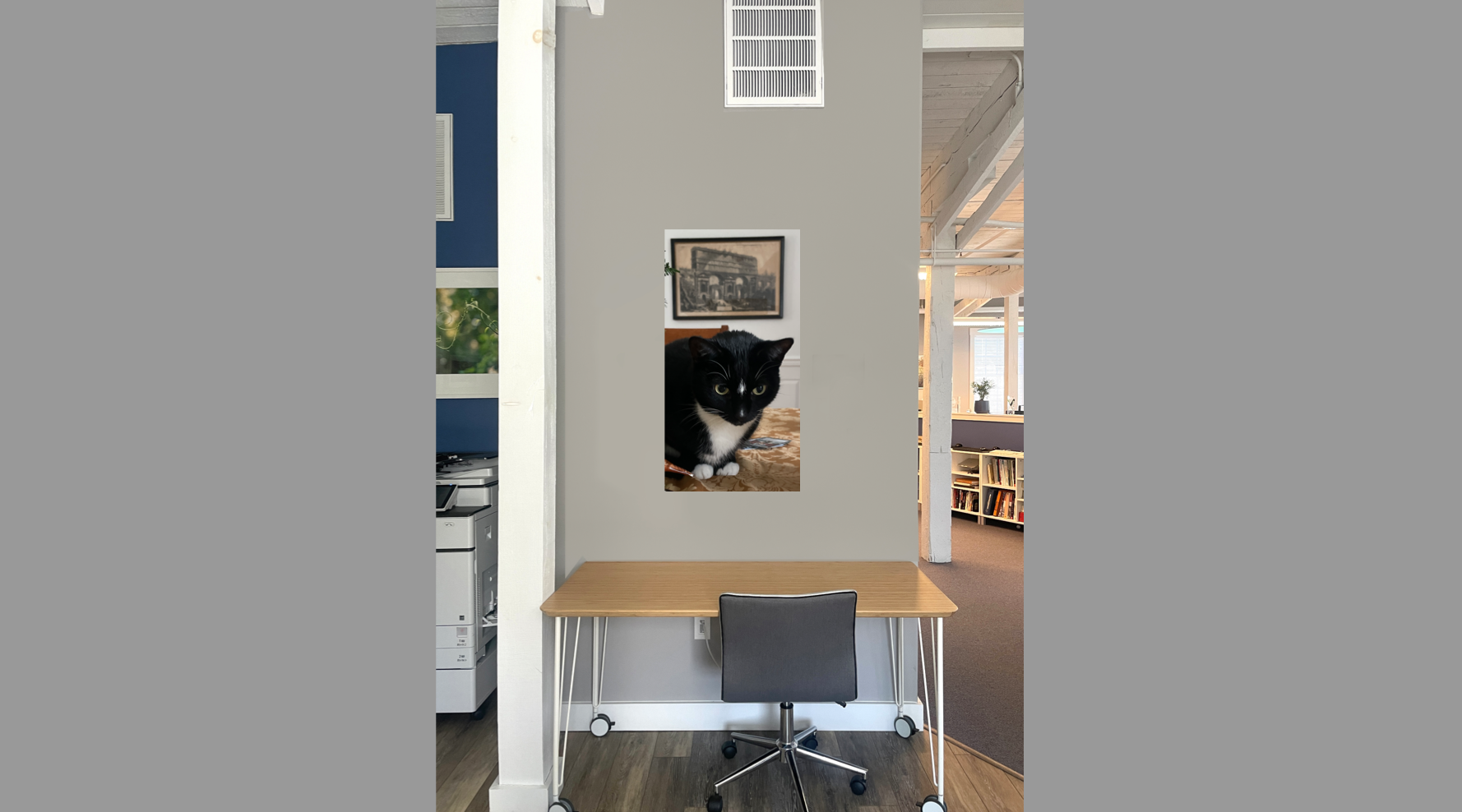
Check out the joy map:
And note its absence, below, when the space is blank; there is engagement here, shown in yellow, but no pink indicating joy:
Feelings matter, and documenting how quickly they occur can be a powerful tool in the designer toolkit. They contribute to our health and wellbeing; so it’s time to acknowledge that and look at our emotions – both inside and out!
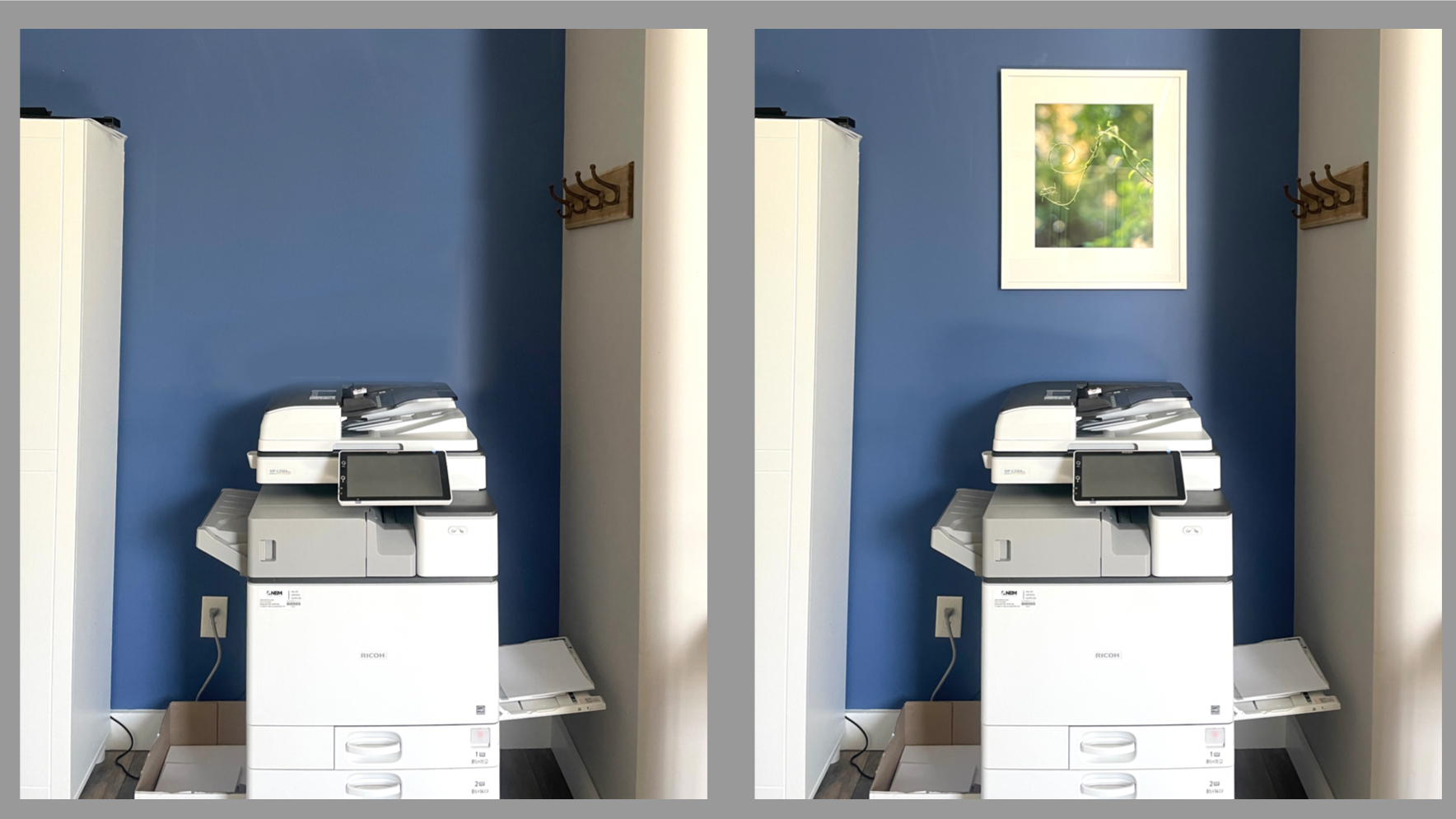
Additional results from eye-tracking an office, with the original paired slides, showing before-and-after art installation; and the heatmaps indicating how the art changed attention and engagement with the space.
For more information about this eye-tracking study, or others, email: contact(at)theHapi.org.
All study photos and eye-tracked images ©theHapi.org.
- – – – – –
Many thanks to The Green Engineer and iMotions.com for making the study possible, ArtScape artists at the Bradford Mill, Lola Chaisson, Irene Stapleford and Suzanne Revy for providing the creative art, and, of course, Enkidu, the cat, for his pose and presence.

 The Genetics of Design