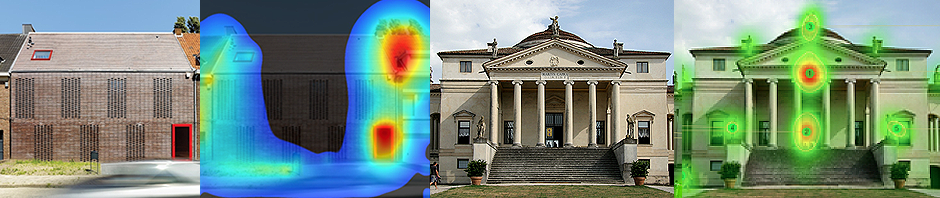
What makes design that delights? This blog explores the biology behind human responses to the world around us. In the 21st Century, new information from neuroscience, psychology, and biology is exploding, giving us new insight into why we like what we do in the built environment and shun what we don’t. It also gives us the chance to create more successful places for people. For, to paraphrase Steve Jobs, the better we understand the ‘human experience’, the better we can design for it. Passionate about making better places for people – whether in city, suburb or spots in between – the Genetics of Design celebrates design that fits human nature and Nature herself.
Ann + Janice

Ann Sussman is an architect, biometric researcher, speaker, writer, and co-author with Justin B. Hollander of Cognitive Architecture, Designing for How We Respond to the Built Environment. (Routledge, 2015, 2nd edition, 2021 ) and Urban Experience + Design, Contemporary Perspectives on Improving the Public Realm (Routledge, 2021), She has taught classes on human perception at the Boston Architectural College, and most recently the, School of Architecture and Planning at Catholic University of America (CUA). In 2020, she co-founded The Human Architecture + Planning Institute, Inc., (theHapi.org) to improve our understanding of how people function and design better places for them, and currently serves as its President.
email: ann@thehapi.org
web: annsussman.com, https://thehapi.org
twitter:@ann_sussman

Janice M. Ward

 The Genetics of Design
Dear Ann and Janice,
I agree with you that exploring the biology behind human responses is increasingly important in our contemporary world. Academic interest and fascination aside, it seems that we all find great beauty in Nature. Yet, beauty is not entirely subjective and is not just in the eye of the beholder. There is strong, unshakable evolutionary basis for our sense, feeling, perception and conception of beauty. In addition, there are evolutionary bases in people’s sense of morality and in their behaviours. We can find a great deal of new understandings in multidisciplinary fields such as sociobiology, evolutionary psychology and behavioural sciences, epigenetics, brain and cognitive sciences, gene-culture coevolution, biophilia and many more. . . . .
Having been a multidisciplinary academic (now largely retired), I am always very interested in, and have been heartened by, the incorporation of biophilia in the projects that I have come across during my perusal of some of the posts published on your website here. Many years ago, when I was still a postgraduate student, I used to audit some classes in environmental studies and architecture in the Department of Geography, Architecture and Planning (GAP) as well as the Department of English, Media Studies and Art History (EMSAH). Certain concepts originated outside architecture, such as affordance and biophilia, have fascinated me. The recently departed Edward O Wilson, an entomologist specializing in myrmecology, who proposed the idea of biophilia, has been one who often stepped beyond disciplinary boundaries to achieve greater insights. You may have already known that Wilson’s seminal book “The Diversity of Life” has given us the terms “biodiversity” and “biophilia”. I have owned a copy of the book for 20 odd years. That we can learn a great deal about ourselves and Nature via the notion of “Biophilia” as first proposed by Wilson is in some ways both refreshing and revolutionary.
One of my most favourite books of Edward O Wilson is none other than “Consilience: The Unity of Knowledge”, which is a national bestseller, not to mention that Wilson has received many fellowships, awards and honours, including two Pulitzer prizes. I love the word “Consilience”, which I have used in my very long “About” page.
My special and academically written post entitled “We have Paleolithic Emotions; Medieval Institutions; and God-like Technology” is a detailed and expansive tribute to Wilson. The direct link is:
May both of you find the rest of 2024 very much to your liking and highly conducive to your thinking, writing, reading, researching and blogging whatever topics that take your intellectual fantasy and creative reverie in all their depths, diversity and profundity!
Yours sincerely,
SoundEagle
LikeLike