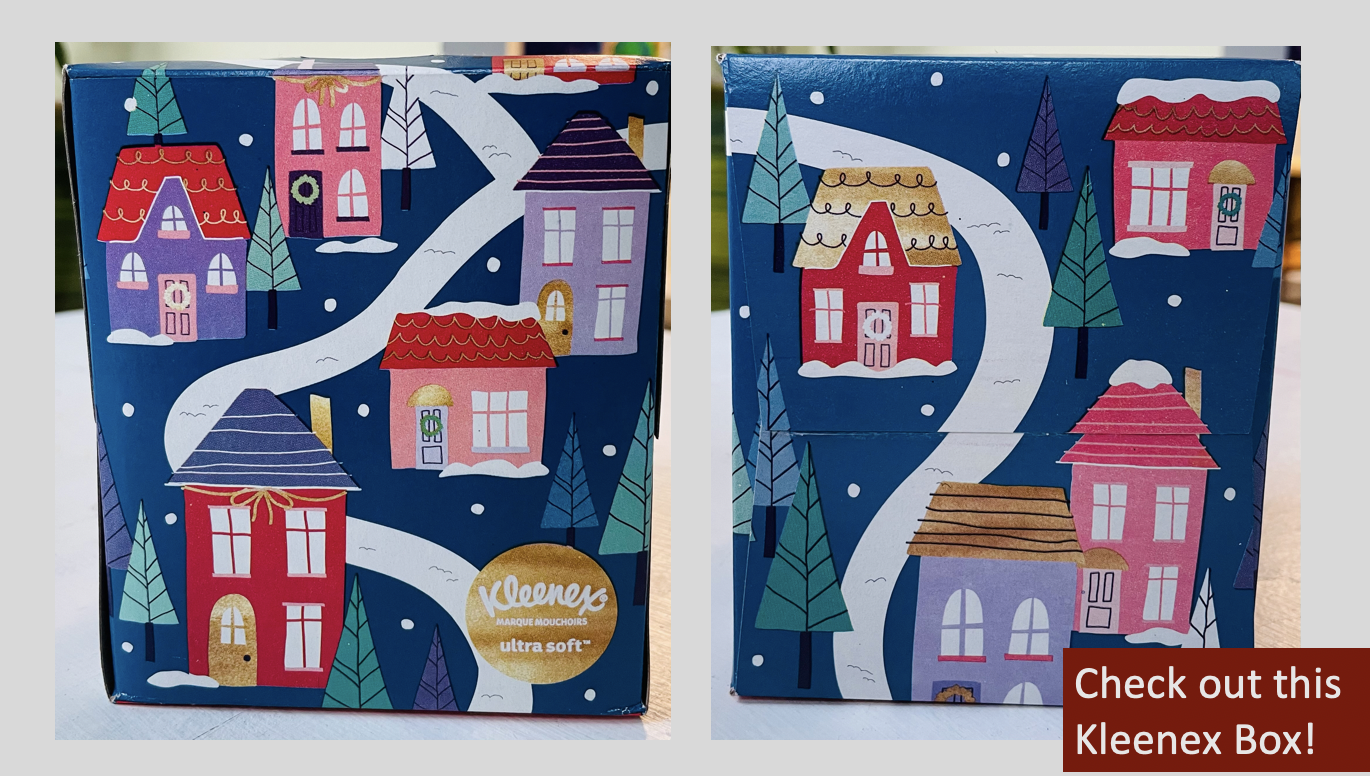
When I saw this box on the store shelf, I had to get one!
The cottages seemed warm and welcoming, as if waiting to see me, suggesting a cozy community. What could be more inviting in winter? I honestly felt happy picking out that box. It also shows a walking path between buildings – that is car-free – no traffic congestion here, in fact, no cars to speak of.
No wonder I went for the tissues, even though I hadn’t initially planned on buying any. Who wouldn’t want to be in a place like that? It shows a charming space where people implicitly feel safe; and what more do people really want in a home or community?
I soon learned that Kleenex, from multinational Kimberly-Clark, based in Irving, Texas, (valuation $44 billion), isn’t the only brand using charming and historic architecture to get us to shop. Check out the plastic bag and box below.
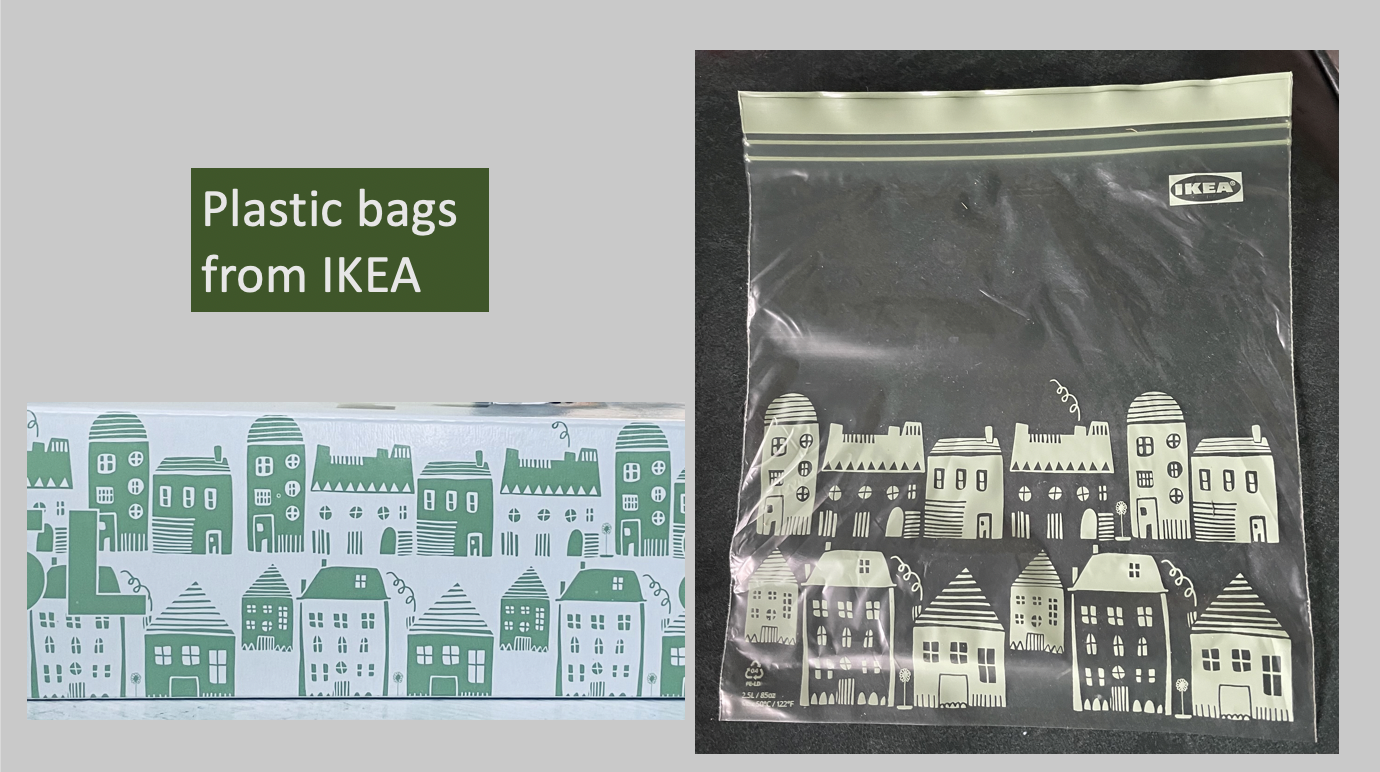
This new item (both the box and plastic bags inside) from IKEA, founded in Sweden, known as the world’s largest furniture retailer (valuation $21 billion), feature Stockholm’s famous 19th-century-and-earlier architecture, where tourists gravitate today.
And when you use these bags, put sandwiches in them, say – it does feel special! No wonder, they use the same timeless patterns that make us feel most at home in a place, and secure in a space, no matter where we’re from.
It’s fascinating to see how billion-dollar retailers seriously consider client feelings in the built environment – including ones not widely acknowledged, like the power of car-free streets and old architecture to make people feel safe and happy – to drive sales of things that have nothing to do with buildings at all.
Retailers know the strength of our attachments to place, and how these feelings are powerful enough to spill over to anything – including a box of tissues or plastic bags.
It is time for that knowledge of our hidden human behaviors to be better understood by developers, designers and planners today, to make our future environments healthier and happier. (It’s why we created this blog!)
Let’s use the appealing designs, sketched on tissue boxes, in the real world to create a public realm we can care about. Feelings, after all, do matter. Future generations will thank us.

 The Genetics of Design
How can architectural design in supermarkets influence consumer purchasing decisions?
Regard Telkom University
LikeLiked by 1 person
Most definitely! Lighting, height of shelves…how easily it is to see other people!
At Trader Joe’s stores in the US, they always put large bouquets of flowers at the entry…and then bright arrangements of fruits and vegetables! It draws you right in!
LikeLike
This captivating blog post sheds light on the often-overlooked realm of architecture that extends beyond traditional structures – the world of supermarket shelves. By delving into the intricacies of product packaging and shelf layout, the article highlights how thoughtful design can effectively capture consumer attention and elevate brand identity in the competitive retail landscape. Through insightful analyses and real-world examples, readers gain valuable perspectives on how architecture transcends physical spaces, influencing purchasing decisions and fostering memorable brand experiences. A compelling read for marketers, designers, and anyone intrigued by the artistry behind the products that beckon to us from the shelves.
LikeLiked by 1 person
Thanks, Mark for your comments; appreciated!
LikeLike